





Oklahoma Boiler Works

Why your radiators won't heat up in Oklahoma

Step 1 of 3: Equipment

Why won't my radiators heat up?

Winter mornings here can get cold enough that a boiler running fine and radiators staying cold feels backwards. You turn up the thermostat, the boiler kicks on, you can hear it, but the radiators across the room never get past lukewarm. Before calling anyone, it helps to know what actually stops heat from reaching them, because the cause changes what happens next.

Trapped air or a stuck valve is usually why

Hot water circulates from the boiler through pipes to each radiator, and anything that blocks that flow leaves the radiator cold even while the boiler runs. Air pockets inside the radiator push the water out, so heat never fills the metal. A valve that won't open all the way, or sediment built up inside the radiator, does the same thing. Sometimes only one radiator is affected, which points to that unit. If every radiator in the house stays cold, the problem is more likely at the boiler or the circulator pump moving water through the whole system. Either way, the boiler working doesn't mean the heat is getting where it needs to go, and that gap is worth having looked at before a cold snap settles in.

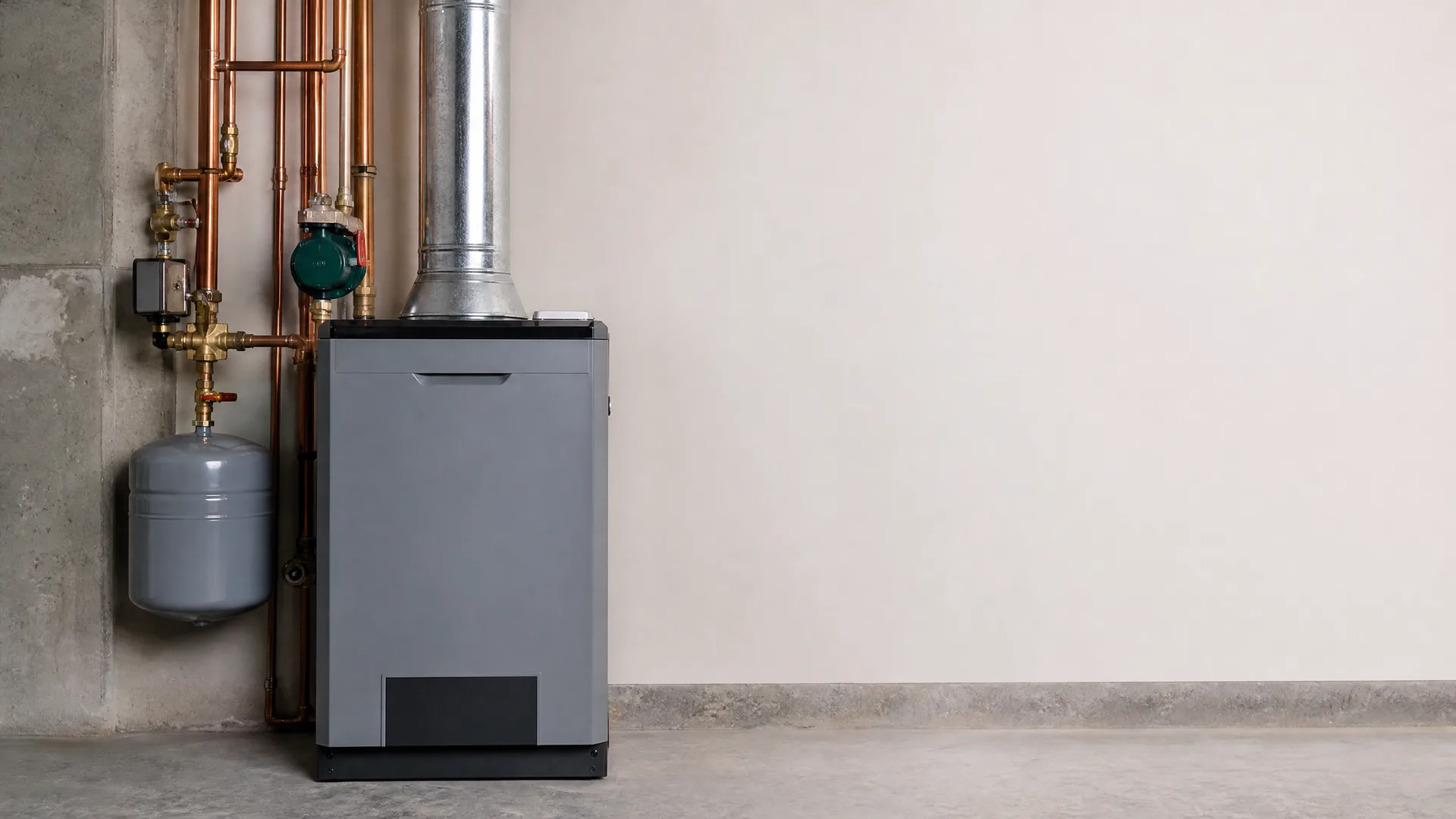
A gray floor-standing boiler with a metal flue pipe, copper piping, a circulator pump and a gray expansion tank, installed against a concrete wall.

Trapped air blocks the water

A radiator with a cold top and a warm bottom usually has air trapped at the top, keeping hot water from filling the rest of it. Most radiators have a bleed valve for this. Opening it until water runs out, then closing it, lets the loop fill back up. Gas boilers push hot water through the same loop all winter, and air works its way in over months without anyone noticing.

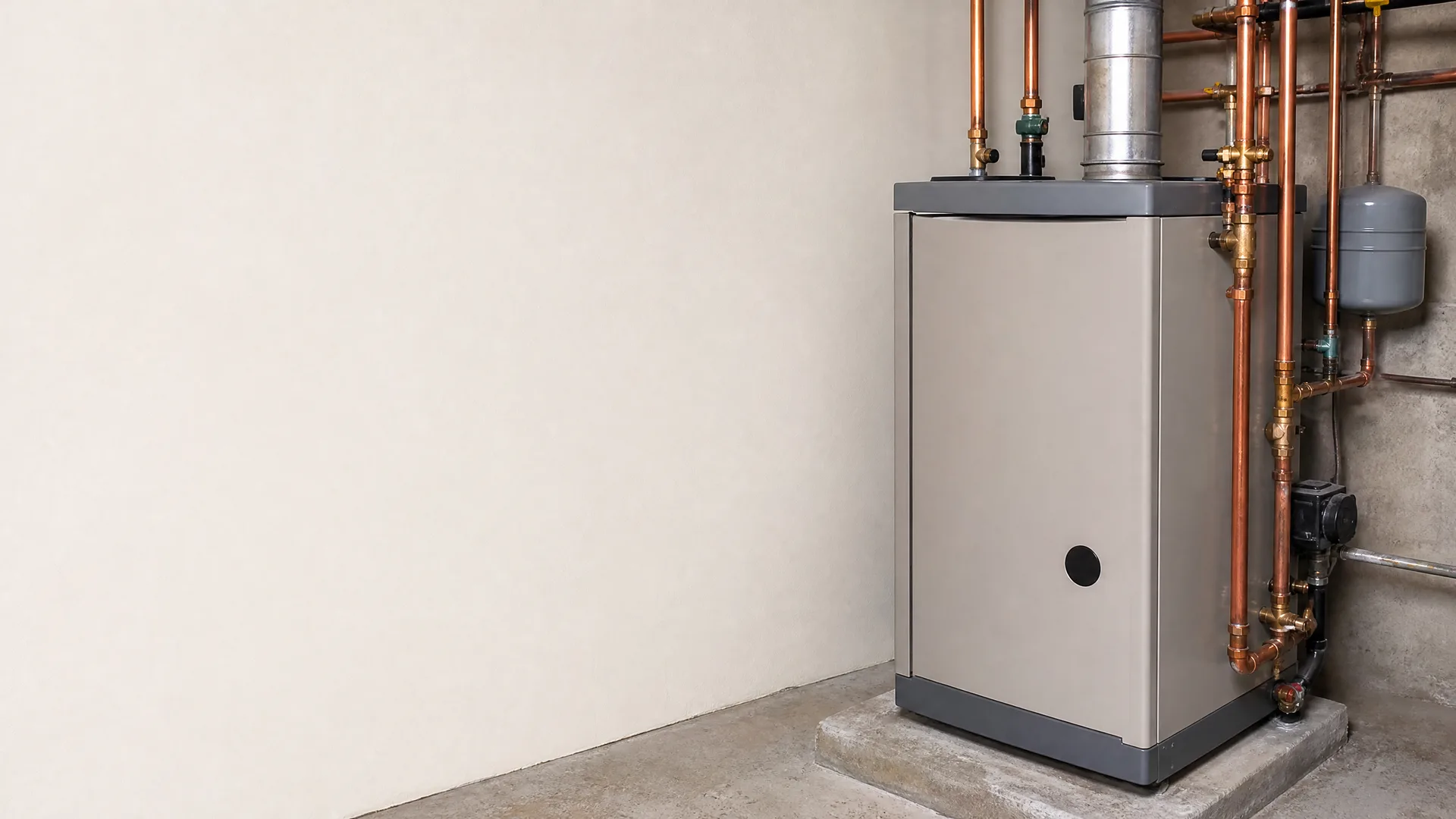
A tall grey floor-standing boiler on a concrete plinth in a corner of a room, with copper pipework, a flue, a circulator pump and an expansion vessel to its right, beside a plain cream wall.

One cold radiator versus all of them

If just one radiator stays cold while the rest heat up, the problem is usually local to that unit, a stuck valve or a blockage inside it. If every radiator in the house stays cold while the boiler runs, the problem is further back, often the circulator pump that moves water through the whole system. A local contractor who services boilers through Oklahoma winters sees both kinds of failures every season and can tell which one you have.

Bleed It Yourself or Call Someone

Bleed it yourself

  • A bleed key fits most radiator valves and costs little, so it is worth keeping one in a drawer.
  • Bleeding takes a few minutes once you find the valve, usually a small square fitting near the top of the radiator.
  • It only fixes trapped air, so a radiator that stays cold after bleeding points to a different problem.
  • You can check every radiator in the house in one afternoon instead of waiting on a visit.
  • If the boiler's pressure gauge sits low after bleeding, the system needs water added, which you can often do yourself too.

Call a contractor

  • A closed zone valve, a failed pump, or sludge built up inside the radiator won't clear with a bleed key.
  • A local contractor who services boilers all winter has seen which of these tends to fail first in homes around here.
  • One contractor means one visit and one diagnosis, not a string of calls from companies competing for the job.
  • If bleeding a radiator brings out water but no air, something upstream is blocking flow and needs a trained eye.
  • Gas boilers tied to the thermostat and the circulator pump involve wiring and controls best left to someone licensed for it.
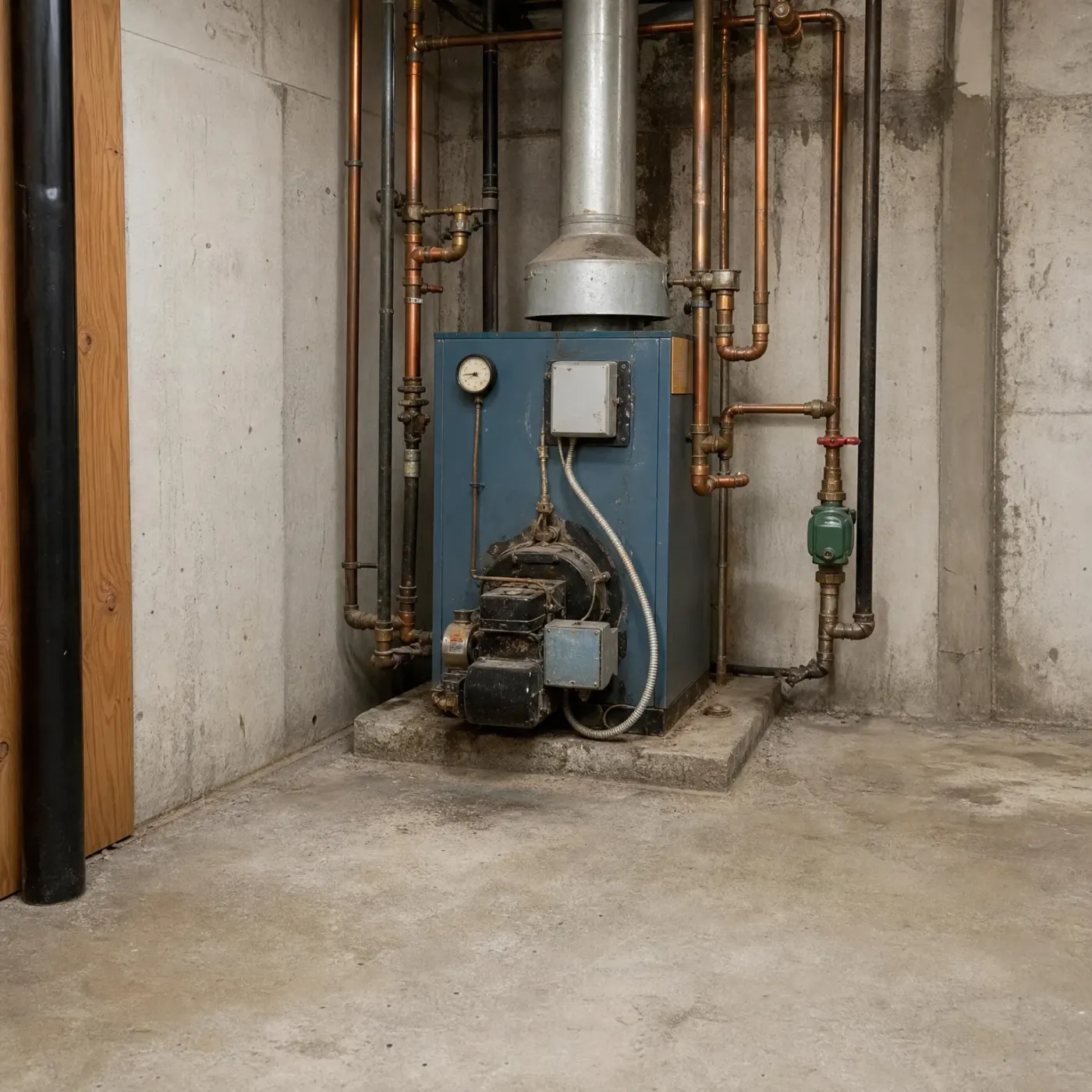
A blue oil-fired boiler with a pressure gauge, burner unit and metal flue sits on a concrete pad in a basement corner, surrounded by copper and black pipes against bare concrete walls.
Before you get your boiler repair
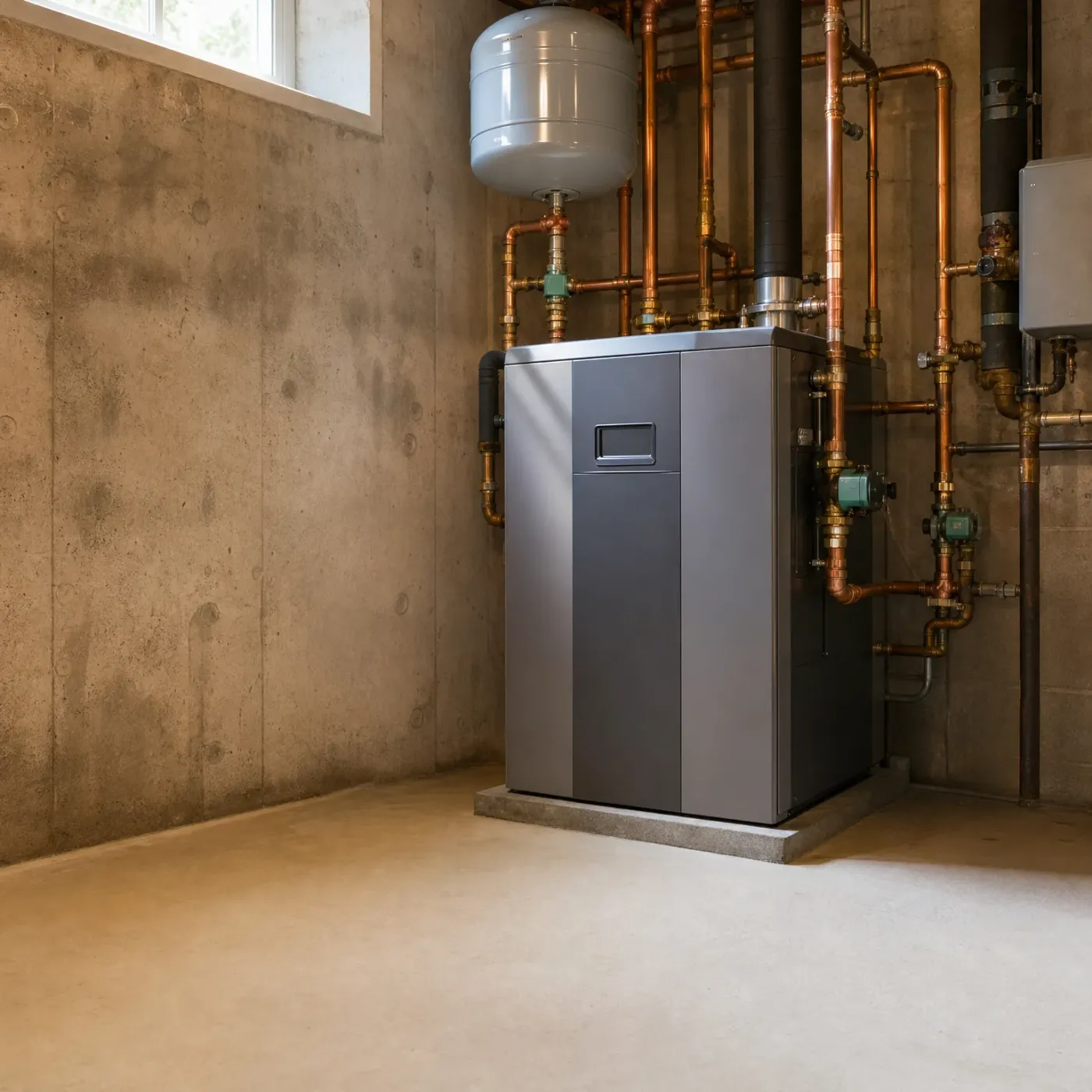
A gray boiler unit on a concrete pad in a basement corner, connected to copper piping, circulator pumps, and a ceiling-mounted expansion tank against bare concrete walls.
After you get your boiler repair

A pro who works on boilers

Your request goes to one pro, not a list of companies.

You only hire the pro if you want to.

How hot water actually moves

  • A boiler heats water to around 180 degrees, then a circulator pump pushes it through supply pipes to each radiator.
  • Water should return to the boiler cooler than it left, which is how the system knows heat actually transferred into the room.
  • Each radiator has a valve on one end and a return connection on the other, so water has to flow through, not just sit inside.
  • If a loop has a closed or stuck valve, water finds the path of least resistance and skips that radiator entirely.
  • Sludge and mineral buildup settle at the bottom of a radiator over years and block flow before you ever notice a leak.
  • Zone valves or a failed circulator can send heat everywhere else in the house while one line gets starved of hot water.

A boiler by itself does not heat your house. It heats water to around 180 degrees, and a circulator pump moves that water out through supply pipes to every radiator on the loop. Each radiator takes water in through a valve on one end and sends it back out the other side toward the boiler. That return trip matters. If the water comes back noticeably cooler than it left, the system is working the way it should, because that drop in temperature is the heat it gave up to your room. When a radiator stays cold, something is breaking that path rather than the boiler failing to make heat.

Water takes the easiest route available. If a valve on one radiator is shut, stuck, or partly closed, the water bound for that radiator finds another loop to flow through instead, and that radiator gets skipped while the rest of the house warms up fine. Over years, sludge and mineral deposits can also settle at the bottom of a radiator and narrow the path enough to choke off flow long before any leak shows up. A failed circulator pump or a stuck zone valve causes a similar pattern. Heat still reaches most of the house, but one line or one room gets starved because the water never gets pushed through it. In all of these cases the boiler is doing its job. The problem is somewhere between the boiler and that one cold radiator.

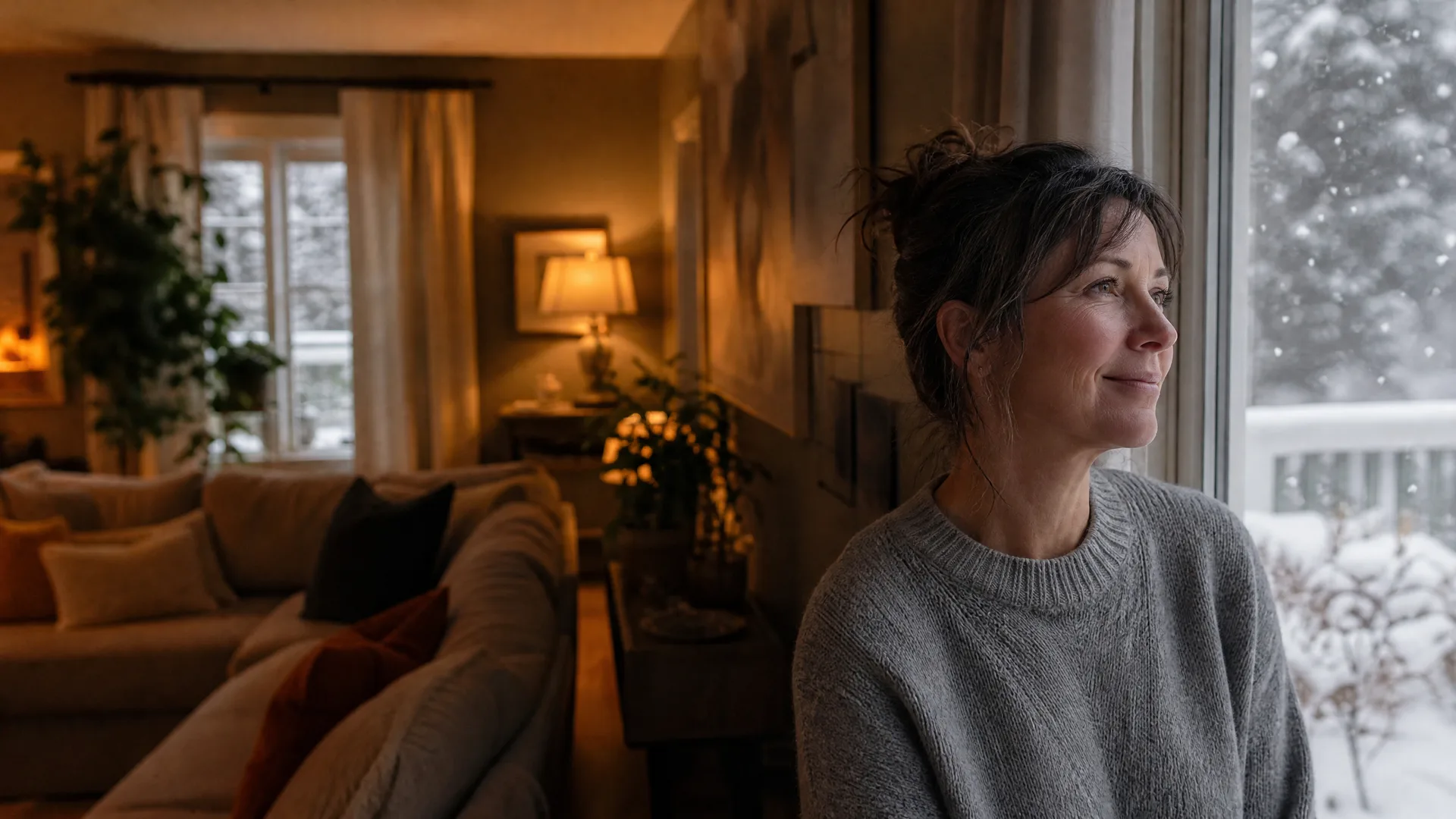
A woman in a gray turtleneck sweater stands by a window looking outside at snowy ground, with a dimly lit living room containing a sofa, shelves, lamp and a lit candle behind her.
A woman in a cream cable-knit turtleneck sweater stands in a warmly lit living room with a fireplace and shelves behind her, looking out a window toward snow-covered trees and a railed deck.
A woman in a cream knit turtleneck sweater stands by a window looking out at snow, with a lit fireplace, sofa and lamp in the room behind her.
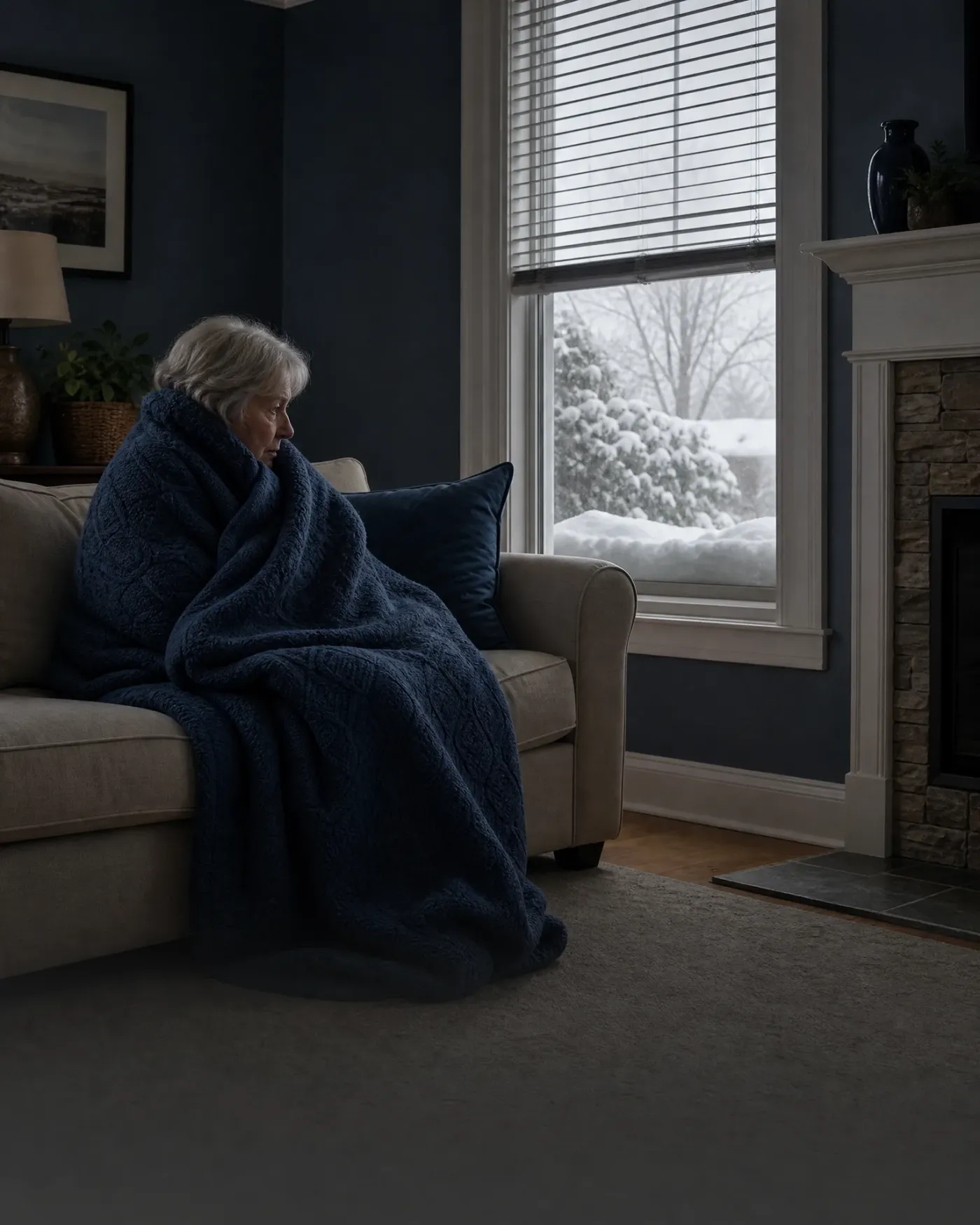
A woman in a gray knit sweater sits by a window looking out at falling snow, with a dimly lit living room containing a sectional sofa, pillows, a lamp and houseplants behind her.

A cold radiator in the room you use most means the boiler is heating water that never makes it to you, and you're paying for that heat whether you feel it or not.

Leave it long enough and the valve or pump that's struggling now can fail outright, turning a bled radiator job into a boiler repair in the middle of an Oklahoma cold snap.

A bearded man in a plaid flannel shirt stands in a kitchen looking out a window toward snow-covered shrubs, with a steaming mug on the windowsill and potted plants on a shelf behind him.
A smiling man with dark curly hair in a navy t-shirt sits on a gray couch indoors, with a large-leafed plant and a window in the background.

One radiator stays cold

If just one radiator won't heat up while the rest of the house warms fine, the problem is usually local to that unit. Trapped air is the common cause, and bleeding it often solves it in minutes. A valve that's partly closed or a loop of pipe that's airlocked can do the same thing. Since the rest of the system is clearly working, the boiler itself is heating water and moving it where it needs to go. This is the easier case to sort out, and it's worth trying the simple fixes before assuming anything bigger is wrong.
Several radiators stay cold

When more than one radiator won't heat up, especially ones on the same floor or same side of the house, the cause is more likely the circulator pump, a zone valve, or a blockage in the main supply line feeding that part of the system. Bleeding each radiator won't fix a pump that's failing or a valve stuck shut. This pattern usually means water isn't reaching that section at all, not that air is sitting at the top of each unit. It's worth having someone check the pump and the valves before you spend time bleeding radiators one by one.

Winter nights average 30°F statewide

Those 30-degree nights are when a boiler runs longest and a cold radiator costs you the most. If it's only warm near the floor or not at all, the boiler is working through those hours without actually heating the room you're in.

NOAA nClimDiv 1991-2020 county normals weighted by homes

A cold radiator usually comes down to trapped air, a stuck valve, or a pump that can't push water as far as it used to. You can rule out the first one yourself with a bleed key. The rest calls for someone who can get the boiler apart and see what's actually failing. A local contractor who services boilers all winter has likely seen the same symptom on the same brand of radiator more than once, and knows whether to start at the valve, the pump, or the near-boiler piping instead of guessing room by room. You'll be matched with one contractor, not a handful calling you back at once, so the person who shows up is the one who looked at what you described and judged they could help. Get the air out, check the valves, and if the radiators still won't come up to heat, it's time to have someone look at the boiler itself.

Interior room corner with sunlight from a window, showing peeling paint and damaged plaster on the wall above a white baseboard, a wooden cabinet with a pale bowl on top, hardwood floor and a patterned rug.
Interior corner of a room with tan walls, white profiled baseboard and window trim, a wood-plank floor in sunlight, and green foliage visible through the window.
An empty room corner with cream walls, white baseboard, two windows with deep sills showing green foliage outside, and a wood plank floor lit by sunlight.
Empty room corner with beige walls, white beadboard wainscoting, chair rail and baseboard, a window with green foliage outside, and sunlight casting leaf shadows on the wall above a wood floor.
Sunlit room corner with a multi-pane window, beige walls, white baseboard, wood floor with a woven rug, and a dark wooden cabinet holding a ceramic table lamp below a framed picture.

Get your boiler to the right pro

The pro who reaches out is licensed in Oklahoma.

Get a licensed local pro

Asking costs nothing, and the choice to hire stays yours.