A boiler that runs out of hot water partway through a shower usually has a specific reason: a failing part, sediment in the tank, or a setting that no longer matches what your house needs. This page walks through what causes it. Once you know what's behind it, you can get matched with a contractor who'll take it from there.
A boiler that runs out of hot water usually means the burner is cutting off before the tank finishes heating, or sediment has built up on the bottom of the tank and is sitting between the burner and the water, soaking up heat that should be going into your shower. On older units, a failing thermocouple or igniter can shut the burner down early every time, so you get a few warm minutes and then nothing. Combi boilers have their own version of this: a worn diverter valve or a heat exchanger that can't keep up with demand, so the water runs hot, then lukewarm, then cold. None of this is about how your winters run here. It happens whether it's January or July, because the tank and burner either keep up with what your household asks of them or they don't. If this is happening more than once, something inside the unit is wearing out, not just an unlucky morning.
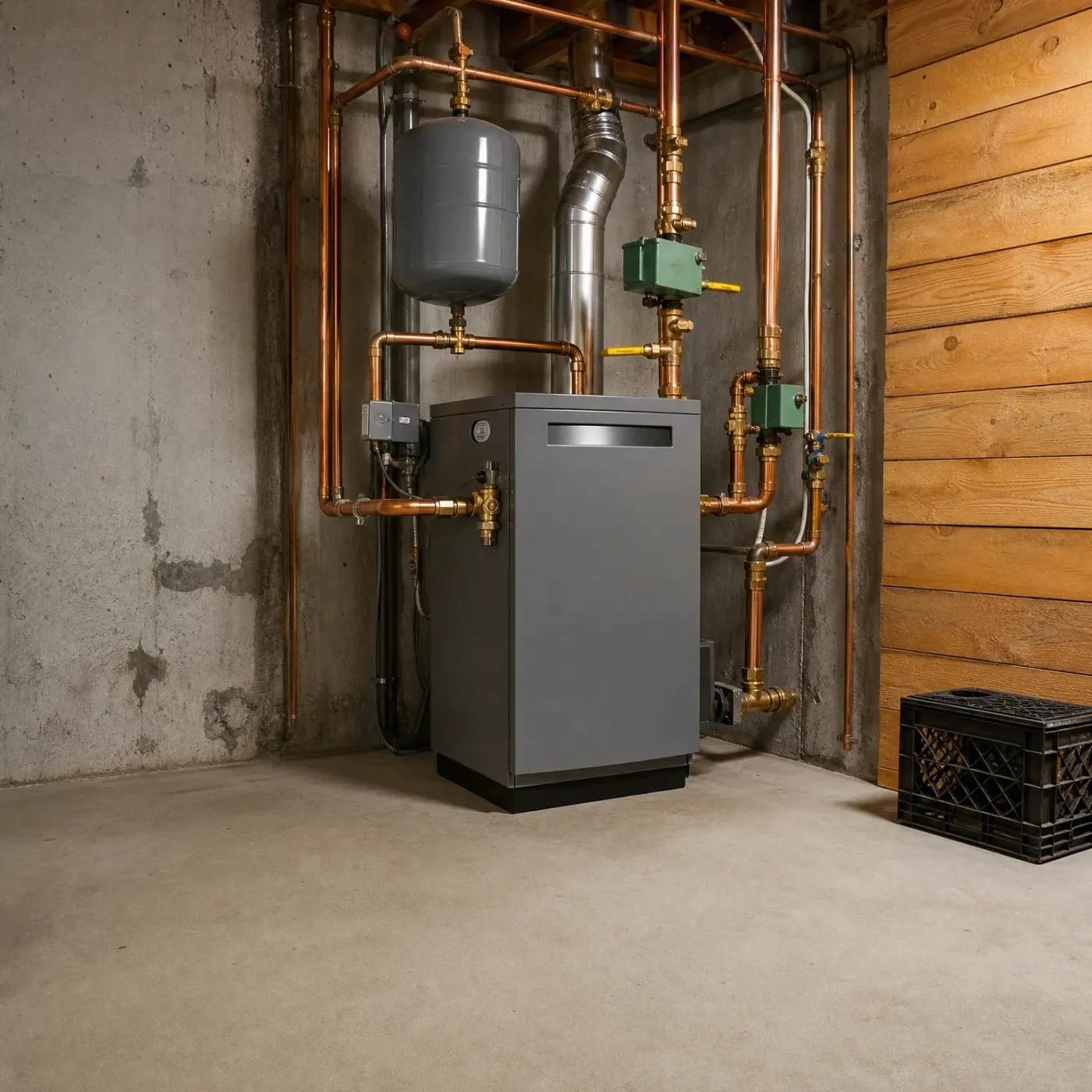
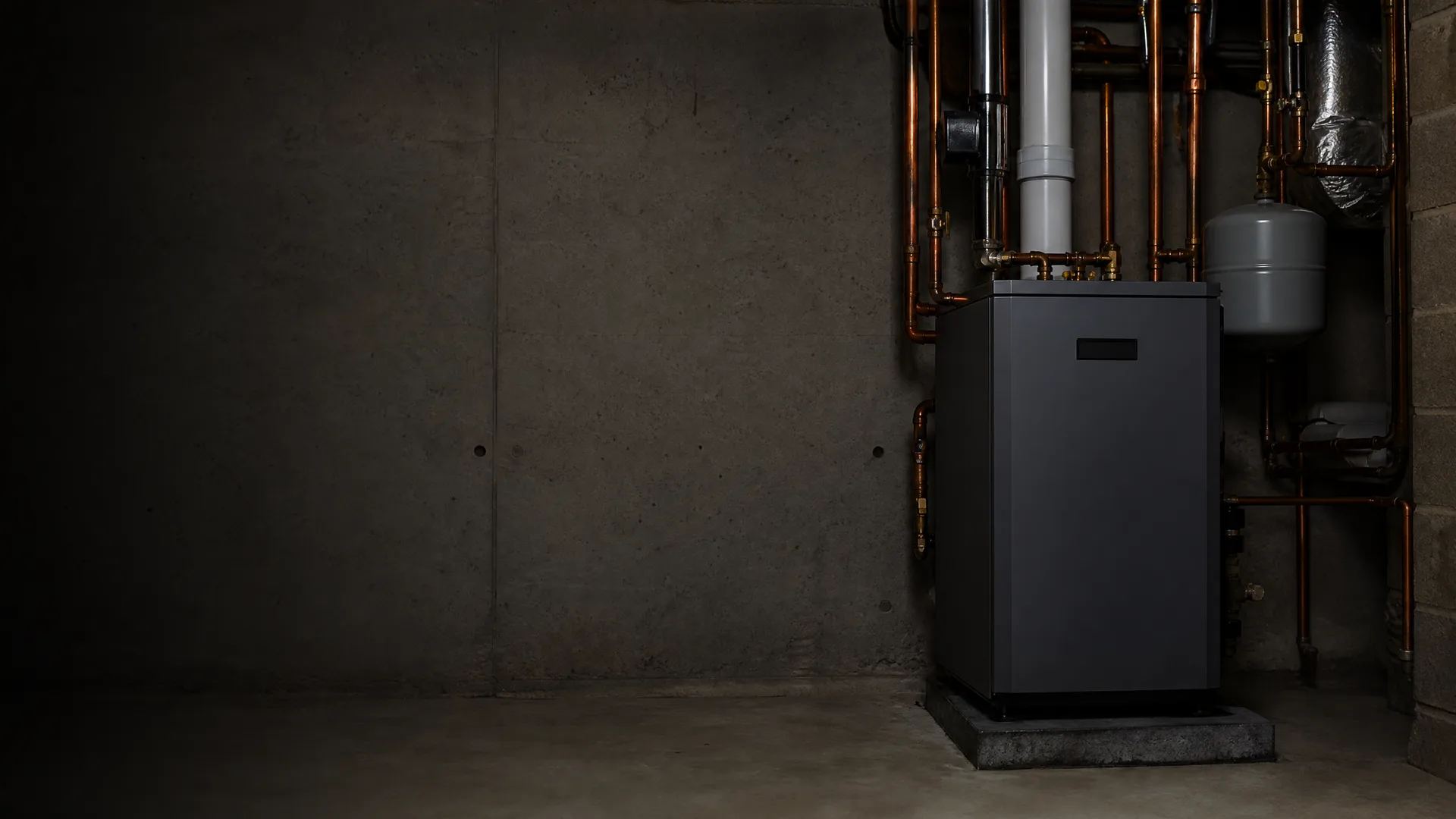
The green zone boxes and expansion tank here mean the system is heating water the way it was set up to, with each zone getting its share.
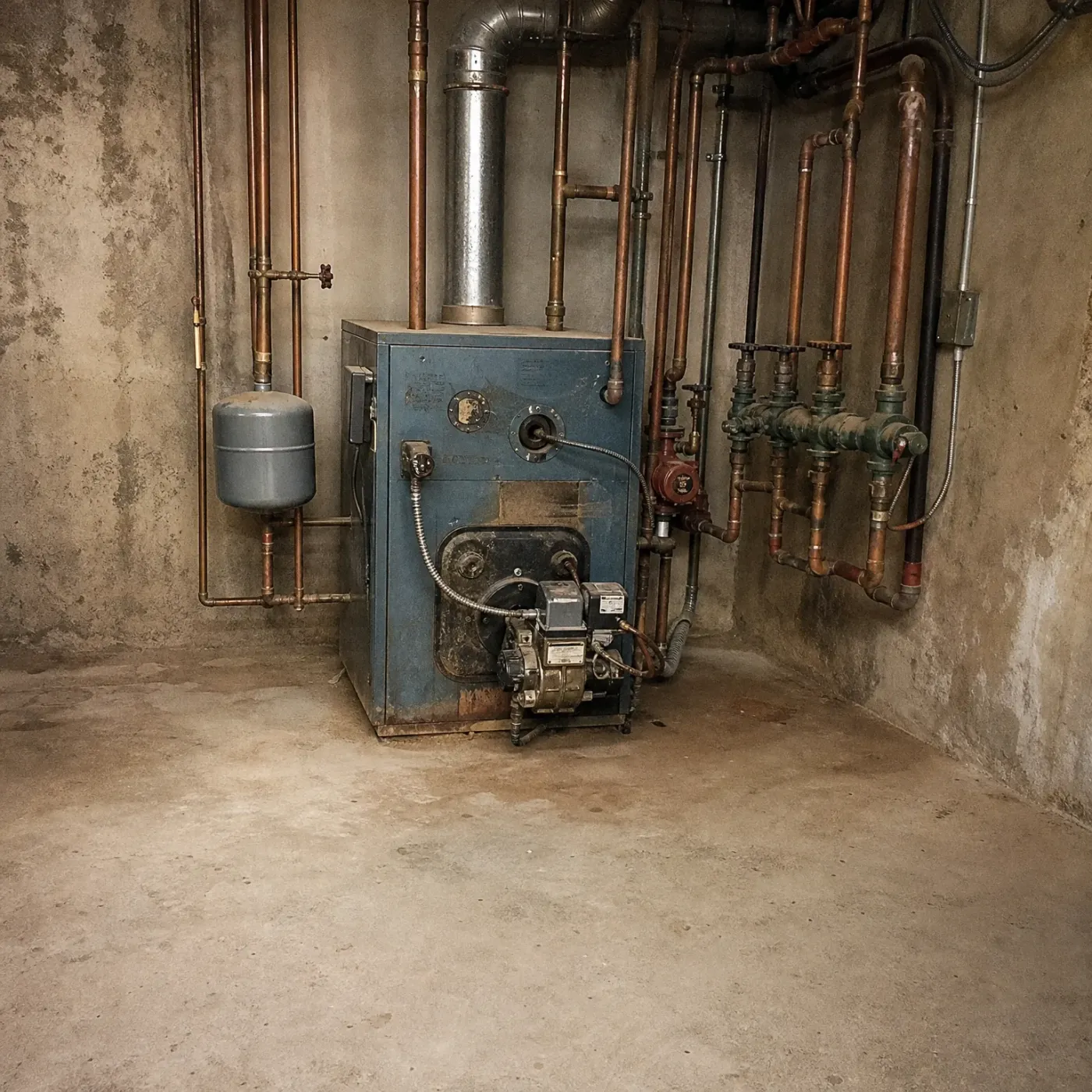
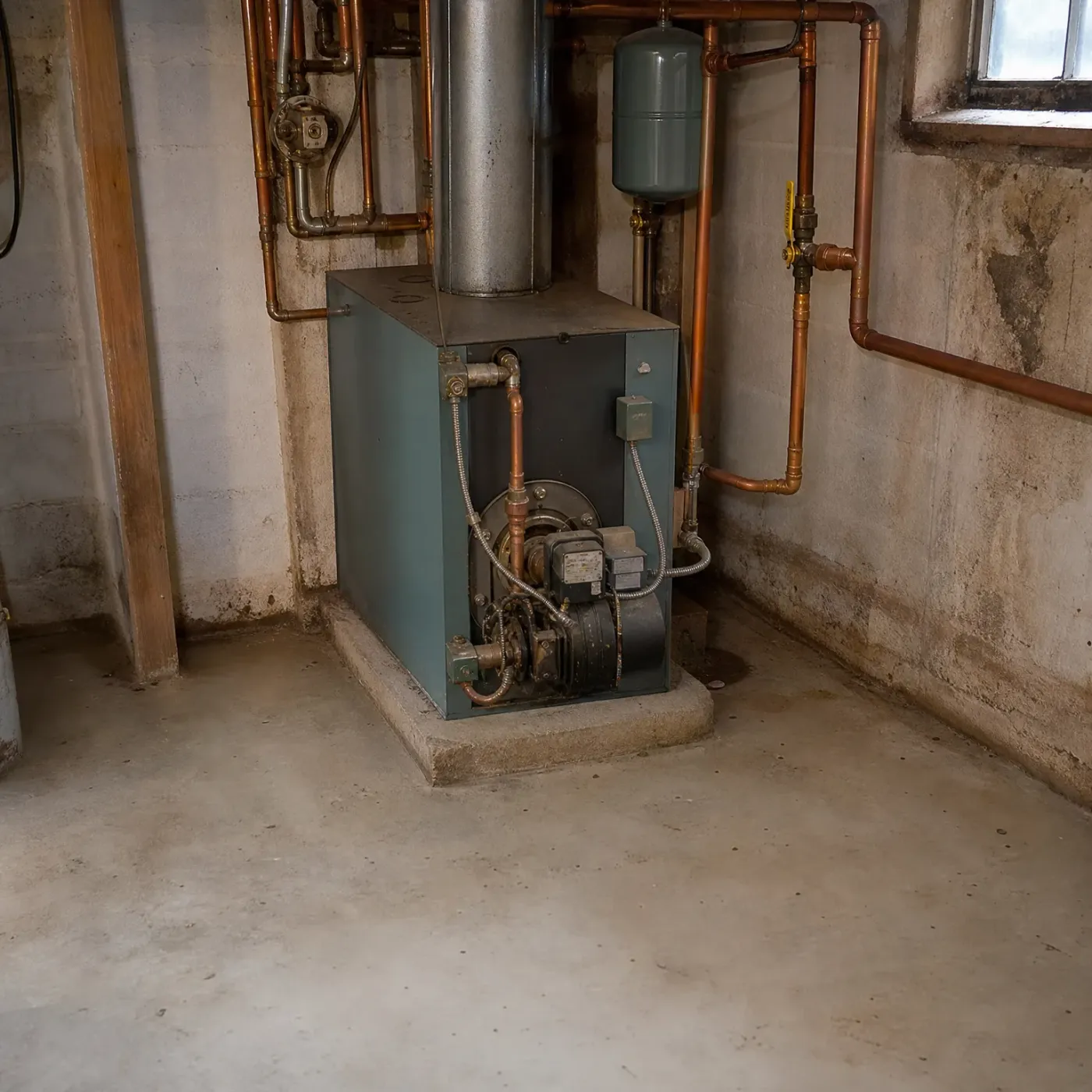
Shut-off valves and an old flue pipe like this one often point to a boiler past its years, where parts wear down enough to cut hot water short.
The aquastat is the thermostat for the tank, and it tells the burner when to fire and when to stop. If it's reading wrong, the burner shuts off early and the tank never gets to temperature. A worn thermocouple or flame sensor can do the same thing, cutting the burner's cycle short before the water's actually hot. Sediment is a different problem. It settles on the tank bottom, right between the burner and the water, so the burner runs its full cycle but the heat has to pass through that layer first. Some of it never makes it into the water at all. Sizing matters too. A boiler that matched the house when it went in may not keep up if more people are pulling hot water now. The mixing valve blends hot and cold before it reaches the tap, and if it's stuck out of adjustment, the water at the tap runs cooler than the tank setting suggests. Low pressure in the boiler loop can trip a safety switch and shut the burner down, which feels exactly like running out of hot water, even with a full tank.
What's Actually Cutting the Heat
The aquastat tells the burner when to fire and when to stop, and if it reads wrong, the burner shuts off before the tank reaches temperature.
A thermocouple or flame sensor that's wearing out can cause the burner to cut short on its own cycle, leaving the tank only partly heated.
Sediment settled on the tank bottom sits right where the burner's heat should be going into the water, so the burner runs but the heat never gets through.
A boiler sized for the house as it was years ago may not keep up if more people are drawing hot water now than when it was installed.
The mixing valve blends hot water from the tank with cold before it reaches the tap, and a valve stuck out of adjustment can run the tank hotter or colder than the dial suggests.
Low water pressure in the boiler loop can trip a safety switch that stops the burner, which feels like running out of hot water even though the tank is full.
You've got gas heat and cheap power running through an Oklahoma summer that turns sticky fast, and none of that changes what's happening in the tank. A boiler running out of hot water mid shower isn't about the weather outside. It's the aquastat reading wrong, a thermocouple wearing thin, or sediment sitting on the bottom of the tank where the burner's heat should be going into your water instead. Those are mechanical problems and they don't fix themselves with a thermostat adjustment or a new showerhead. Figuring out which one you've got means someone looking at the actual unit, the actual valves, the actual flue. That's not a weekend project with a wrench and a guess. Send the request and a contractor who works on boilers like yours takes it from there. You stop trying to diagnose a burner cycle from the kitchen table, and the running out of hot water stops being something you have to solve alone.
What sediment does over time
A gas boiler heats water by running a burner underneath the tank, and sediment settles right on that surface. Once it builds up, it acts like a lid between the flame and the water above it. The burner still fires, still runs its normal cycle, but more of that heat is going into baking the sediment layer instead of warming the tank. Homes on well water tend to see this build up faster than homes on treated city water, since there's more mineral content settling out over time. A tank that once gave a full shower's worth of hot water can start running short even though nothing about the burner or the gas line has changed.
Checking the aquastat setting
The aquastat is the control that tells the burner when to stop firing, based on a temperature setting a contractor can check and adjust. If it's set lower than it used to be, or if the sensor itself is reading the water as hotter than it really is, the burner shuts off early. The tank never gets a chance to reach its full capacity before the burner cuts out. This is different from a tank that's full of sediment, because the burner itself is working fine. It's just stopping too soon. A contractor can test the actual water temperature against what the aquastat reports and see if the two match up.
Winter nights average 30°F statewide
On a 30°F night the burner has to fire more often just to hold tank temperature. If the aquastat is reading wrong or sediment is sitting on the bottom, that extra cycling is what empties the tank before your shower's done.
NOAA nClimDiv 1991-2020 county normals weighted by homes
The system working as it should
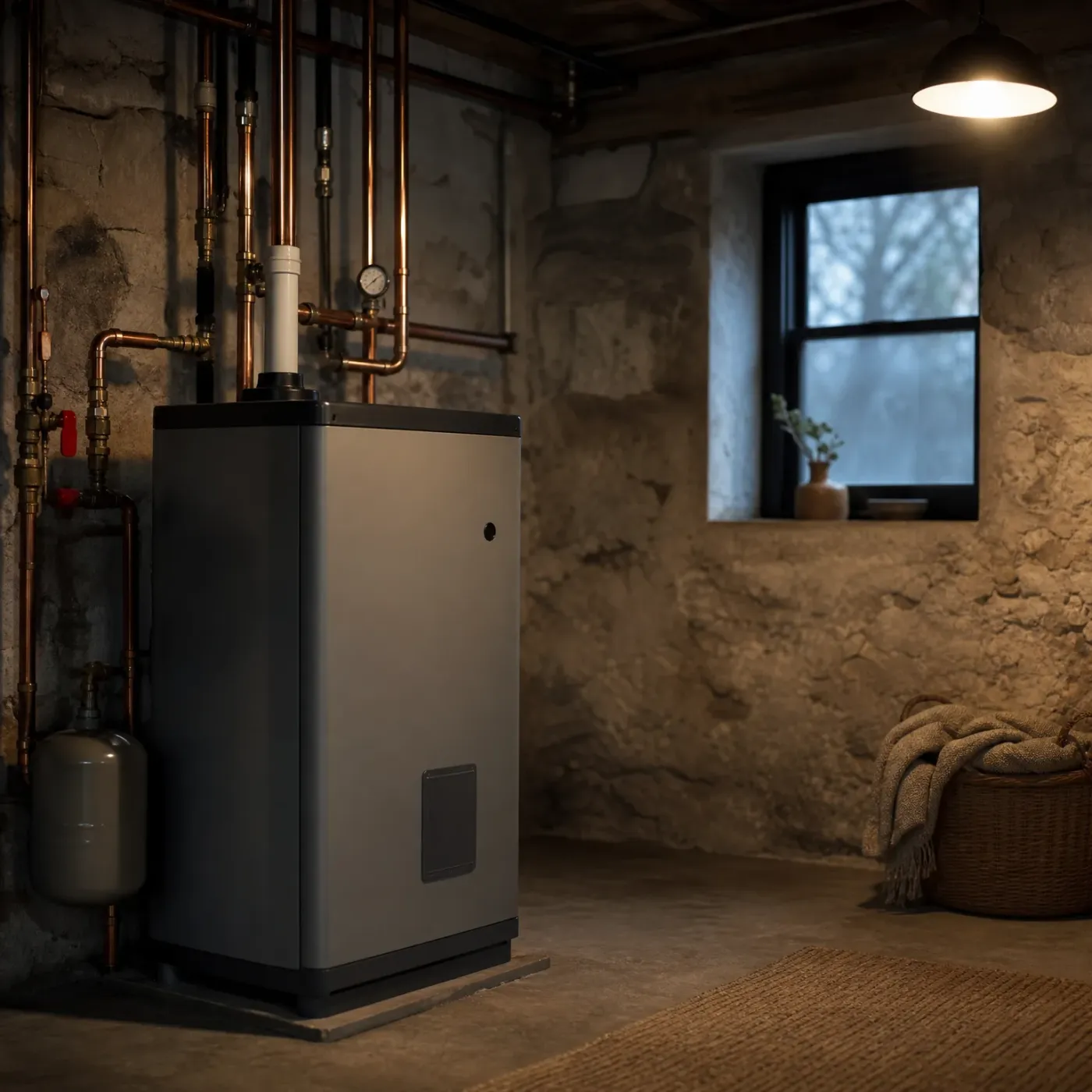
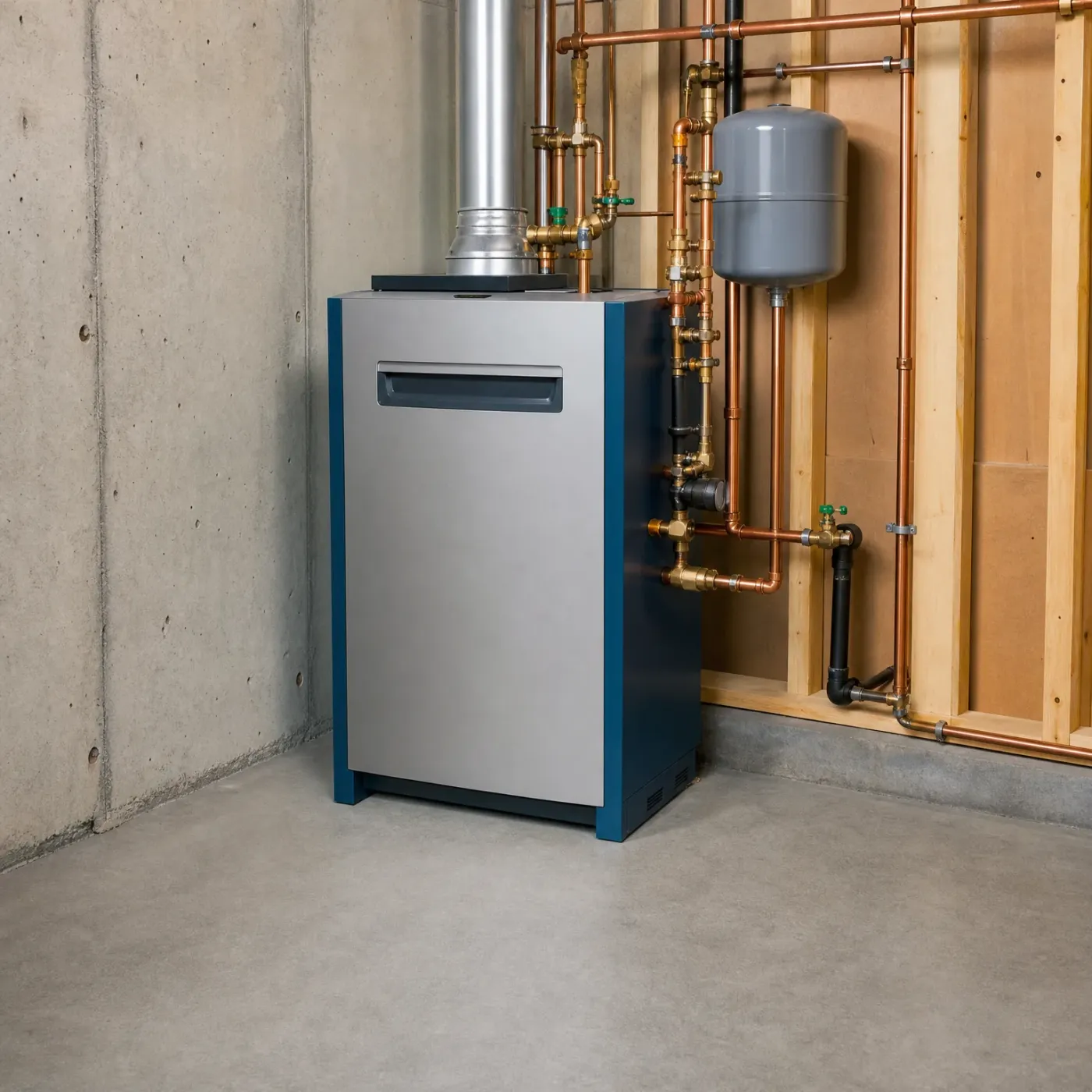
Copper lines and brass fittings run clean from the boiler to the expansion tank, each zone getting its share of heat. A tank like this recovers fast between draws because nothing stands between the burner and the water.
The system behind a shower that runs cold
This oil-fired unit sits on its pad with the same piping, the same flue rising up and out. From outside it looks fine. What decides whether you get hot water the whole way through is the aquastat and the tank floor, neither of which you can see from here.
A boiler that runs short has a reason, and it's findable
Running out of hot water isn't random. It's the aquastat telling the burner to stop too soon, sediment sitting between the flame and the water, or a tank that's worn past doing its job well. Each of those behaves differently, and each one is something a tech can check by hand.
Once you know which one it is, the fix stops being a guess. Send in your information and a licensed contractor serving your part of Oklahoma will reach out to look at your tank directly. From there, finding what's wrong with it is someone else's job, not yours.