Why your boiler relief valve is leaking in Oklahoma

Step 1 of 3: Equipment

Why is my boiler's relief valve leaking?

A few drops from the relief valve, or a steady drip into the pan underneath, is easy to notice and easy to put off. You caught it early, which is the right move, but you want to know what it actually means before deciding whether this is a small fix or a sign something bigger is going wrong with the boiler.

It's releasing pressure that's built up too high, or the valve itself has gone bad

The relief valve exists to open when pressure or temperature inside the boiler goes past a safe point. If it's dripping, either the pressure really is too high, often from a faulty expansion tank or a fill valve letting in too much water, or the valve has worn out and can't seal anymore even at normal pressure. Gas boilers in Oklahoma run most of the year once winter sets in, so the valve gets a lot of cycles, and that wear adds up over time. A valve that leaks under normal pressure needs replacing. One that leaks because pressure is genuinely too high points to a different part failing upstream, and that part needs attention too.

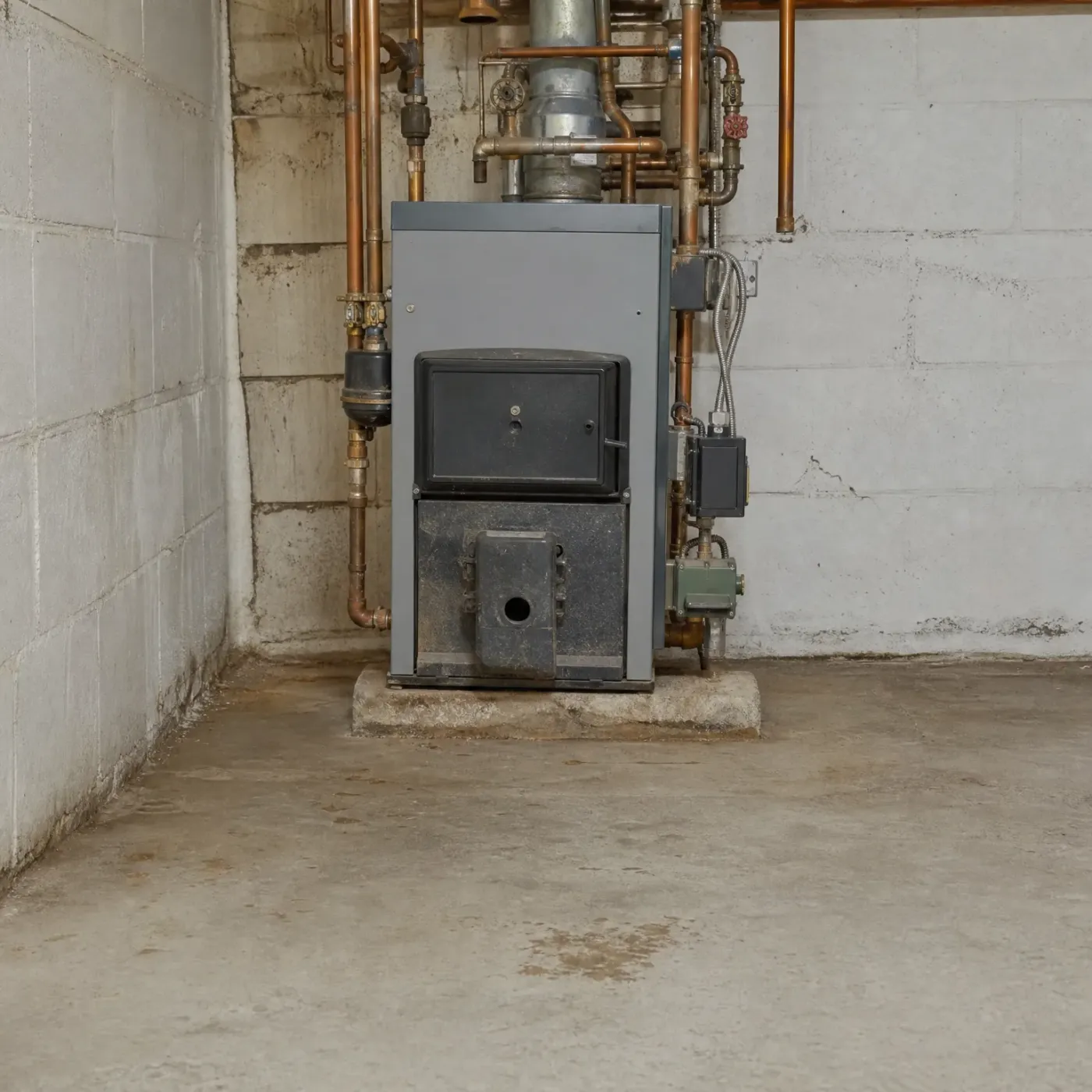
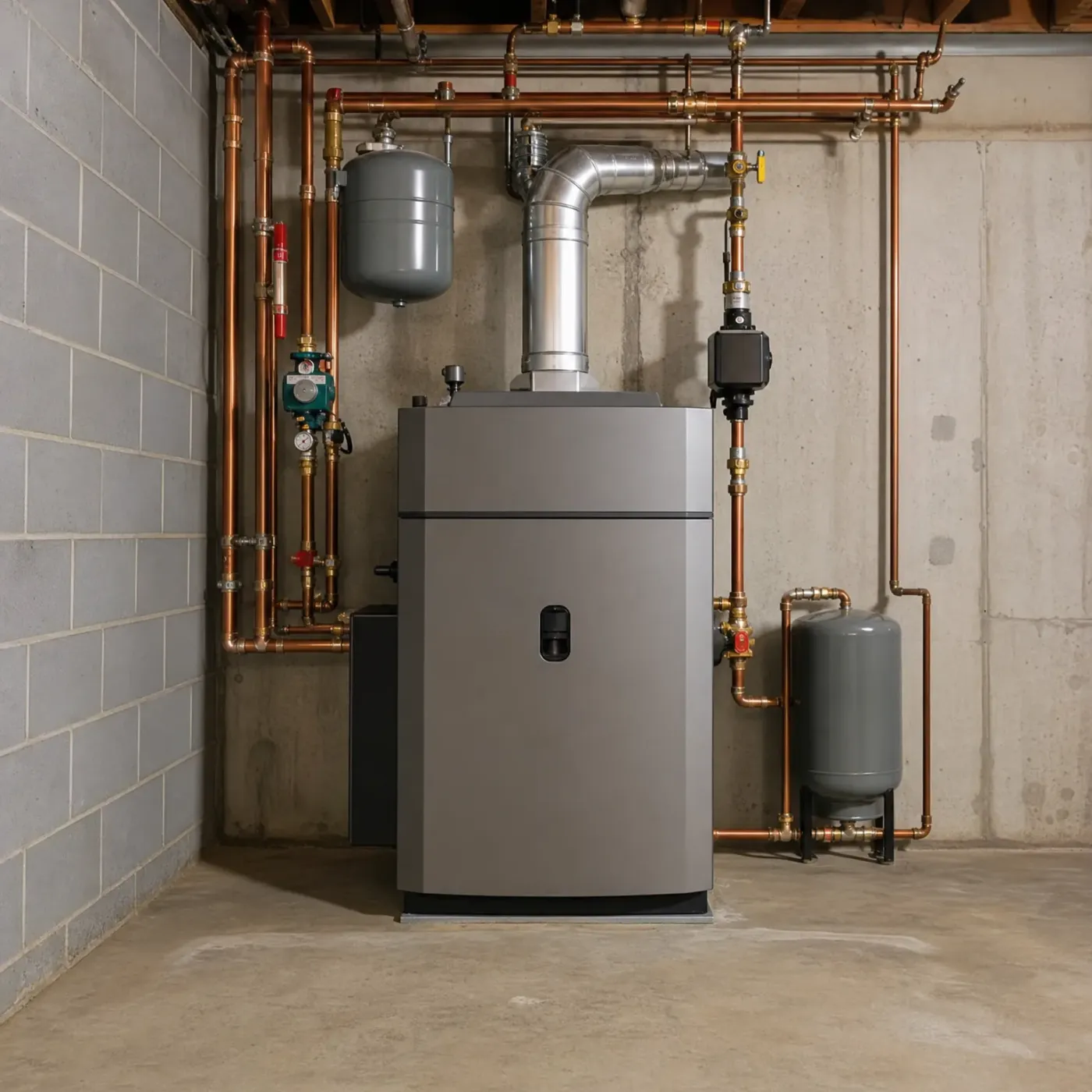
A gray boiler with a metal flue pipe stands in a basement against concrete and concrete-block walls, connected to copper piping, a circulator pump, and two gray expansion tanks.

Normal pressure, dry valve

When pressure and temperature stay in range, the relief valve stays shut and dry. The gauge reads where it should, the expansion tank holds its charge, and nothing drips into the pan. This is what the system looks like when it's doing its job.

A gray boiler on a concrete pad in a basement with painted concrete block walls, copper piping, a metal flue, and electrical control boxes.

Pressure climbing, valve weeping

A valve that drips has already told you pressure or temperature went past what it's rated for, or the valve itself is worn and won't seal anymore. Left alone, a few drops can turn into a steady leak, and the cause behind it doesn't fix itself.

What are you noticing around the boiler right now

You probably saw a few drops on top of the valve, or a small puddle in the pan underneath it. Sometimes there's a faint mineral smell, or a crust of white or rust-colored residue where water dried around the fitting. The pressure gauge might sit higher than usual, or you noticed the drip starts after the boiler's been running a while and stops once it cools. None of that means the valve itself is bad. It usually means the valve is doing its job, letting out pressure or water that built up somewhere else in the system. Left alone, that steady drip can waste water, corrode the fitting it sits in, and eventually wear the valve out so it won't reseal, which turns a small drip into one that won't stop.

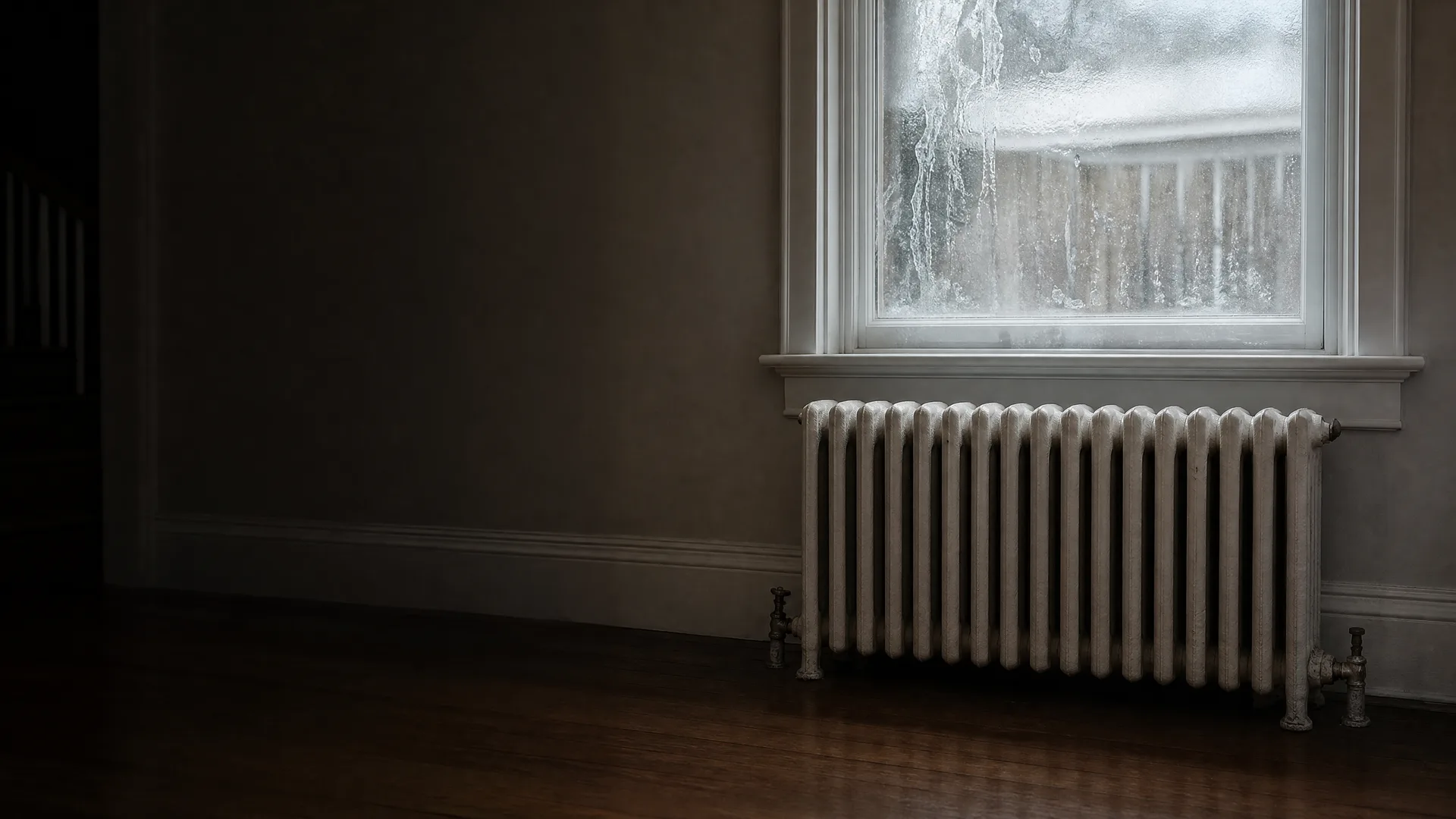
A white cast-iron column radiator with valves at each end sits beneath a frosted, condensation-covered window in a dim room with dark wood flooring and gray walls.

The radiator under the window has ice feathered across the inside of the glass, the kind that forms when a January night drops hard and stays there. You're on the floor in front of it in a robe, hand flat on the cast iron, waiting to feel heat come up through it. It's warm at the bottom, barely warm at the top. Behind you the boiler is running, you can hear it, and when you go check on it there's a thin line of water down the side of the tank, dried white at the edges, wet and dark near the valve. The pan underneath has maybe half an inch in it. Outside it's still dark, still Oklahoma-cold, and the thermostat hasn't moved in ten minutes.

Winter nights average 30°F statewide

On a 30°F night, your boiler runs long to keep the house warm, and pressure climbs higher than it does on a mild evening. That's when a relief valve already on the edge starts to weep. A valve holding fine in October can start dripping once nights settle into the 30s.

NOAA nClimDiv 1991-2020 county normals weighted by homes

The relief valve is set to open at 30 psi, a point your boiler should never reach if the expansion tank and the pressure-reducing valve are doing their job.

So a valve that opens at normal operating pressure isn't faulty on its own. It's responding correctly to pressure that's already too high somewhere upstream.

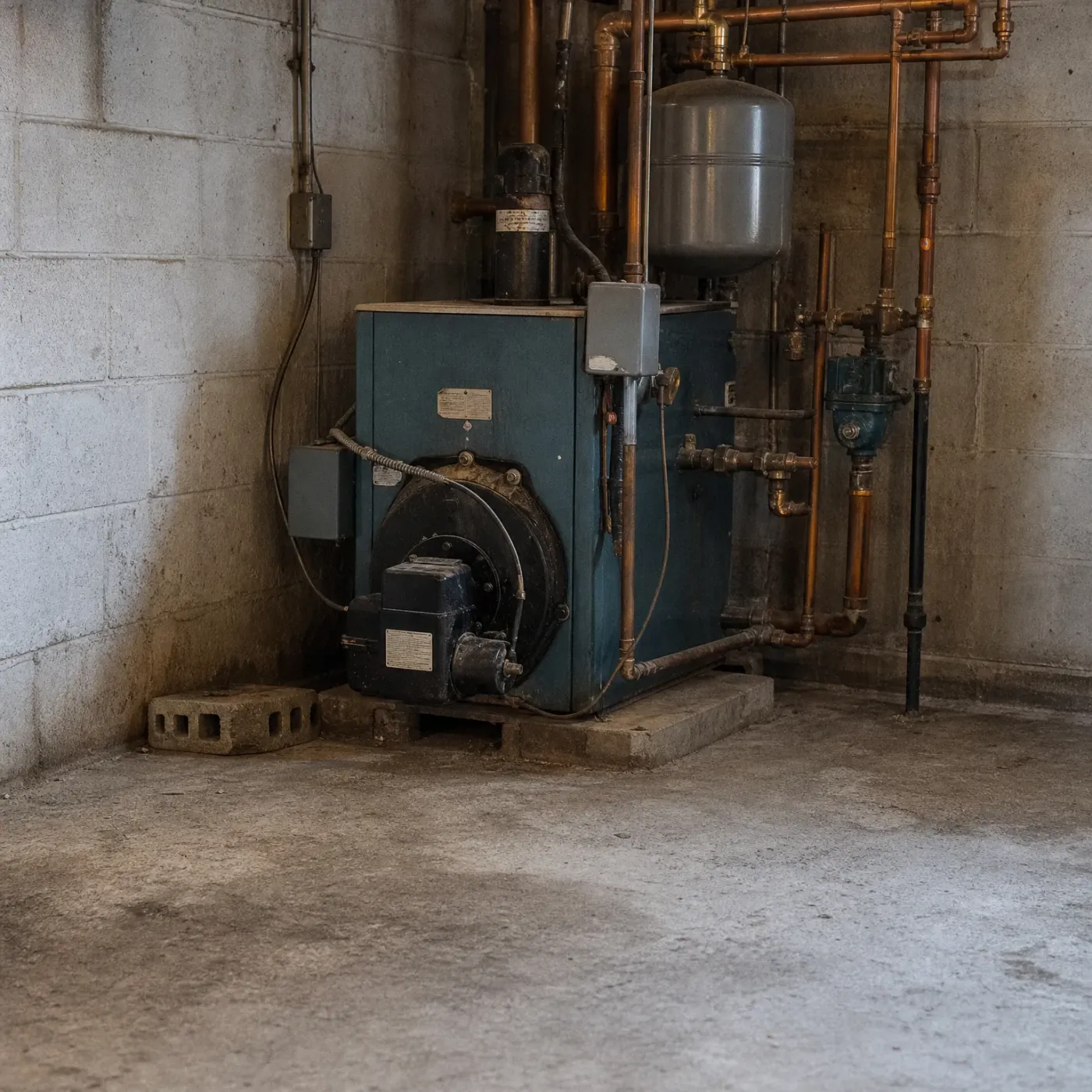
A blue oil-fired boiler with a burner unit sits on a concrete pad in a basement corner, with copper piping, valves and a gray expansion tank overhead against concrete block walls.
Before you get your boiler repair
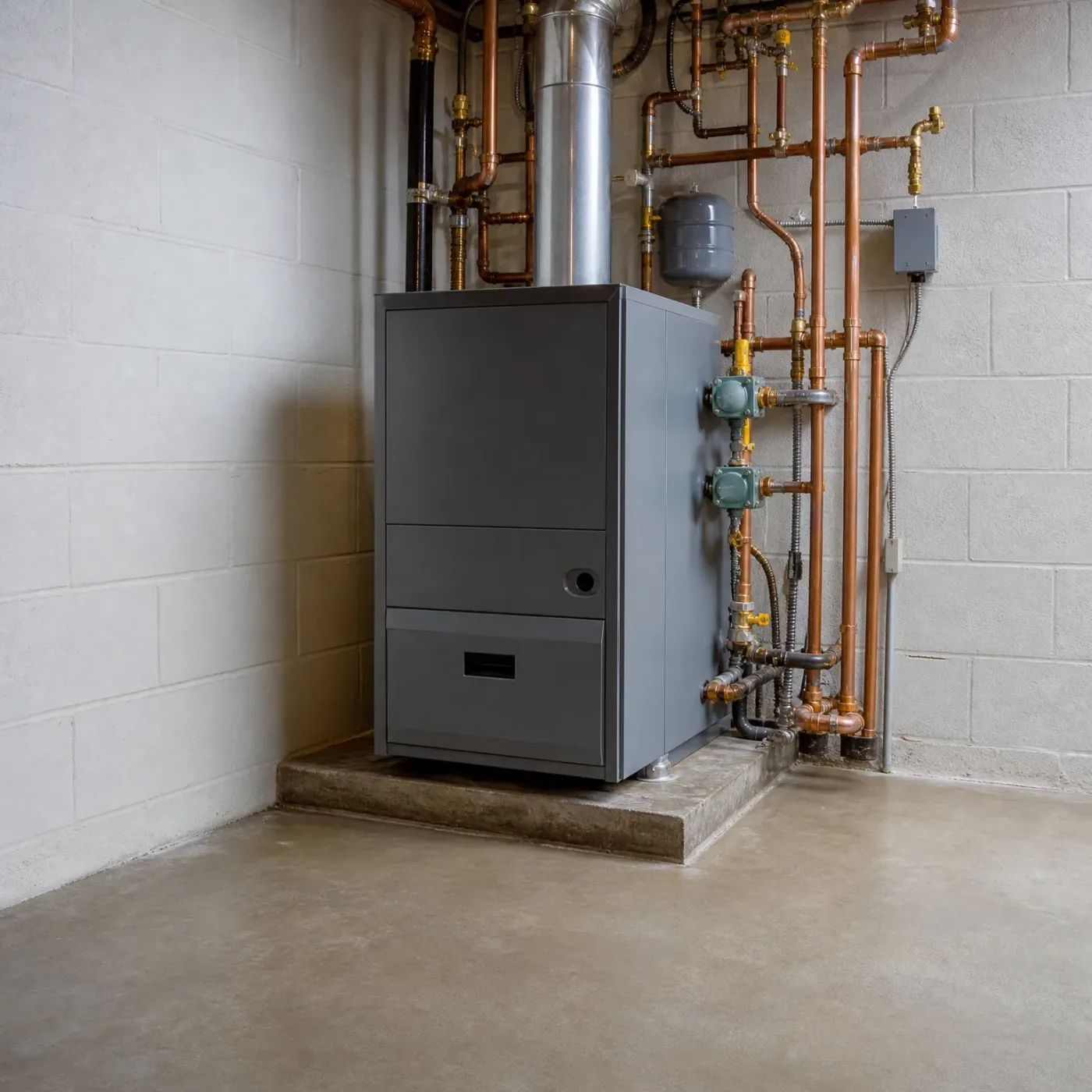
A gray boiler unit on a concrete pad in a basement corner, connected to copper piping, valves and a metal flue against painted concrete block walls.
After you get your boiler repair

Hand off the search today

Skip searching for a boiler pro and answer a few questions instead.

Sending the form costs nothing.

Leave it dripping

The valve keeps doing its job, which means the pressure keeps finding its way out through the top of the tank instead of somewhere worse. But a valve that's opened once opens easier the next time, since the seat doesn't always seat back down clean. Mineral residue builds where the water dries, and that buildup is what eventually keeps the valve from closing all the way. What started as a few drops after a cold night can turn into a slow drip that never fully stops. The pan underneath isn't rated to catch that forever, and the floor under it isn't either. Left alone, the real failure isn't the valve itself. It's whatever let the pressure get high enough to need it, still sitting there unaddressed.

Have it looked at

A technician can tell you fast whether the valve is bad or whether it's doing exactly what it's supposed to do. If the expansion tank has lost its charge or the pressure-reducing valve is letting too much in, the valve gets replaced along with whatever's actually driving the pressure up. If the valve itself is just worn from however many times it's opened, swapping it is quick and the dripping stops for good. Either way you get an answer instead of a guess, and you stop watching the pan every morning before you've had coffee. The part that's gone once someone's out there looking at it is the not knowing, not the work itself.

A smiling man in a navy long-sleeve shirt sits at a wooden table in a kitchen and dining area, with a ceramic mug, a potted plant, and a sliding glass door behind him.
A smiling bearded man in a green henley shirt stands at a kitchen island with a gray mug, looking off to the side, with a dining area and shelves blurred behind him.
A smiling bearded man in a navy sweater sits at a white kitchen island with a ceramic mug, with open shelves, potted plants and a range hood behind him.
A smiling man in a dark olive long-sleeve shirt sits in a kitchen beside a counter with a dark mug, with a dining table, sideboard and hallway visible in the blurred background.

What the drip is telling you

  • A leaking relief valve is almost always responding to pressure or heat, not failing on its own for no reason.
  • The usual causes are a waterlogged expansion tank, a pressure-reducing valve set too high, or a seat worn from opening before.
  • Cold nights in the 20s and 30s make a borderline valve drip more, since the boiler runs longer and pressure climbs higher.
  • A valve that has opened once seats back down less tightly, so small drips tend to come back and worsen over time.
  • Oklahoma's cheap power doesn't offset what a running boiler does to pressure on a hard winter night.
  • Knowing which part is behind the drip, the tank, the reducing valve, or the valve itself, decides what gets fixed.

A relief valve that drips is doing exactly what it was built to do. It opens when pressure or temperature inside the boiler goes past what's safe, and it closes again once that pressure has somewhere else to go. The drip itself isn't the problem. It's a sign pointing at one of three places: a waterlogged expansion tank that can't absorb pressure the way it should, a pressure-reducing valve set higher than it needs to be, or a seat inside the relief valve itself that's worn from opening before and doesn't close as tight as it used to. Which one it is changes what gets fixed, and guessing wrong means paying for a repair that doesn't stop the drip.

Cold nights make this worse, not because the boiler is working harder than it should, but because longer run times push pressure higher on a system already close to its limit. A valve that holds fine through a mild October can start weeping once temperatures drop into the 20s and 30s and stay there. And a valve that's opened once rarely seats back down as well as it did the first time, so a drip that seems small now tends to come back more often, and worse, as the season goes on.

None of this is something to watch and wait on. The valve is doing its job. The question is why it's having to.

A smiling man in a dark blue T-shirt sits on a light gray sofa in a living room with a wooden shelf and window behind him, with a laptop edge visible in the foreground.
A bearded man in a plaid flannel shirt stands indoors looking out a frost-covered window, with a steaming dark blue mug on the wooden sill and snow-covered trees outside.

Stop chasing a boiler pro

A leaking relief valve won't fix itself, and the longer it weeps, the more the seat wears and the worse the drip gets. Instead of searching contractors, calling around, and explaining the same drip and puddle story three different times, send this once. You get matched with a licensed plumber who handles boilers, and the search is off your plate. They'll check the pressure, the expansion tank, and the valve itself, and tell you which one's actually behind it.

Hand it off

One form replaces the calls you'd make to find a boiler pro.

You're not committing to anything by asking.