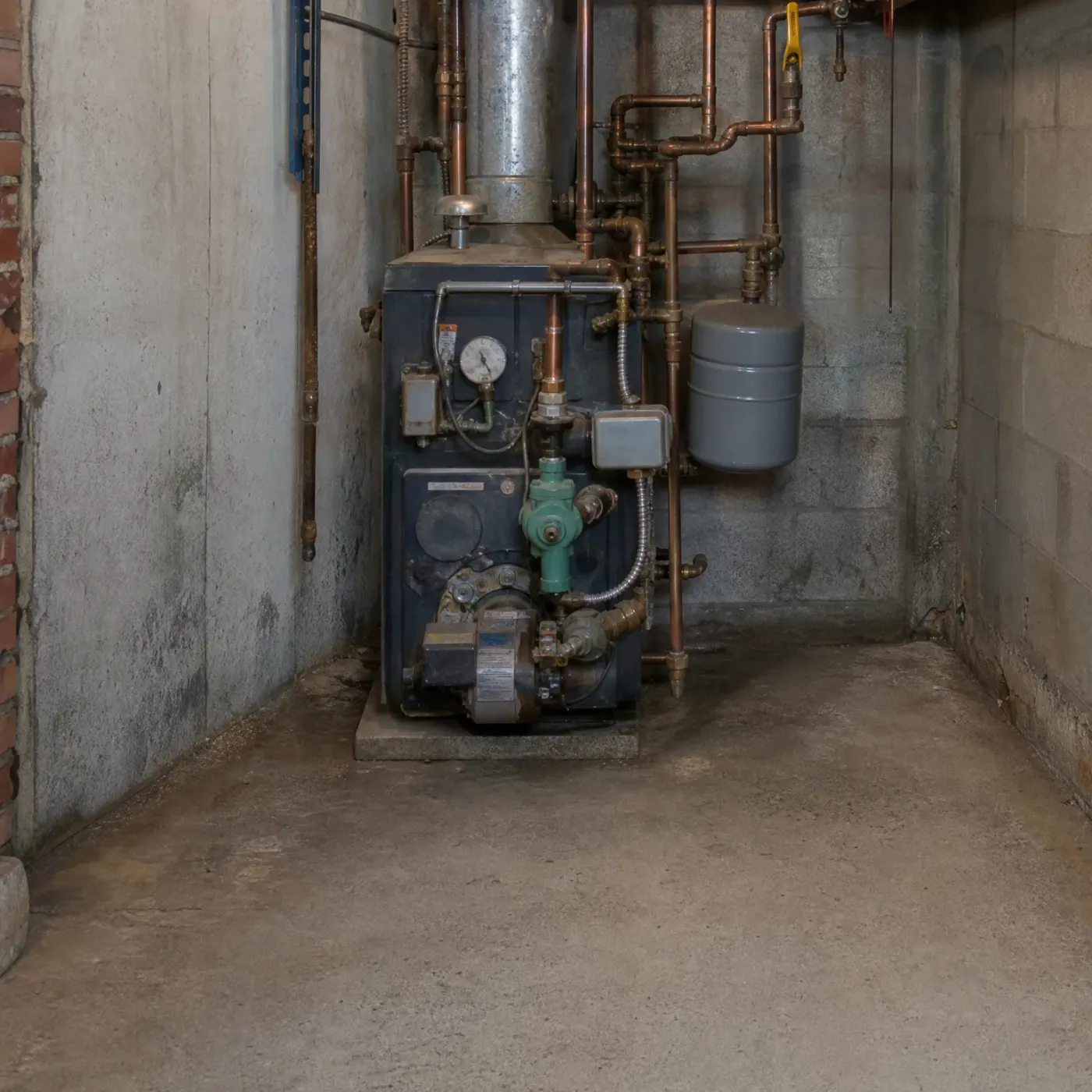
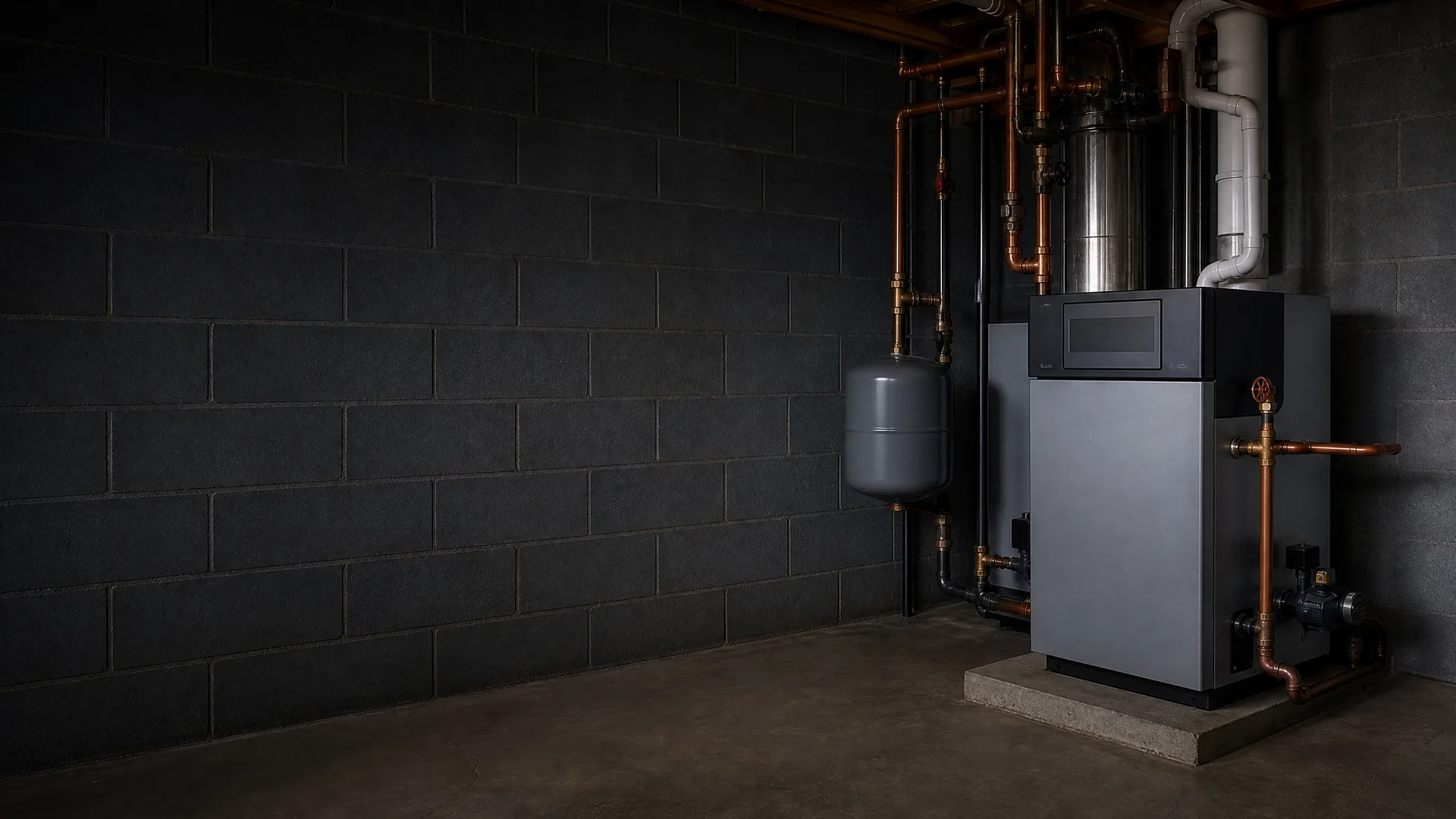
A dark grey floor-standing boiler with a metal flue stands against a concrete basement wall, surrounded by copper pipework, valves and a wall-mounted expansion tank, with ivy and a shelving unit at right.

Hand off the boiler problem

Why your boiler makes a banging noise in Oklahoma

Banging in a boiler almost always comes down to one thing: water turning to steam inside a part that's caked with scale or sediment, then collapsing with a knock you can hear through the house. This page walks through why that happens and what it means for your system. Once you send the request, finding someone to look at it is off your plate.

Hand it off

That banging is usually kettling. Sediment settles at the bottom of the boiler's heat exchanger, and when the burner fires, water trapped under that layer heats faster than it can circulate. It flashes to steam, then collapses back into water as it mixes with the cooler water around it, and that collapse is what you hear as a bang or a series of knocks. Oklahoma's water tends to run hard, and hard water leaves more mineral behind every time the boiler heats a tank of it, so the buildup happens faster here than it would with softer water. The noise usually starts quiet, a tick or two on cold mornings, and gets louder over weeks as more scale builds up. It will not fix itself. Left alone, the heat exchanger keeps overheating in that one spot, and that is what cracks it.

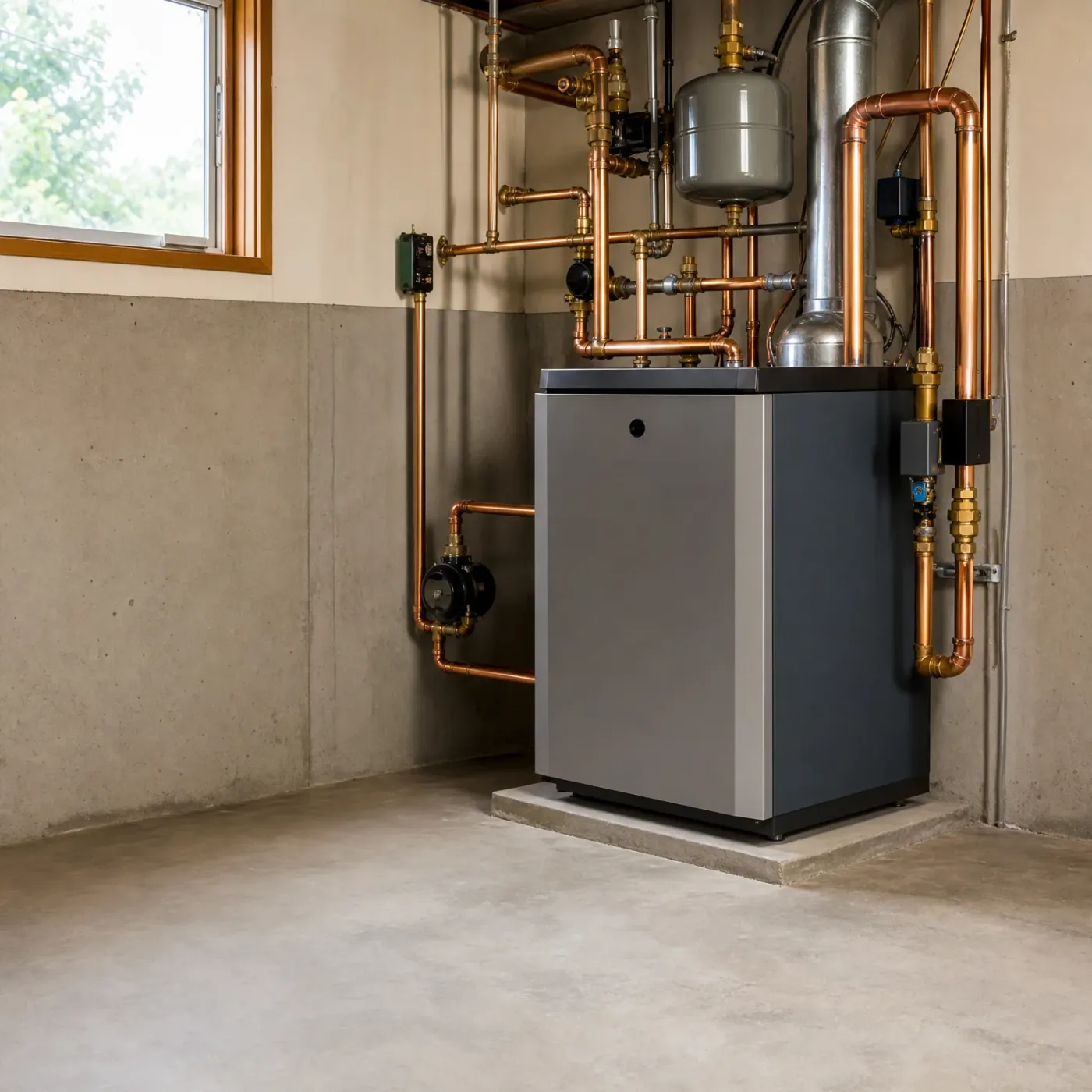
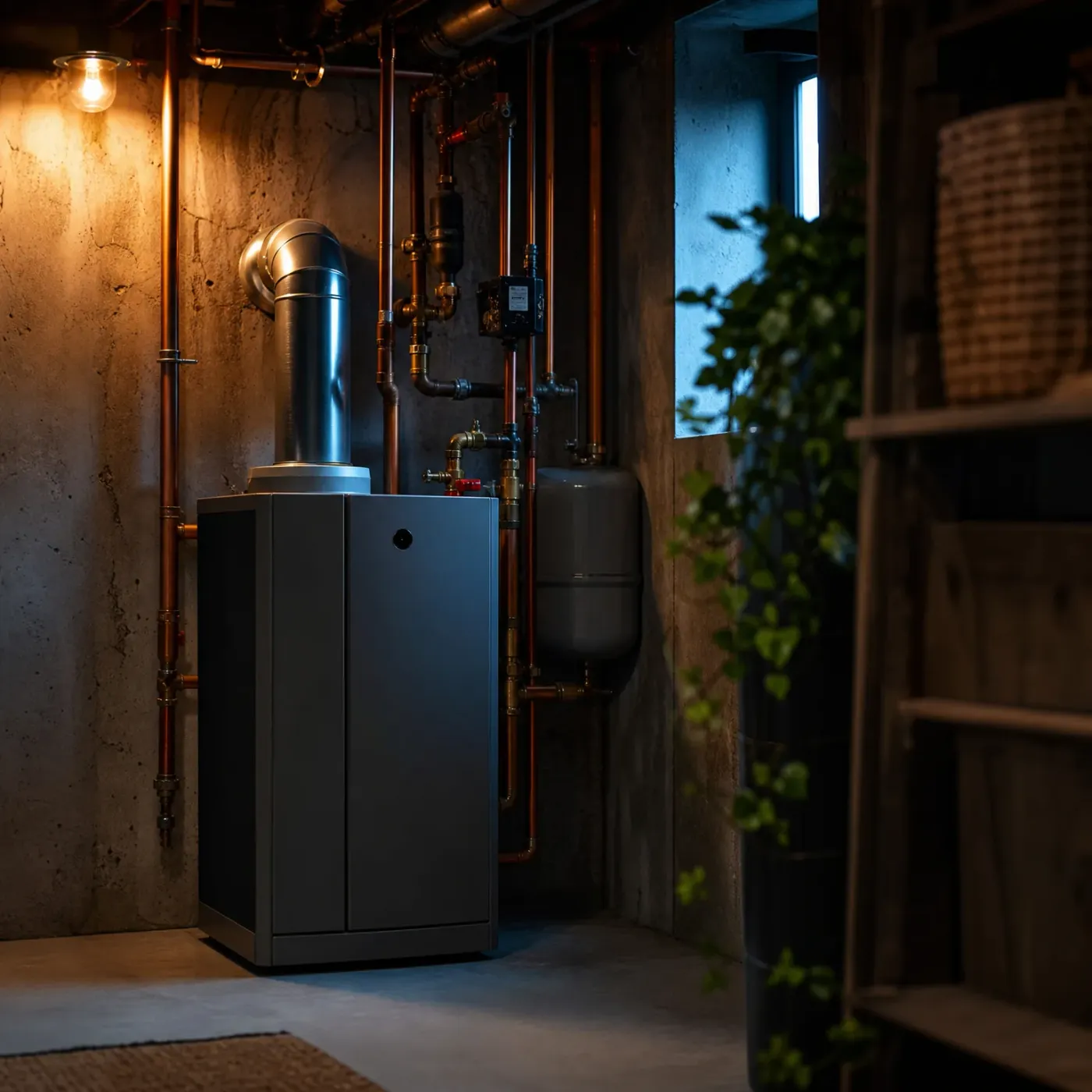
A gray boiler on a concrete pad in a basement, connected to copper piping, valves, pumps and a gray expansion tank, with a concrete wall on the left and a brick wall on the right.

Quiet operation

A clean heat exchanger lets water move freely past the burner, so heat leaves as fast as it comes in. No pockets of trapped water, no steam, no knock. The pumps and fittings keep doing their job without the boiler ever raising its voice.

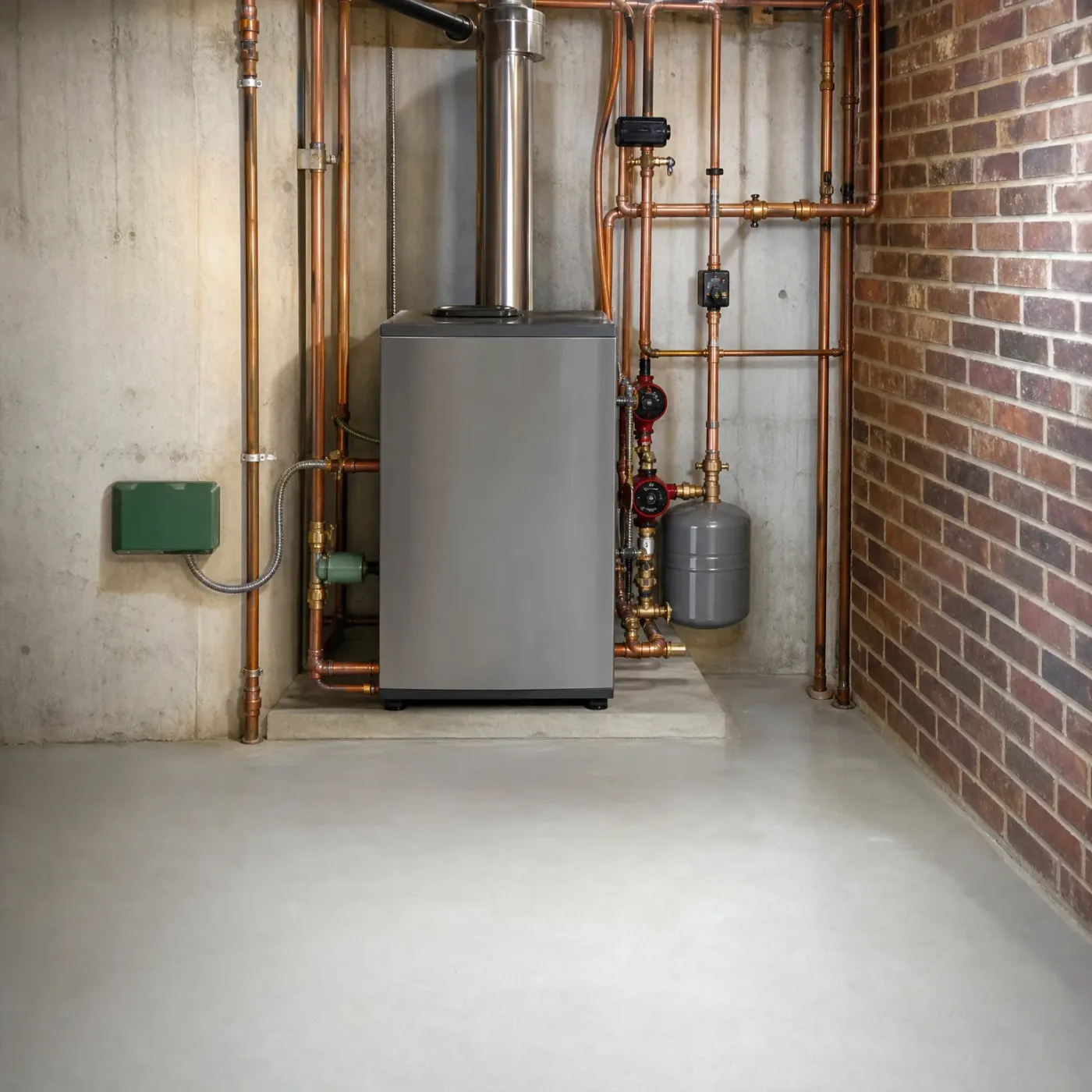
A dark cast-iron boiler with copper piping, pressure gauge, and a gray expansion tank sits on a concrete pad in a basement corner with concrete block and brick walls.

Scale buildup underneath

Years of sediment settle at the bottom of an older boiler like this one, right where the flame hits hardest. Water caught under that layer turns to steam before it can circulate out, and the bang you hear is that steam collapsing back into water.

Is that banging getting louder every time the heat kicks on

You hear it when the burner first fires, a knock or a series of bangs from somewhere behind the boiler, then it settles down once the system's been running a few minutes. Some homes get a rumble instead, almost like a kettle starting to boil. Either way it tends to get worse week over week, not better. Left alone, that trapped steam is hammering the heat exchanger every time the boiler cycles, and the stress on the metal adds up. A heat exchanger that fails means no heat at all, and in an Oklahoma winter that's not something you want to find out about at midnight.

A man with grey hair and stubble in a dark sweater sits on a grey sofa indoors, looking off to the side, with a potted plant and a sunlit window behind him.
A man with gray hair, a beard and glasses, wearing a dark green sweater, sits on a gray sofa in a sunlit living room with a potted plant, table lamp and wooden sideboard behind him.
A middle-aged man with graying hair and a short beard sits on a blue sofa in a living room, looking toward a window, with a bookshelf, lamp and framed picture in the background.
A man with graying curly hair and a dark green sweater sits on a gray sofa in a sunlit living room, looking off to the side, with a framed picture, shelving, an armchair and a window with sheer curtains behind him.
A gray floor-standing boiler on a concrete pad in a basement corner, connected to copper piping, brass valves, a circulator pump, an expansion tank, and a metal flue, with a window at upper left.
Clean waterways mean the burner's heat moves straight into the pipes, so the boiler stays silent from startup to shutoff.
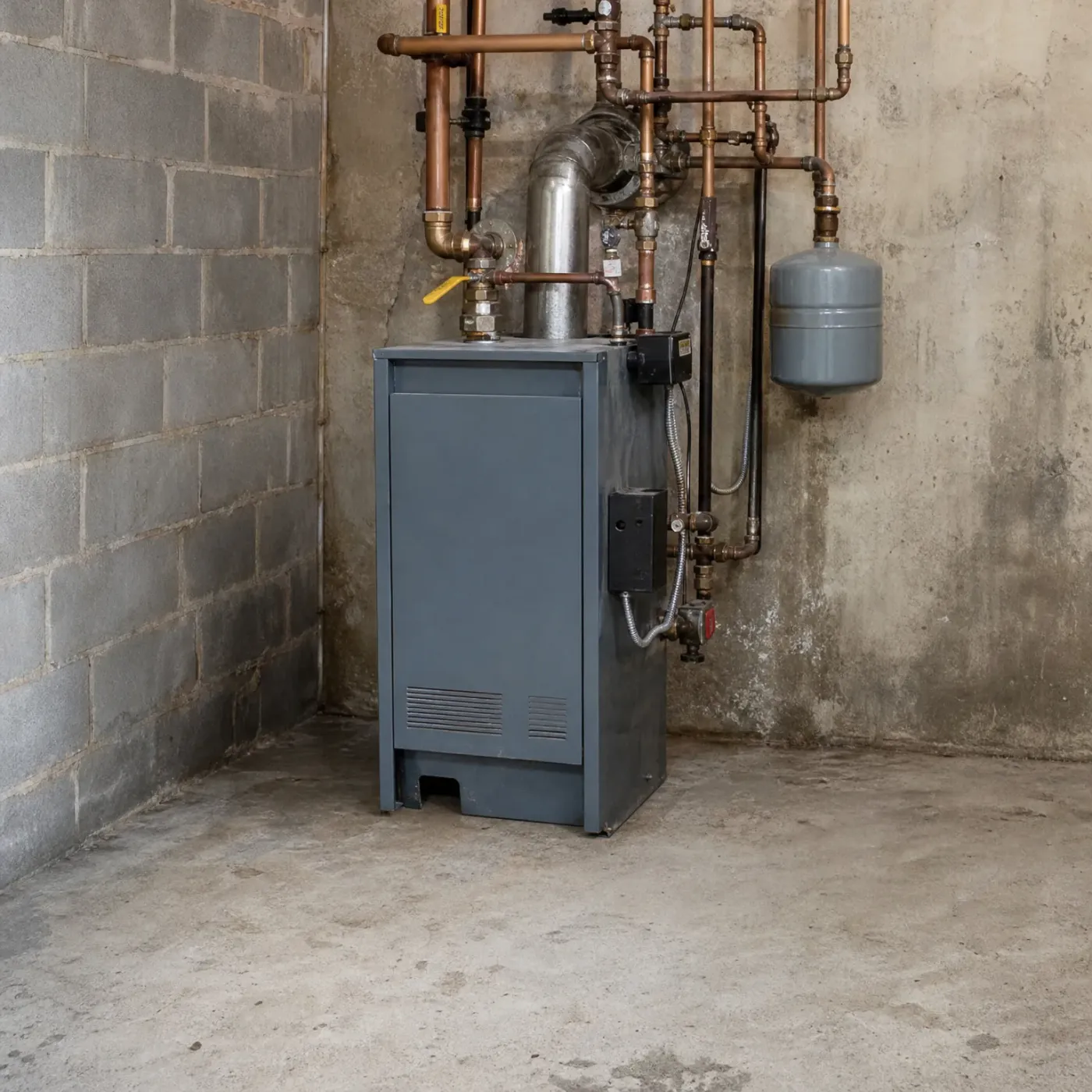
A gray floor-standing boiler in a basement corner with copper and black piping above it, a flue vent, and a gray expansion tank mounted on the concrete wall beside a concrete block wall.
Scale built up around the heat exchanger traps water against the flame, and that's the knock you hear when it fires.

The heat exchanger sits low in the boiler, and that's where sediment lands first, right where the flame hits hardest. Once scale builds up there, a thin layer of water gets trapped between the metal and the mineral deposit. That water sits closer to the flame than anything else in the system, so it heats up fast, faster than the water still moving freely through the rest of the boiler. It turns to steam almost instantly, and the second that steam pocket touches cooler water flowing past, it collapses. That collapse is the bang you hear. It isn't a one-time event. It happens again each time the burner fires and more water gets caught under the layer. If your water here runs hard, which is common across Oklahoma, that scale builds faster than it would with softer water, and a boiler that hasn't had the heat exchanger flushed in years is the one most likely to be making this noise now.

Where the noise comes from

  • Sediment settles at the bottom of the boiler's heat exchanger because that's the lowest point in the waterways and the first metal the flame touches.
  • The layer traps a thin film of water right against the hottest surface, so that water heats far faster than the water circulating around it.
  • Trapped water flashes to steam in a fraction of a second, and the bubble collapses the moment it touches the cooler water moving past it.
  • That collapse is what you hear as a bang, and it repeats every time fresh water gets trapped under the scale while the burner runs.
  • Hard water feeding the system leaves more of this mineral buildup behind than softer water does, so the scale layer thickens over time.
  • A boiler that's gone years without the heat exchanger being flushed will usually get louder, since the layer has more surface to trap water under.
A woman with shoulder-length brown hair wearing a beige knit cardigan sits in a gray upholstered armchair near a window, looking off to the side with a slight smile, with bookshelves blurred in the background.
A woman and a sleeping child wrapped together in a cream knitted blanket on a couch, with a potted plant, framed photo and lit lamp in the background.

Send one request and you're done looking

Only one pro gets your request, so you hear from one company.

No fee to send it, and nothing to sign.

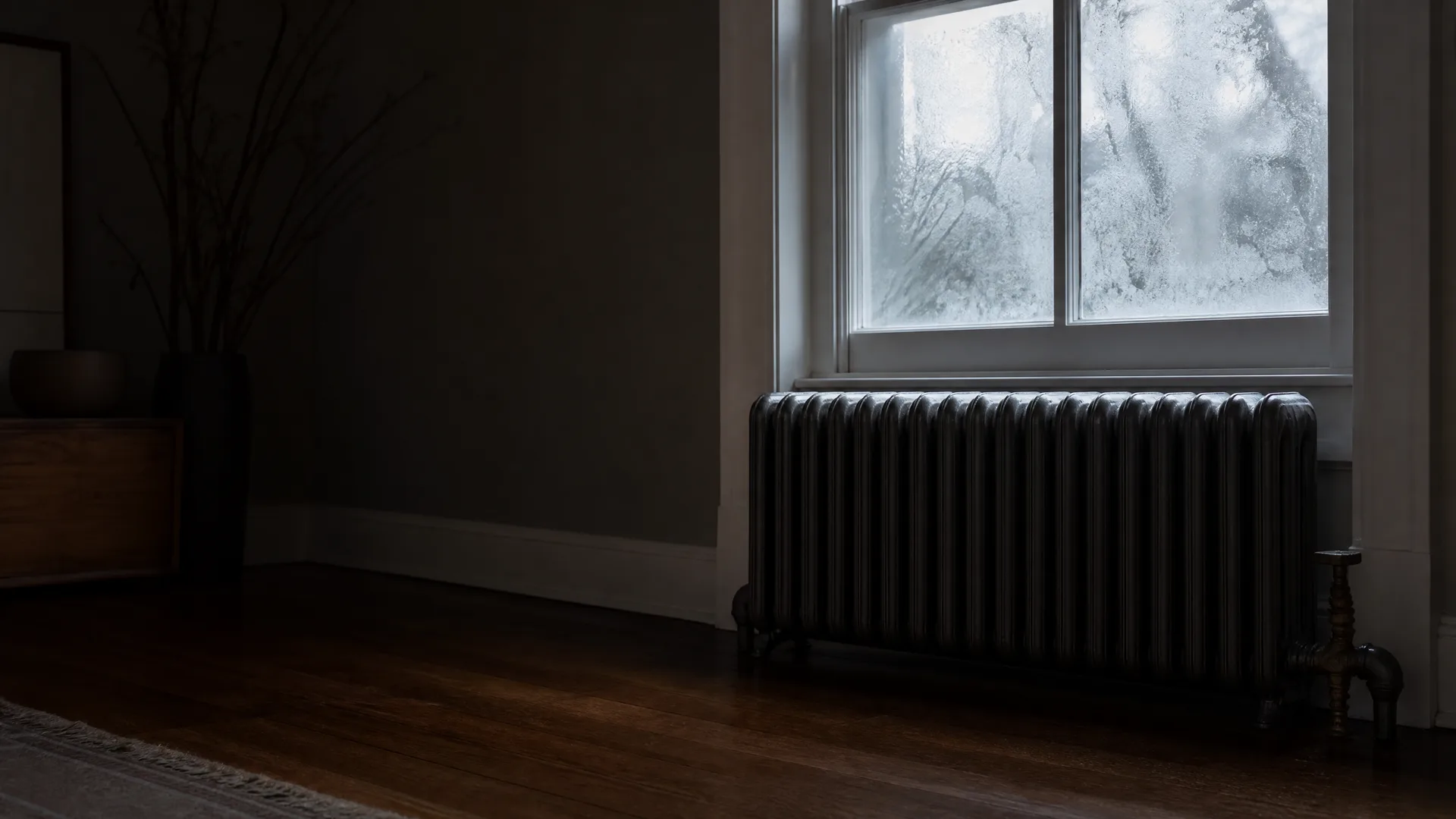
A cast-iron column radiator stands beneath a frosted window in a dim room with dark walls, a wood floor, and a vase of bare branches on a low cabinet at left.

It's early, still dark outside, and the radiator under the living room window has frost built up on the inside of the glass above it. The boiler kicks on down in the utility room and within a few seconds you hear it, a hard knock that comes up through the floor before the house has even warmed. You stand there in a coat you haven't taken off yet, waiting to see if it settles down like it usually does. It does, after a minute or so, and the radiator starts ticking as it heats. The glass stays iced over until the room catches up.
Winter nights average 30°F statewide

On a 30°F night your boiler is firing often and running long to hold the house. That's more hours for water to sit against a scaled heat exchanger and flash to steam, so a unit that bangs tends to do it most on the coldest nights, not the mild ones.

NOAA nClimDiv 1991-2020 county normals weighted by homes

Kettling, explained and handled

  • The knock you hear is kettling, water flashing to steam against a scaled heat exchanger and collapsing back with a bang.
  • It shows up most on the coldest nights, when the burner fires often and runs long to keep the house warm.
  • A boiler running quiet has clean waterways, nothing trapping water against the flame long enough to turn it to steam.
  • Clearing the scale means draining and flushing the heat exchanger, work a boiler tech who services these units all winter has done many times over.
  • A local, licensed contractor who knows which Oklahoma boilers tend to scale up can tell you on the spot whether a flush fixes it or something else is wrong.
  • Sending one request means one contractor calls, not a handful of companies competing for the job.

The bang comes from scale holding water against the heat exchanger long enough to turn it to steam, and it gets worse the harder your boiler works, which in Oklahoma means the coldest nights of the year. That's the whole story. It isn't the pipes settling or the ductwork, and it isn't something that fixes itself once the weather breaks. A boiler with clean waterways doesn't make this noise at all, because there's nothing trapping water against the flame long enough to flash it to steam.

Clearing it out means draining the system and flushing the heat exchanger, work that takes the right equipment and some patience with an old boiler that hasn't been flushed in years. It's also work that looks different depending on what's actually scaled, how bad it is, and whether something else is going on underneath the noise. That's where a local contractor matters more than the flush itself. Someone who services boilers around Oklahoma all winter has seen which models scale up fast and which fittings tend to fail once the sediment's cleared, and can tell you on the spot whether a flush is the whole fix or just the first step.

Send one request and one contractor calls, the one who already knows this equipment, not a stack of companies bidding for the job. That's what moves you from a boiler that bangs every cold night to one that just runs.

A gray boiler unit with a control panel sits on a concrete pad in a basement room with dark concrete block walls, connected to copper and metal piping, a gray expansion tank, and an insulated flue.

Finding a pro stops being your job

Your request stays with one local pro.

Step 1 of 3: Equipment