Describe what your boiler is doing once, in one form.
A boiler that shuts off mid-cycle usually isn't failing all at once. Something is tripping a safety switch, and that switch is doing its job: low water pressure, a flame sensor that's lost its read, a pressure switch, an igniter wearing out. Gas heat is what most homes in Oklahoma run on, and a boiler kept up right should carry you through the cold months without drama. Short-cycling off every few minutes is it telling you something specific is wrong, not that it's tired.
Figuring out which part it is from your kitchen table is hard. Figuring out which contractor to call is its own chore on top of that. You could spend an evening searching, calling a few places, explaining the same thing three times over, waiting on quotes that land days apart while your house sits cold. That's the part that wastes your time, not the repair itself.
Submit a request here and that search ends. It goes to one contractor, licensed and working in Oklahoma, not a handful of companies competing for your callback. Someone who services boilers through the winter here knows which part usually goes first in this kind of weather and what a short-cycling unit is usually telling you before they've even seen it. You explain the problem once, to the person who's going to fix it.
Summers here get sticky enough that most of these systems sit idle half the year, which is its own reason a part can fail quietly and only show itself the first cold snap you lean on the boiler again. Power is cheap in Oklahoma, so the boiler is doing the heavy lifting on the gas side, and when it's cutting off early, that's heat you paid for and didn't get. Tell the contractor what it's doing. They'll tell you what's wrong.
A boiler that keeps shutting off is almost always tripping on purpose. Boilers have safety switches that cut the burner when something reads wrong, and a boiler cycling off and on is usually telling you one of them caught a problem before it got worse. Low water pressure is a common cause. So is a flame sensor that can no longer confirm the burner is lit, or a pressure switch stuck in the wrong position, or an igniter that's weakening and taking longer to catch each time. Each of these has a different fix, and guessing wrong means paying for a part that wasn't the problem. Since most Oklahoma homes heat with gas, a boiler that won't stay running leaves you without a backup on a cold night. Figuring out which switch is tripping, and why, takes someone checking pressure readings and flame signal with the right gauges, not a guess from across the room.
Explain it one time
Your request stays with one local pro.
Answer a few questions instead of calling shop after shop.
If the boiler restarts and holds a cycle, note what the display or light showed right before it tripped.
Low water pressure is something you can check yourself on the gauge, and topping it off sometimes gets you through the day.
A reset that doesn't hold, or that starts tripping again within the same day, means the switch caught something real.
This buys time if you're waiting on a cold snap to pass, but it doesn't tell you which part is failing.
Repeated resets on a flame sensor or igniter problem can wear the part out faster or leave you without heat overnight.
Get it looked at
A contractor who services boilers all winter can read the fault and go straight to the part instead of guessing.
Pressure switches, flame sensors and igniters fail in patterns a tech who sees this equipment every season recognizes fast.
You explain the problem once, to the person who's going to open the panel, instead of repeating it to several companies first.
One licensed, local contractor takes the job, so you're not fielding calls from a handful of outfits at once.
Gas safety switches exist to stop a real problem, and a tech confirms what tripped it instead of leaving it to reset itself again.
If the part is past resetting, you find out before a cold night in your part of Oklahoma leaves you without heat.
Running a normal cycle
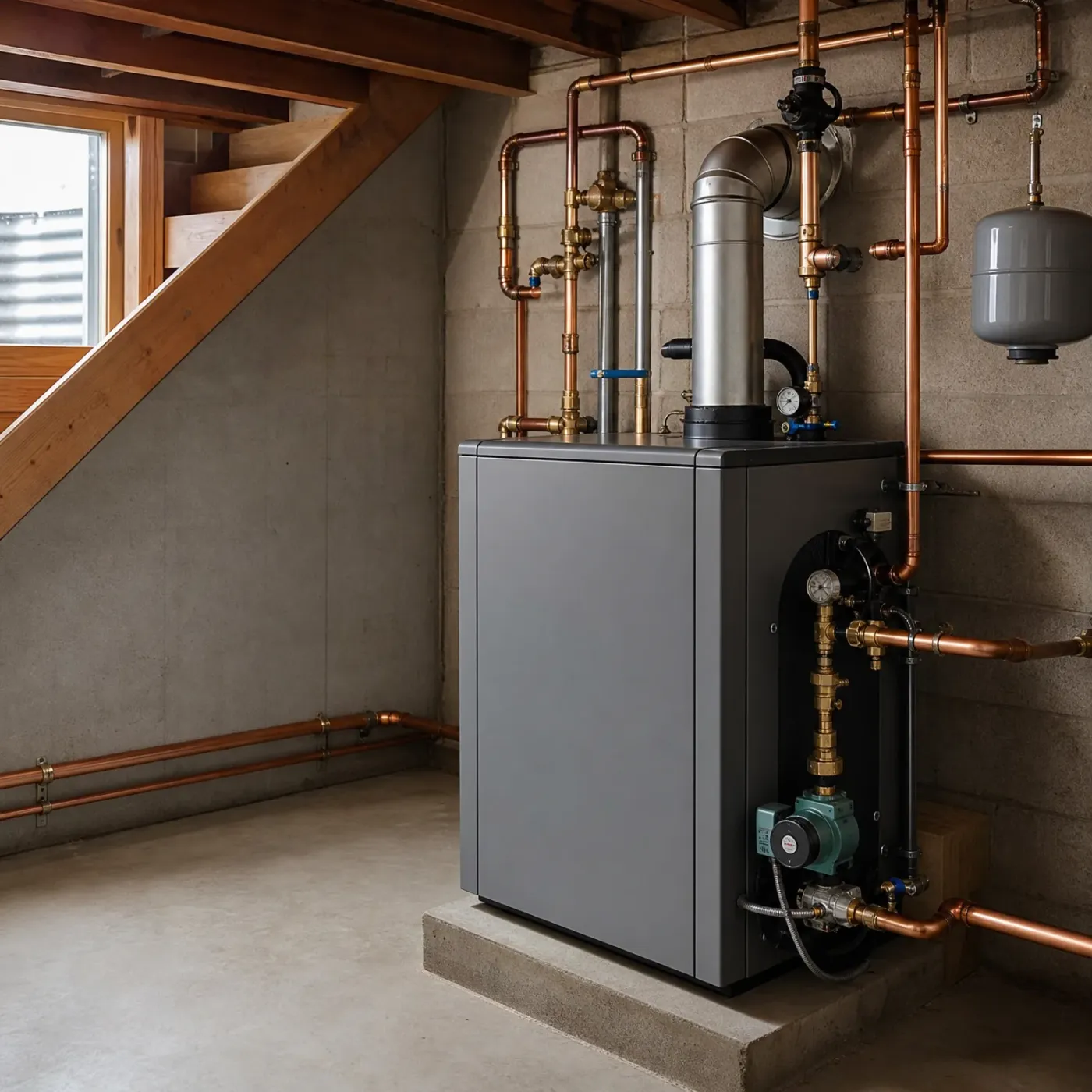
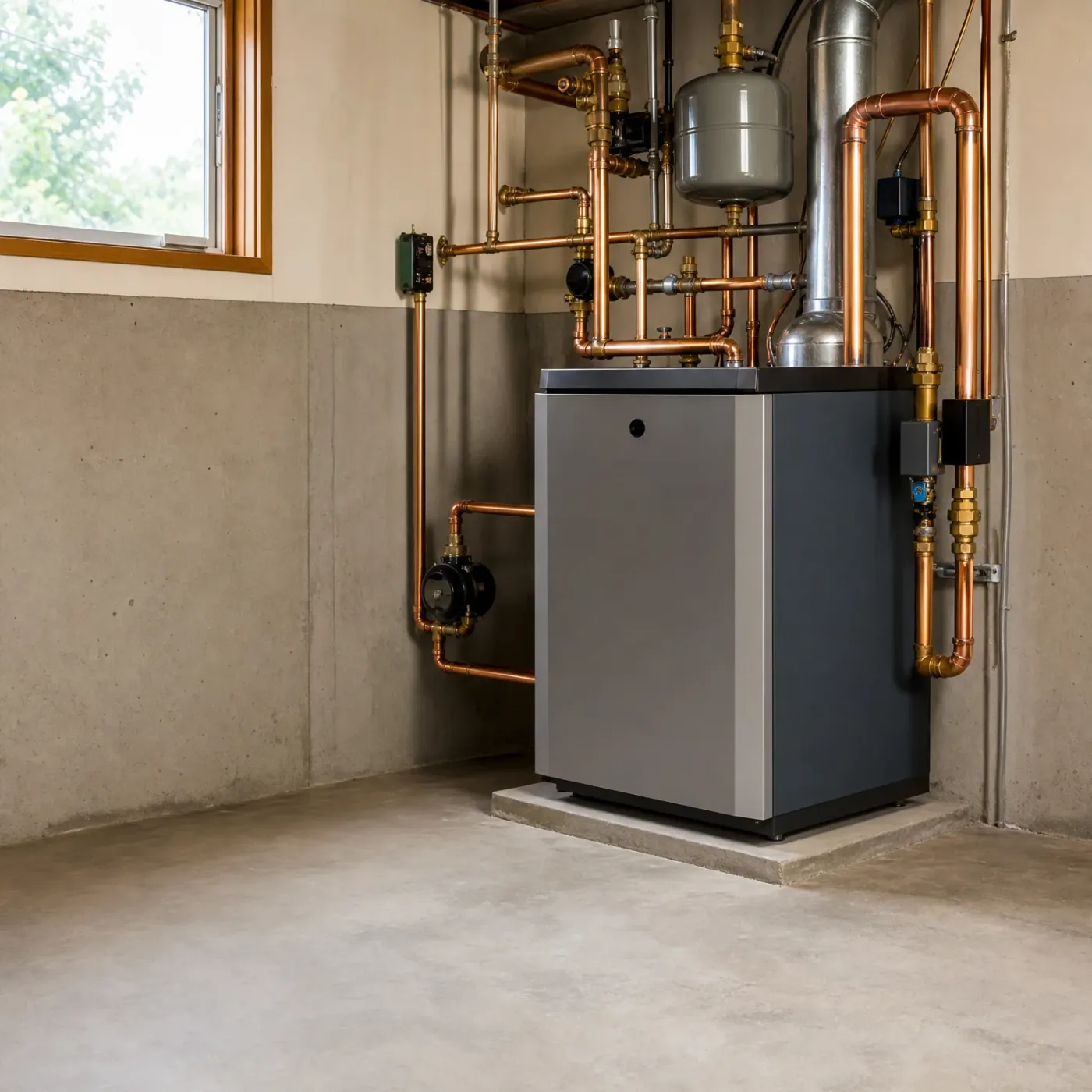
The burner fires, the circulator pump pushes water through the copper lines, and the boiler holds its pressure until the thermostat is satisfied. No short cycling, no lockout light, no smell of flue gas in the room. The expansion tank is doing its job quietly in the background.
Tripping on a safety switch
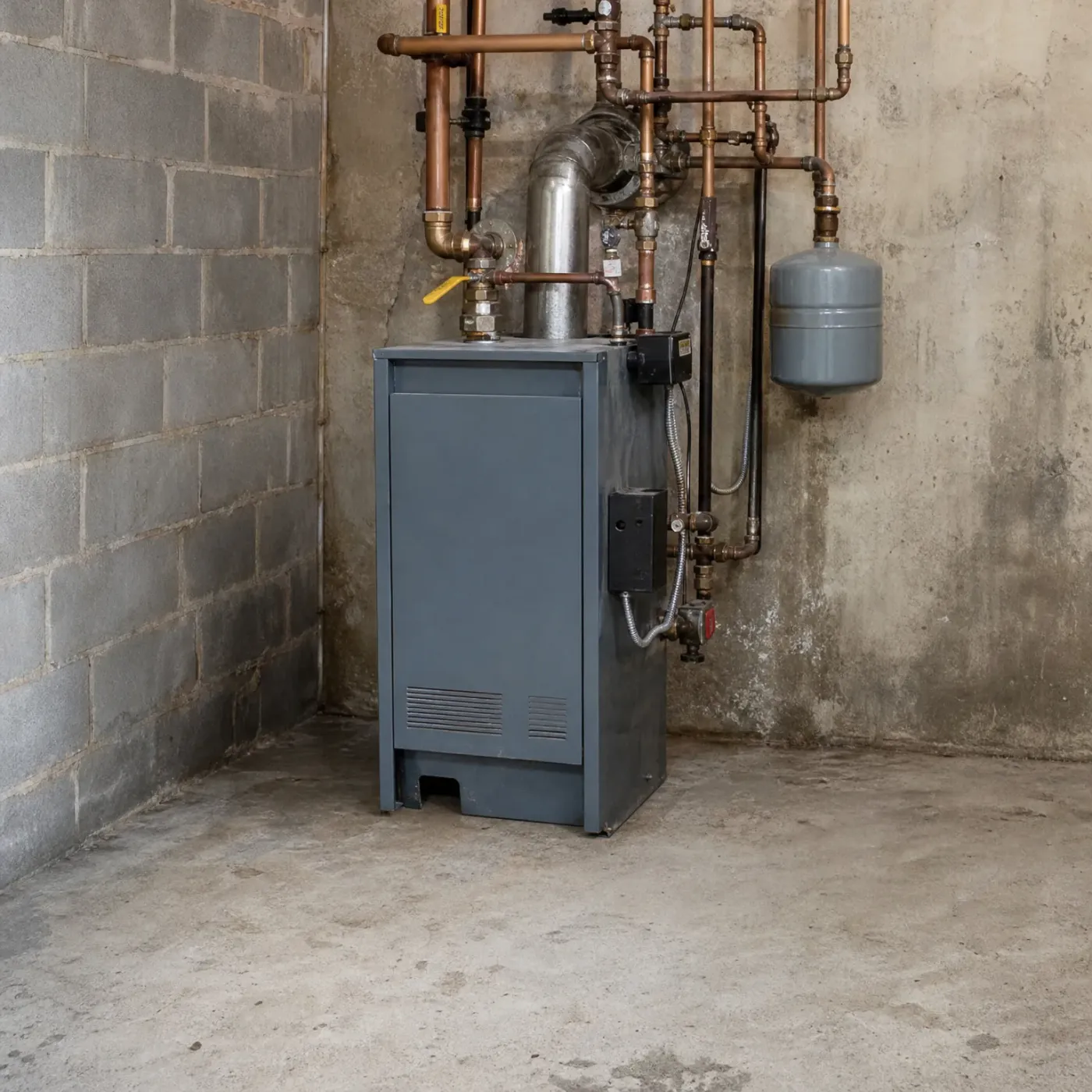
A boiler stopping short of a full cycle is reading something wrong through its pressure switch, flame sensor, or igniter. The gray tank on the wall and the piping behind it aren't the problem themselves, but a tech who works on this equipment all winter can trace which one is cutting the burner before it gets worse.
Winter nights average 30°F statewide
With nights averaging 30°F across December, January and February, your boiler is holding a cycle most of the night, not just kicking on for a few minutes and resting. That's more hours for a weak pressure switch or a tired igniter to show itself, usually overnight when you're not watching it trip.
NOAA nClimDiv 1991-2020 county normals weighted by homes
1
The thermostat calls for heat and the control board wakes up.
2
The igniter heats or sparks to light the main burner.
3
A flame sensor confirms the burner actually lit.
4
The circulator pump pushes hot water out through the lines.
A boiler that shuts off is telling you something specific
Whatever is tripping your boiler, a safety switch caught it before it turned into something worse. Low pressure, a flame sensor losing its read, a pressure switch or an igniter wearing down all show up the same way, as a boiler that won't hold a cycle. A licensed tech can check the pressure, pull the flame sensor, and test the switches in one visit and tell you which one it is.
You don't have to spend the next few nights searching for someone qualified to work on it, calling a handful of companies, explaining the same lockout pattern to each one, then sorting through quotes to see who actually knows boilers. This connects you with one licensed contractor local to Oklahoma, someone who sees this equipment every winter and knows which switch usually goes first. You tell them what the boiler's doing once, and they already know the system.
Boiler Repair
Skip the calls to every shop
Your request goes to one pro, not a list of companies.