Profile view of a bearded man wearing a black baseball cap and a dark gray T-shirt against a plain light background.

Why your boiler is losing pressure in Oklahoma

Step 1 of 3: Equipment

Why does my boiler keep losing pressure?

A boiler that keeps losing pressure usually means you've had to keep walking over to the filling loop and topping it back up, maybe every week or two. That's not normal, and it won't fix itself. Something is letting water or pressure out of the system, and in gas-heavy areas like Oklahoma, where a boiler is running hard through the winter, catching this early matters before it turns into a no-heat call.

There's a leak somewhere in the system, or a faulty valve letting pressure escape

Most of the time this comes down to water finding a way out that it shouldn't. That can be a slow leak in a pipe joint, a radiator, or the boiler itself, or it can be a pressure relief valve that's opening when it doesn't need to. Sometimes it's the expansion vessel losing its air charge, which lets the system pressure climb and trip the relief valve on its own. Oklahoma winters put a boiler through real work, and a system that's already stressed from constant use will show a weak valve or a small leak faster than one running only a few cold weeks a year.

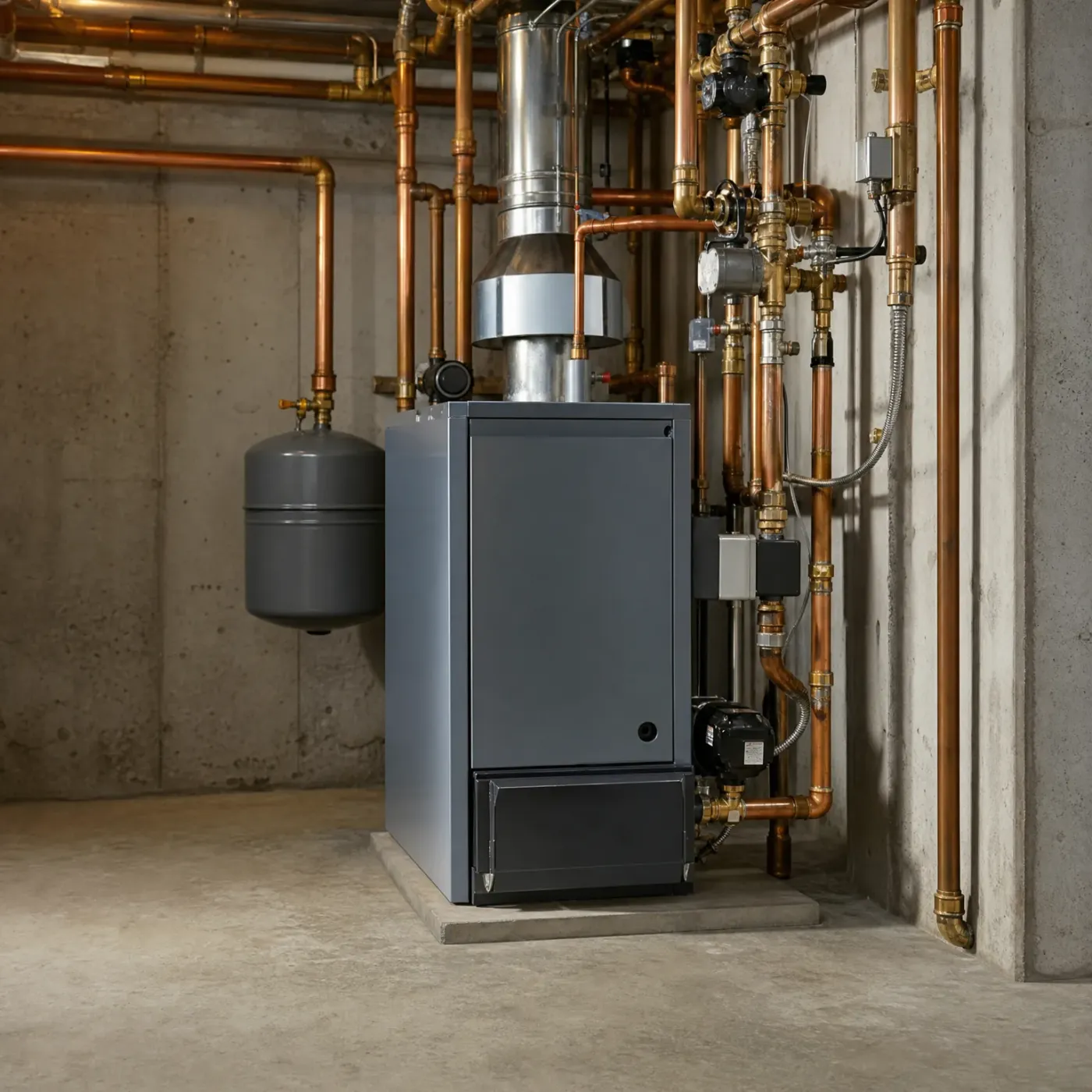
A gray boiler on a concrete pad in a basement, connected to copper piping, valves, circulator pumps, a metal flue, and a wall-mounted expansion tank.

Holding pressure

The gauge sits between 1 and 1.5 bar and stays there. Pipes and fittings are dry, the expansion tank holds its charge, and the pressure relief valve stays shut unless it's needed. You check the gauge now and then out of habit, not worry.
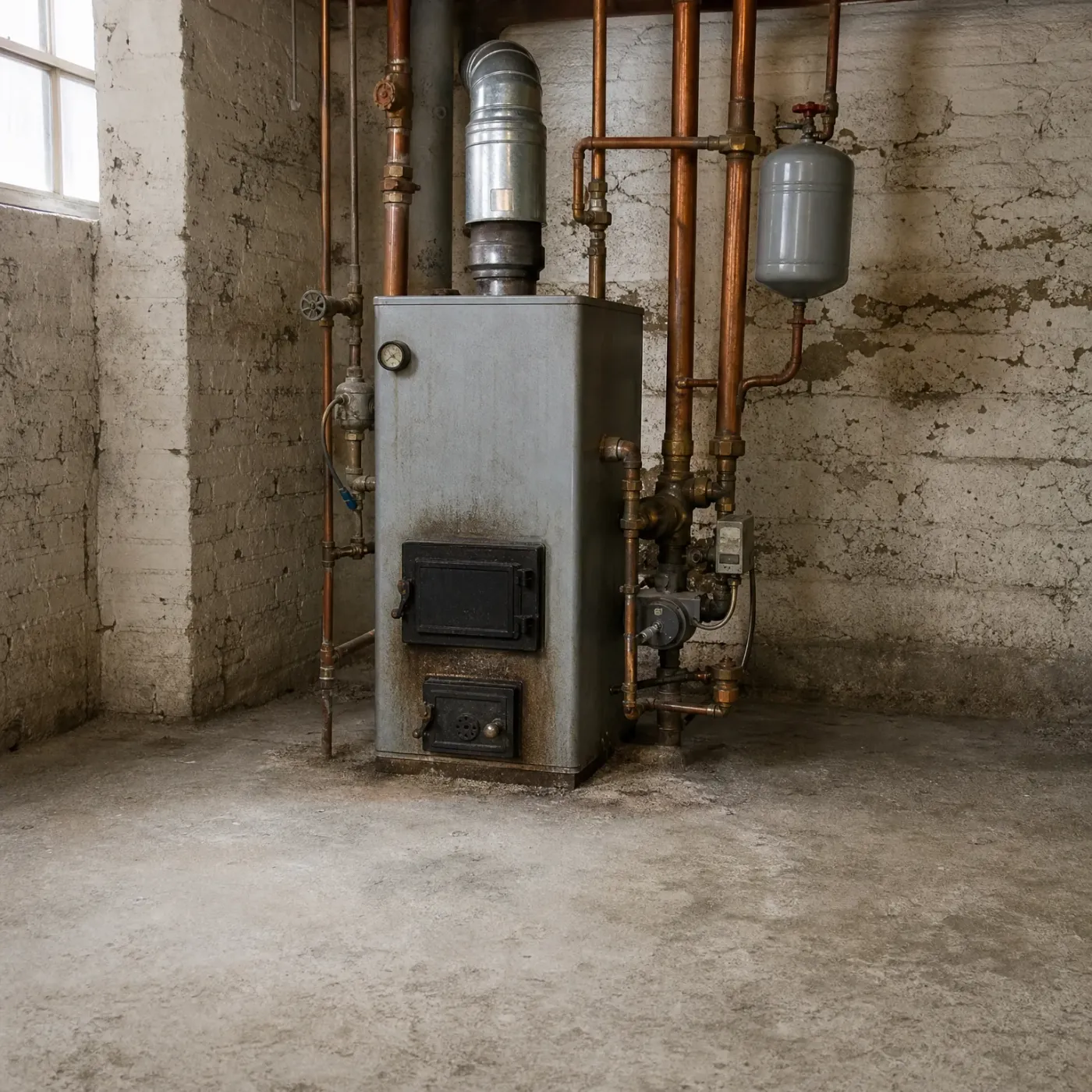
An old gray boiler with copper piping, a flue duct, pressure gauge and an expansion tank stands in the corner of a basement with painted masonry walls and a bare concrete floor.

Dropping pressure

The needle creeps down below 1 bar, week after week. Somewhere in that network of valves and fittings there's a drip, or the expansion tank has lost its air charge. Topping it off at the filling loop buys a few days, not a fix.

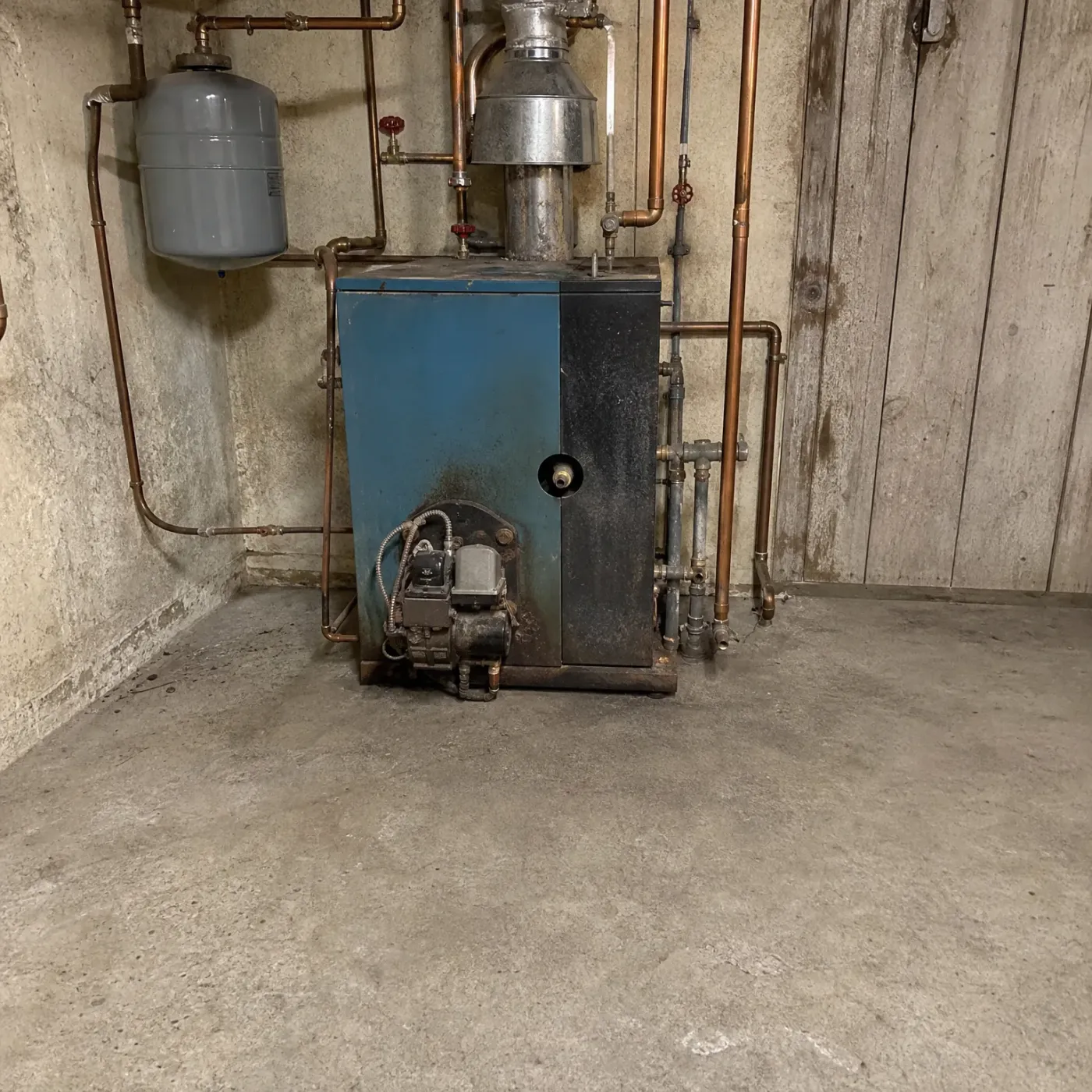
A blue and black boiler with a burner unit, flue, expansion tank and copper and steel piping stands on a concrete basement floor against a concrete wall and wooden plank partition.
Before you get your boiler repair
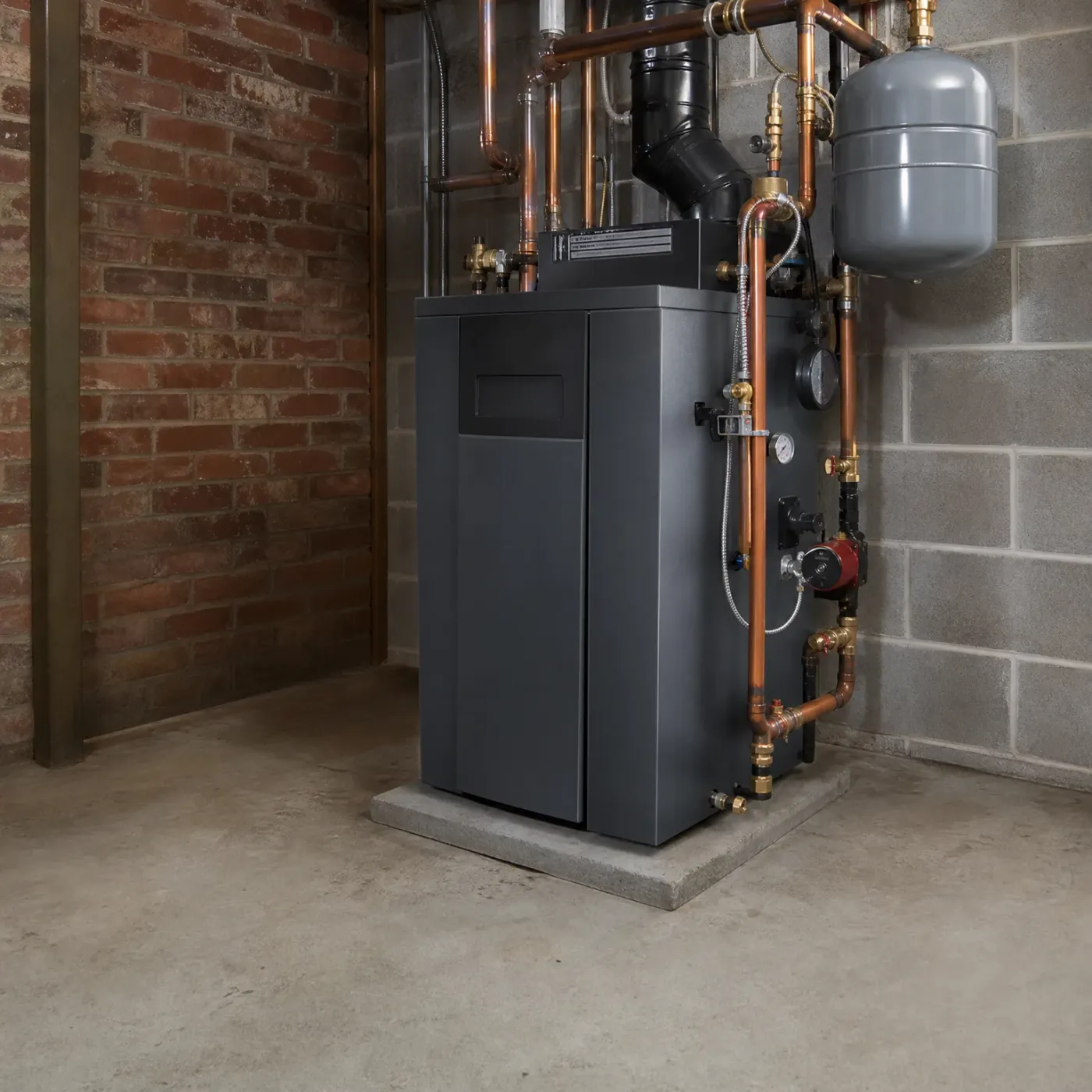
A dark gray floor-standing boiler on a concrete pad in a basement, connected to copper piping, valves, a circulator pump, a gauge, a black flue pipe, and a gray expansion tank, with a brick wall on the left and concrete block wall behind.
After you get your boiler repair

0.5 to 1.5 bar a week

Losing even half a bar in a week means water is leaving the system somewhere, through a seal, a valve, or a fitting you can't see from the gauge.

I'm done searching

Air doesn't do this

A bar of trapped air won't drop the gauge on its own. A pressure that keeps falling means the system is losing water, not air.

I'm done searching

What's going on behind your boiler right now

Look at the floor under the boiler and around the pipe joints. A damp patch, a faint mineral stain, or a drip you can hear are all signs water is finding a way out. Check the filling loop too. If the handles are warm or the loop feels like it's been used recently, that's you, not the system, keeping the pressure up. Left alone, a leak like this can corrode the parts it touches, and a boiler that runs low on water can shut itself off or wear out the pump trying to compensate. None of that happens overnight, but it doesn't reverse itself either.

  1. Water slips out through a loose seal, valve, or fitting.

  2. System pressure drops below the 1 bar mark.

  3. The low water cuts off contact inside the pressure switch.

  4. The boiler locks out and stops firing for heat.

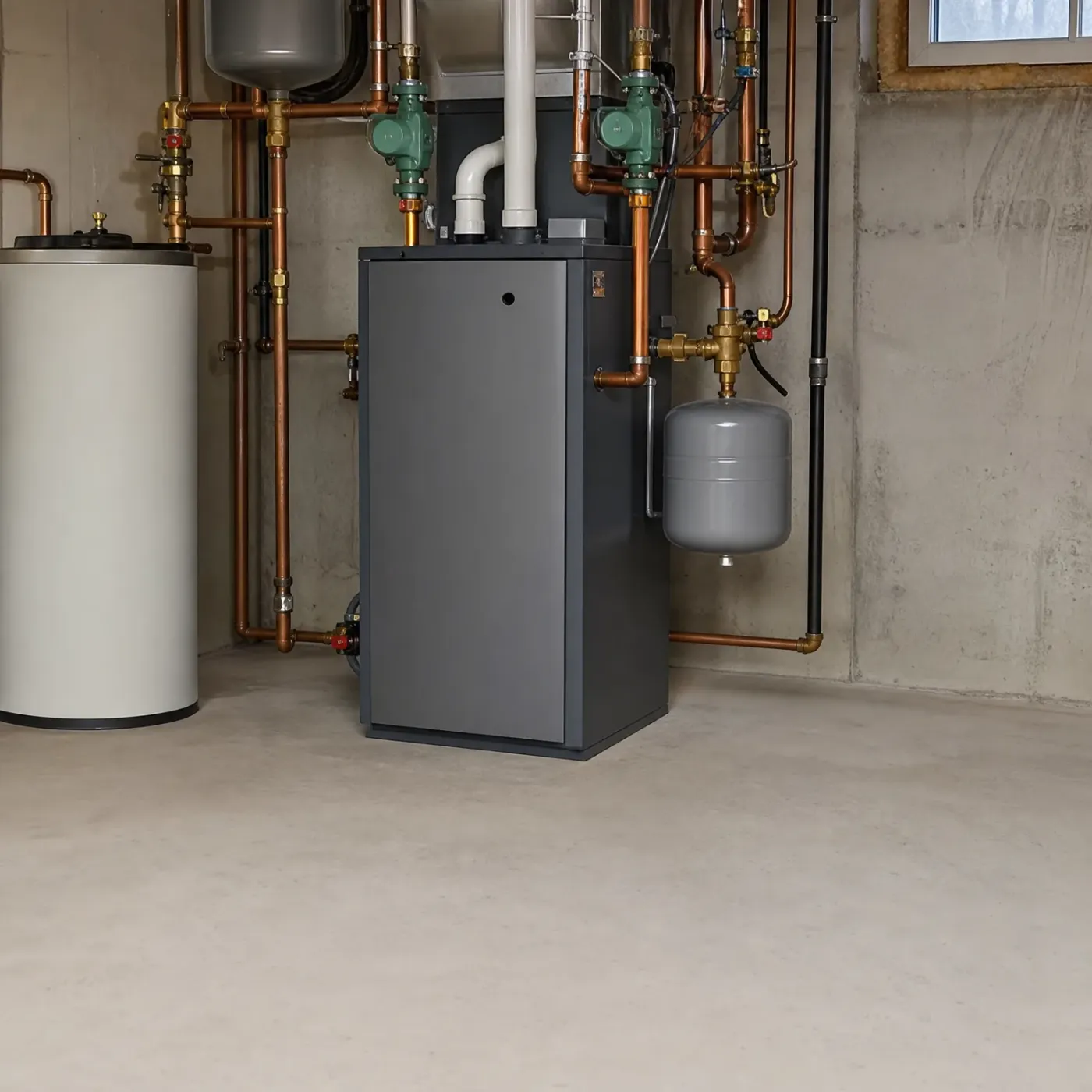
A dark gray floor-standing boiler in a concrete-walled basement, connected to copper piping, circulator pumps, a gray expansion tank, and a cream-colored storage tank to the left.
Pipes and fittings stay dry, the gauge holds steady, and the pump and expansion tank do their job without anyone noticing them.
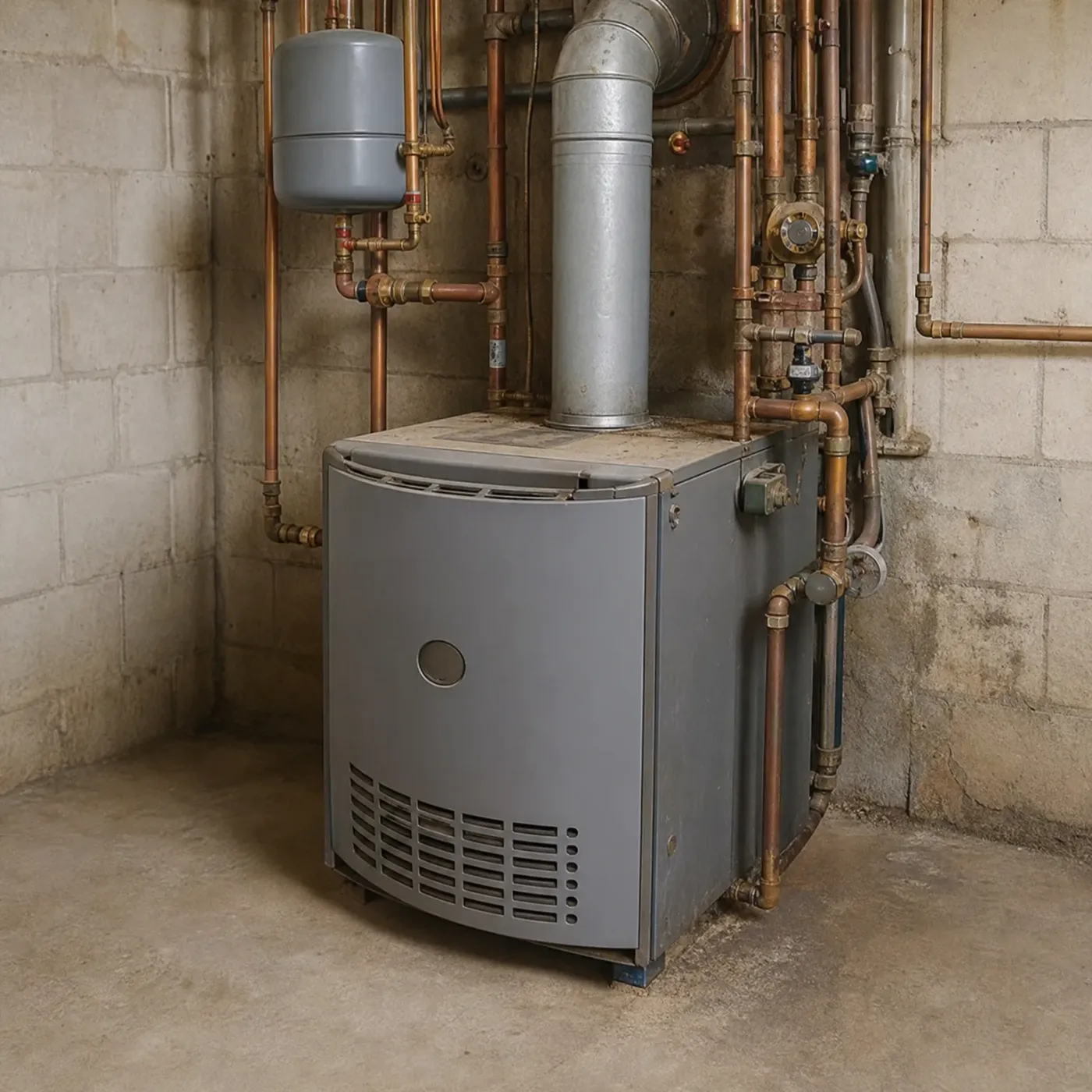
A gray residential boiler with a metal flue pipe stands in a concrete-block basement corner, surrounded by copper piping, valves and a gray expansion tank.
Corrosion builds on the flue and fittings while the system keeps bleeding pressure, and the boiler is closer to locking out for good.
A smiling man in a gray long-sleeved shirt stands in a kitchen looking to the side, with open shelves of dishes, a white mug on the counter, a potted plant, and a view through a doorway into a living room.
A smiling bearded man in a green sweater sits at a white marble kitchen island with a mug, potted plant and bowl of fruit, in a bright white interior with open shelving and an arched doorway.
A smiling man with dark curly hair and a beard, wearing a dark green knit sweater, stands at a white marble kitchen counter with a dark blue mug, with open shelving, pendant lights and a houseplant behind him.
A smiling man in a green ribbed sweater stands behind a wooden table holding a ceramic mug of coffee in a kitchen with white subway tile, shelves of potted plants, and a bowl of fruit.

One request and it's handed off

A boiler that keeps dropping pressure doesn't get better on its own, and finding the leak yourself means checking seals, valves, and fittings you can't always see. Left alone, it ends in a lockout on a cold morning, and then you're calling around anyway, explaining the gauge readings to one contractor after another, trying to figure out who can actually get to a leak you haven't pinpointed. That's hours gone before anyone's even looked at the boiler. Sending this request means you stop being the one who has to track someone down. You're not comparing quotes or repeating the same story three times to three different shops. One contractor gets your situation, the pressure drops, the topping up, what you saw at the filling loop, and takes it from there. In Oklahoma, gas heat runs hard enough in the winter that a boiler losing pressure now is worth sorting before the cold sets in for good. Handing it off today means the search for help is done.

The expansion tank's hidden role

  • The expansion tank holds a pocket of air that cushions the water as it heats and expands.
  • A bladder or diaphragm inside the tank keeps that air separate from the system water.
  • When the bladder fails, water soaks up the air pocket and pressure has nowhere to go.
  • A pressure relief valve set to open around 2.5 to 3 bar will dump water if the tank can't absorb the expansion.
  • Worn valve seats and loose compression fittings let water seep out slowly, often too slow to see but enough to drop the gauge over days.
  • Repeated small leaks leave mineral deposits behind, so a chalky ring around a joint points to where the water has been escaping.

The expansion tank is a sealed cylinder, usually mounted near the boiler, with a rubber bladder inside splitting it into two sides. One side holds pressurized air, the other holds system water. When the boiler heats up, water expands and pushes into the tank, and the air pocket compresses to absorb that extra volume. That's what keeps the gauge steady instead of climbing every time the heat kicks on. The bladder is the part that wears out. Rubber flexes with every heating cycle, year after year, and eventually it tears or stretches thin. Once that happens, water fills the space the air used to occupy, and the tank can't cushion anything anymore. Pressure has nowhere to go but up when the boiler fires, and the relief valve, set to open around 2.5 to 3 bar, starts dumping water to protect the system. That venting is often the real reason the gauge keeps dropping, not a leak you can see. Separately, worn valve seats and loose compression fittings let water out on their own, a slow seep rather than a sudden drip. It's usually too gradual to notice in the moment, but enough adds up over a week to pull the gauge down half a bar or more. A chalky white ring around a joint or valve is where that water sat and dried, and it marks the spot worth checking first.

A man in a blue T-shirt sits on a light gray sofa, laughing while looking at an open laptop in the foreground, with a framed picture, lamp and potted plant behind him.
A bearded man in a blue and brown plaid flannel shirt stands indoors looking out a window at snow-covered trees, with a ceramic mug on the windowsill.

Keep topping it up yourself and you're out checking the gauge every few days, guessing which joint is weeping, and still facing a lockout some cold morning before you've found it.

Send the form and someone licensed comes to find the leak and fix it, so you're not the one crawling around pipework trying to spot a drip.

Winter nights average 30°F statewide

Winter nights average 30°F across the state, so your boiler is working for hours at a stretch most nights, not just cycling on and off. More run time means more chances for a weak seal or fitting to weep, and a slow pressure drop to turn into a lockout before morning.

NOAA nClimDiv 1991-2020 county normals weighted by homes

A boiler that holds its pressure runs quietly through an Oklahoma winter, and one that doesn't will keep sending you back to that filling loop until the leak gets found and closed. The gauge told you something was wrong. The damp patch on the floor or the stain near a fitting told you roughly where. What it can't tell you is whether that's a worn seal, a failing valve, or a cracked expansion tank, and that part takes someone who can open the system up and look. Topping up the pressure buys you a few more days, not a fix. Left alone, the gap between fill-ups gets shorter and the lockouts start showing up on the mornings you can least afford them. Finding a licensed contractor, explaining the problem, and getting quotes compared is its own chore on top of the one your boiler already handed you. Once that search is off your plate, what's left is straightforward: someone finds where the water is going and stops it there.

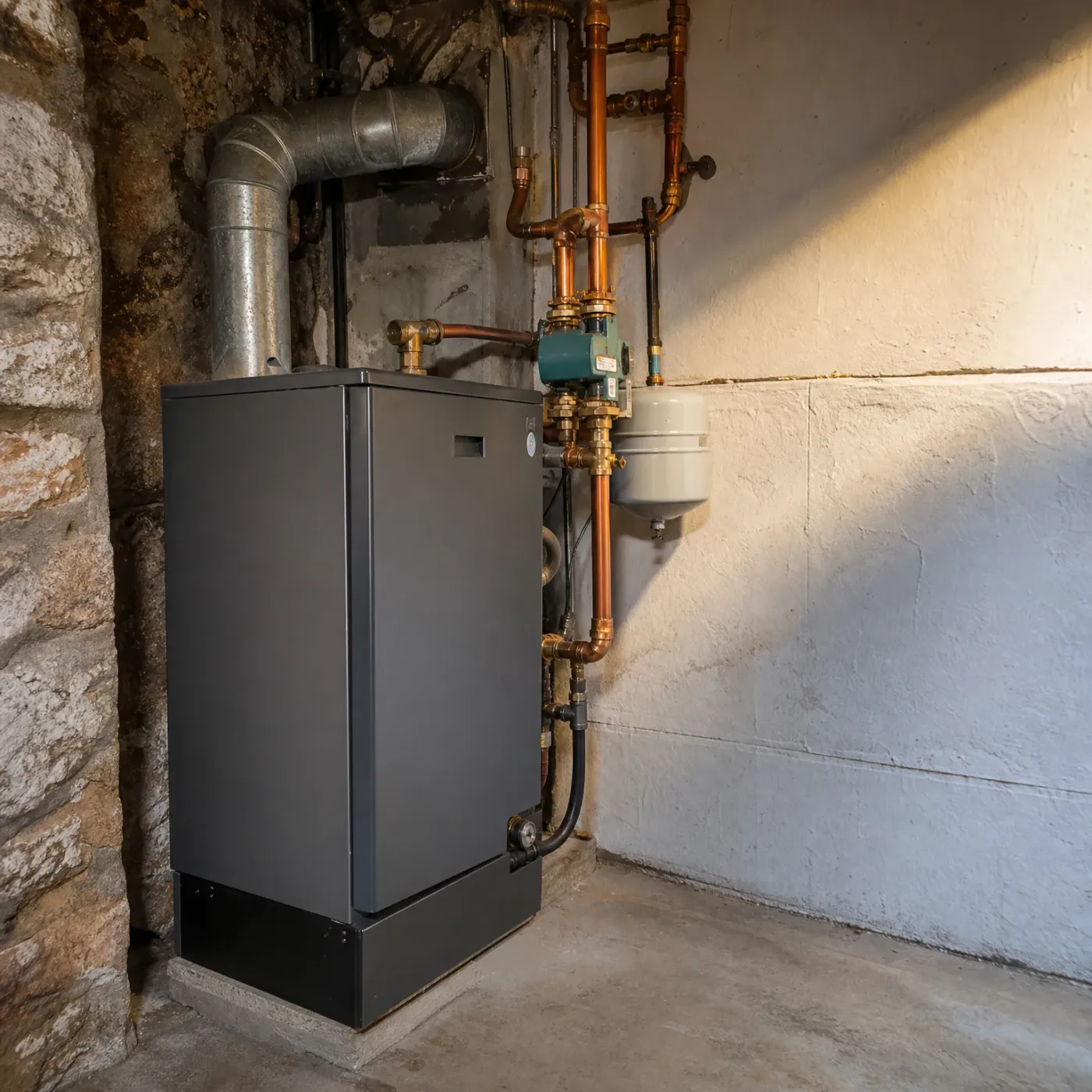
A dark gray boiler unit stands in a basement corner against a stone and painted concrete wall, connected to copper pipes, a circulator pump, an expansion tank, and a galvanized metal flue duct.

Done looking for a boiler pro

Hand off my repair

Describe your boiler job once, to one pro.

No charge to send it. You decide if you hire them.