


Running the way it should
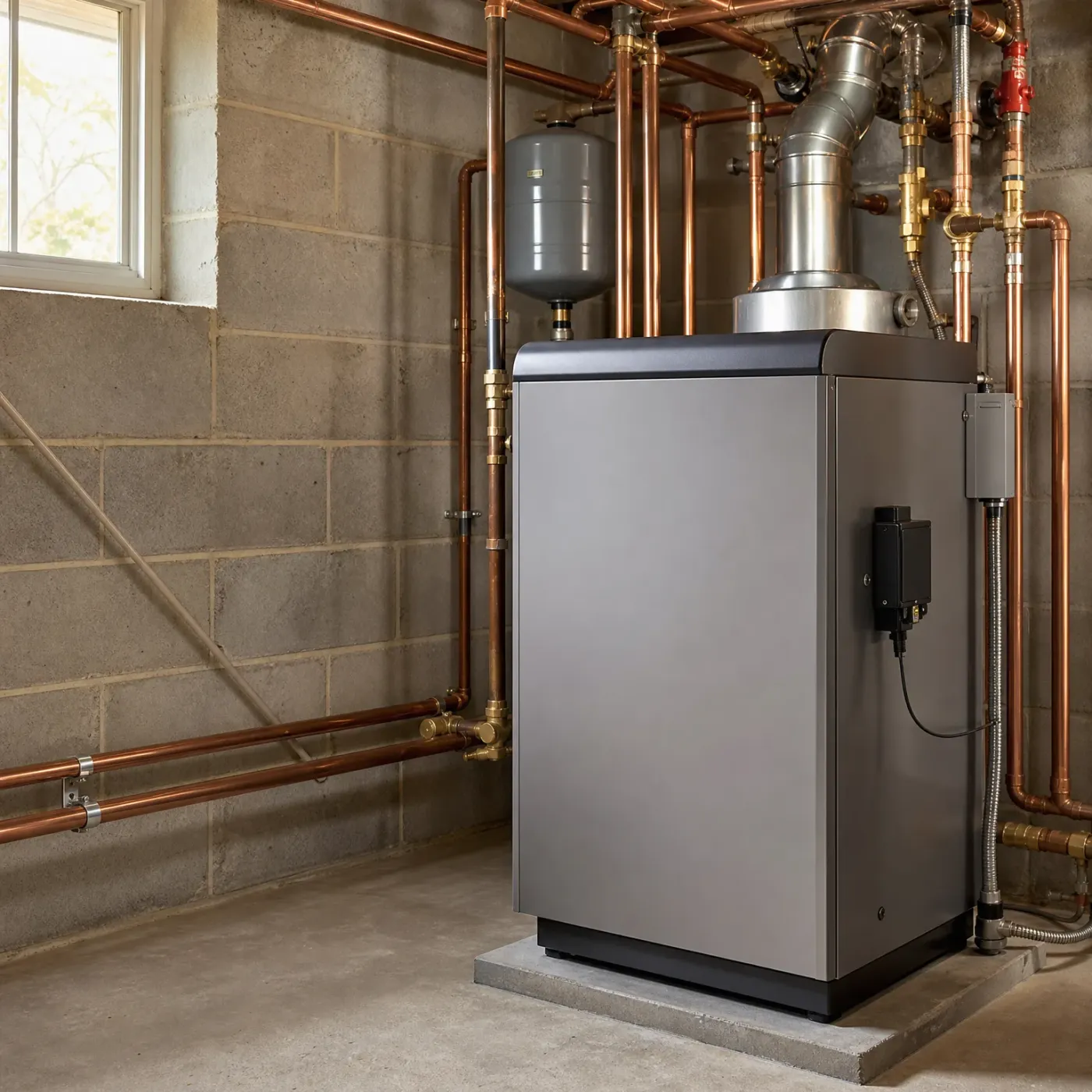
Dry fittings, a steady pressure gauge, and copper lines that stay sealed at every joint. The expansion tank mounted beside it is doing its job, and the flue pipe overhead is venting the way it was built to vent.
Describe your boiler job, and a local pro who handles it gets in touch.
Get matchedA boiler that's dripping or pooling water is hard to ignore once you notice it on the floor near the unit. You're probably checking the pressure gauge, looking at the fittings, and trying to figure out if this is something you can watch for a day or if it needs attention tonight. Gas is how most homes in Oklahoma heat, and a boiler acting up in the middle of a cold stretch isn't something you want to leave alone.
Water usually comes from one of a few places. The pressure relief valve lets water out when pressure inside the boiler climbs too high. A worn seal or gasket can leak slowly around a pump or a fitting. A crack in an old cast iron section lets water seep out from inside the boiler itself. Corrosion over the years can open a small hole in a pipe joint. Each of these shows up differently. A valve leak tends to drip from one spot, while a cracked section can mean water pooling under the whole unit. Winters here get cold enough that a boiler runs for months at a stretch, and that steady use is what wears a seal or valve down over time.
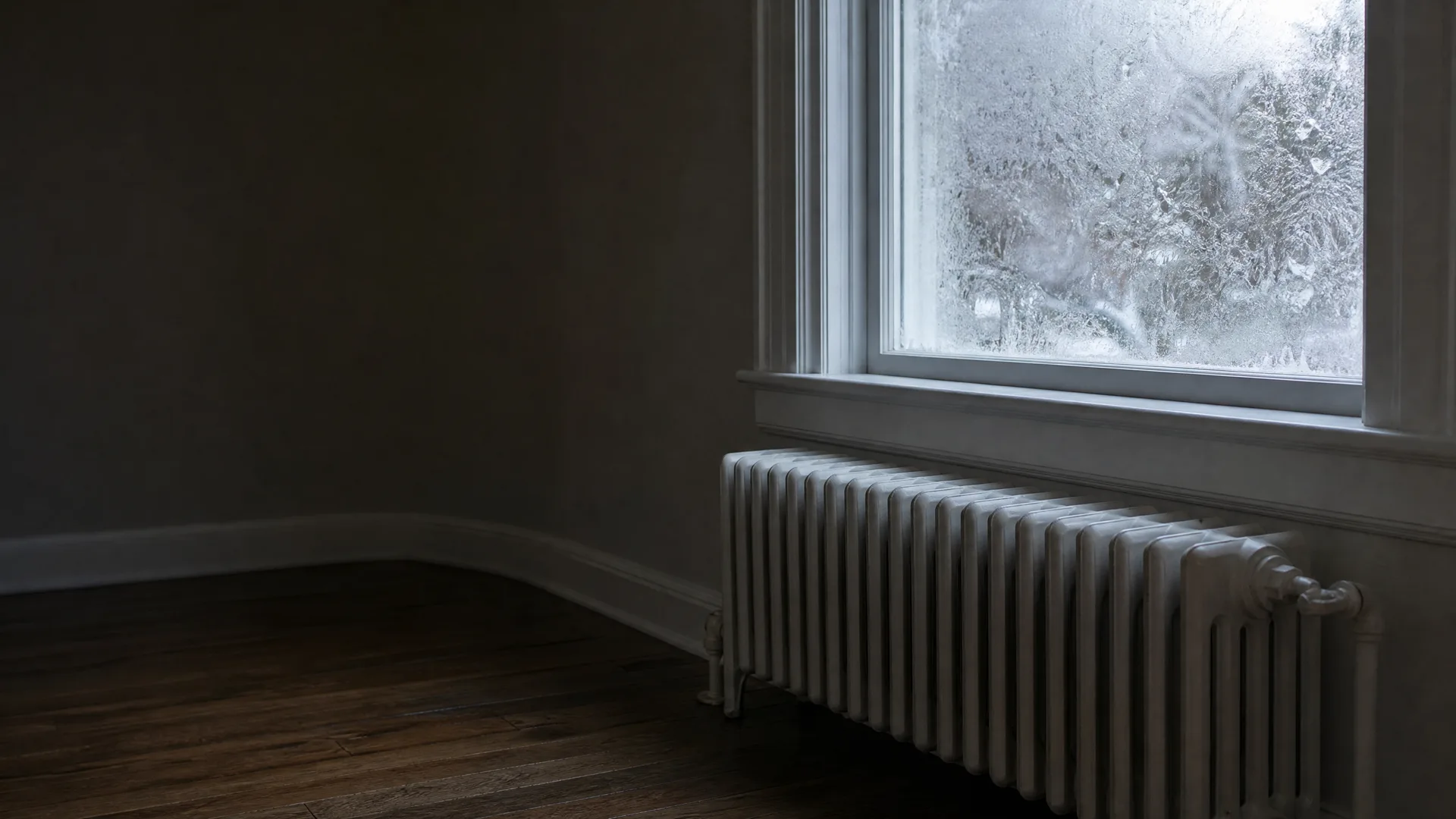
You're up before the sun, same as always in January, and the living room is cold enough that you can see your breath near the window. The cast-iron radiator under it ticks as it heats, but the glass behind it has ice on the inside, a thin frost pattern creeping up the corners. You crouch down to check the radiator and your sock lands in a puddle that's crept across the floor to the baseboard. It's not condensation from the window. You run a finger along the bottom of the radiator and find the spot, a slow bead working its way down an old valve. Outside, it's still dark, and the gas furnace next door hums through the wall like nothing's wrong.
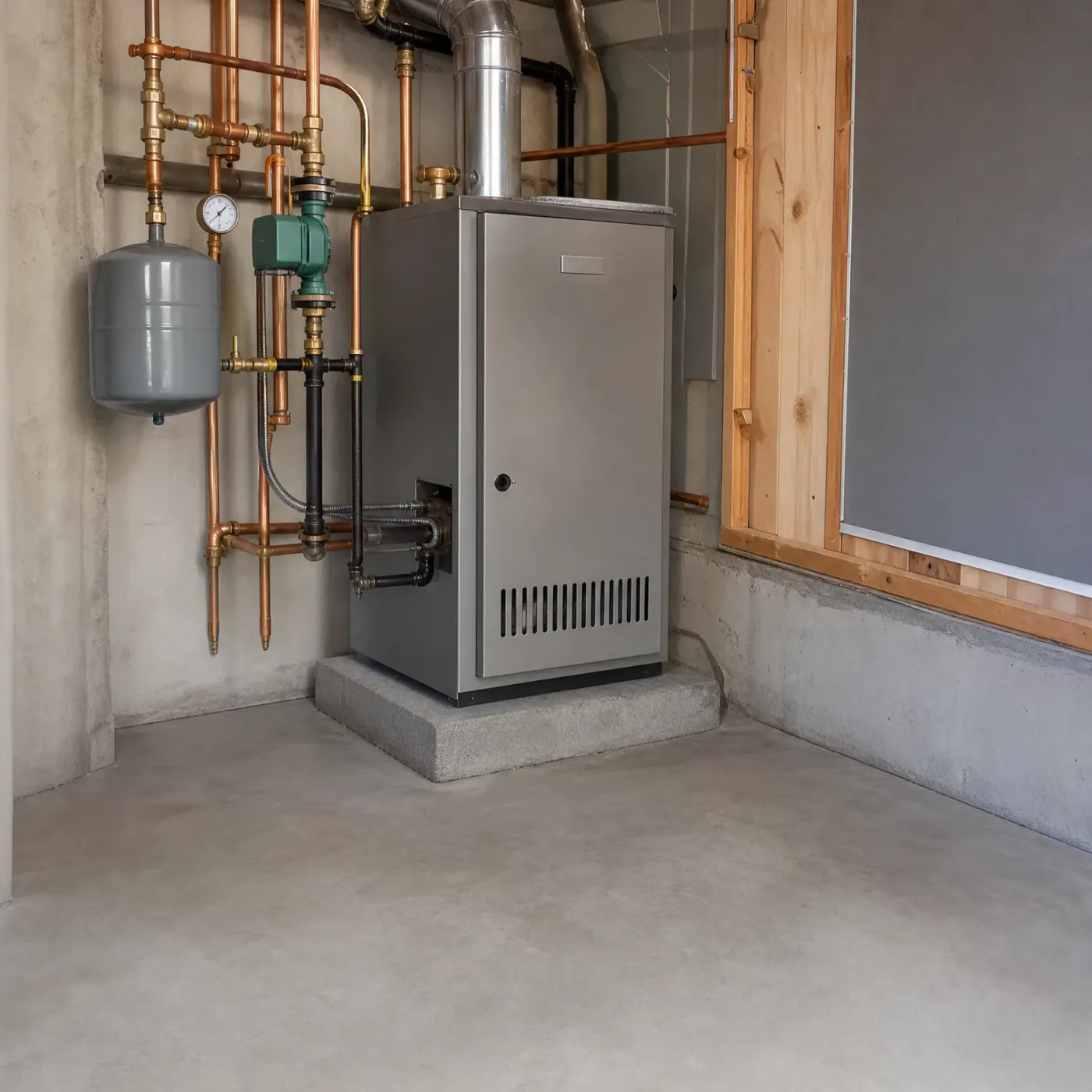
Pressure inside the boiler climbs past the system's safe limit.
The pressure relief valve opens to release that excess buildup.
Water escapes through the valve's discharge pipe onto the floor.
A loose fitting or seal lets pressure seep out slowly instead.
A damp spot on the floor, a rust-colored ring under a fitting, or water beaded along the bottom seam of the tank itself. You might hear a faint hiss near the pressure relief valve or notice the discharge pipe is wet even when nothing seems to be running. Some households catch it by smell first, a musty patch on the basement floor or a water stain creeping up the wall behind the unit. Left alone, that moisture sits against steel and copper long enough to rust fittings through and warp the floor underneath. On a cold Oklahoma morning you're already relying on this boiler to get the house warm, and a leak that keeps growing is one more thing standing between you and a working furnace room.
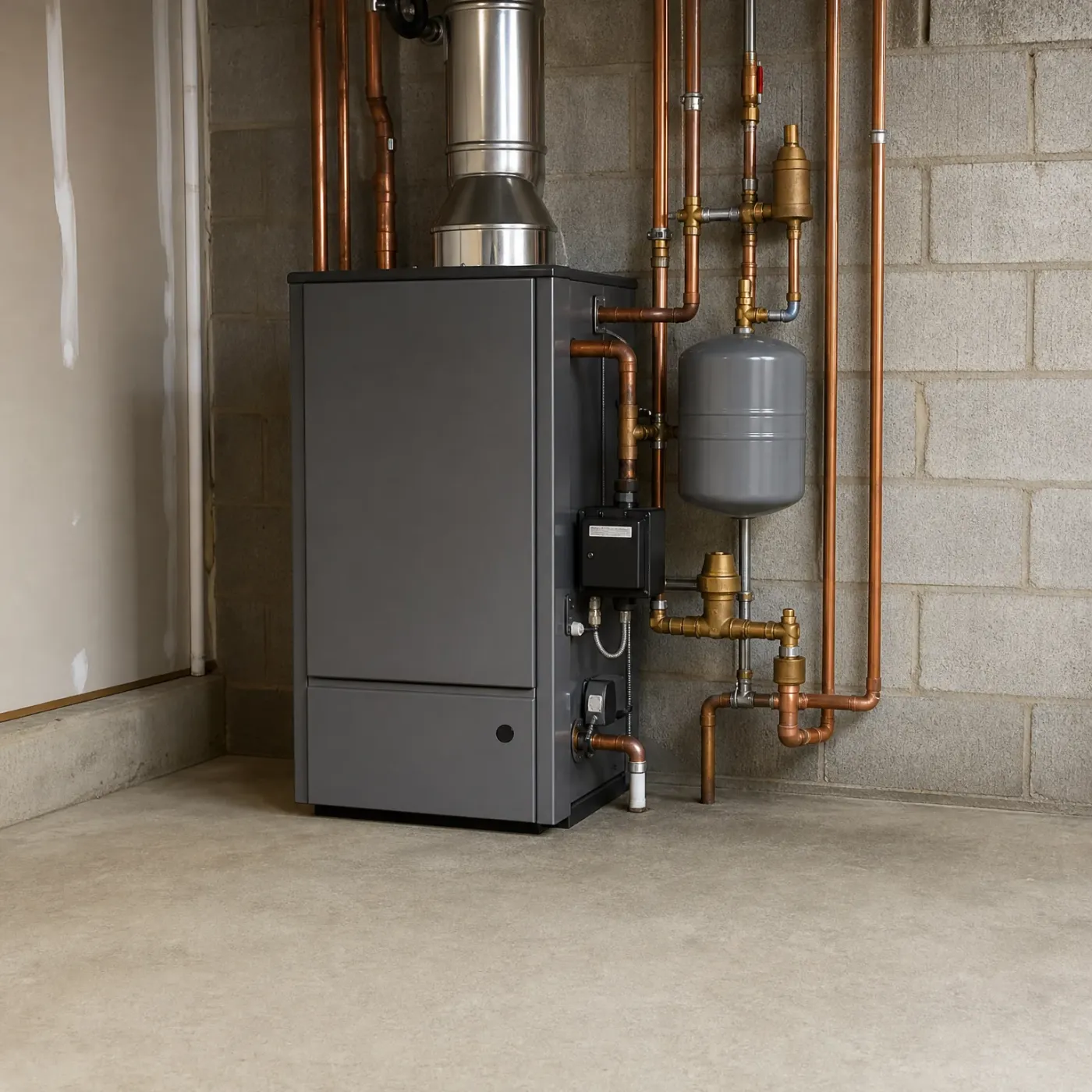
Dry fittings, a steady pressure gauge, and copper lines that stay sealed at every joint. The expansion tank mounted beside it is doing its job, and the flue pipe overhead is venting the way it was built to vent.
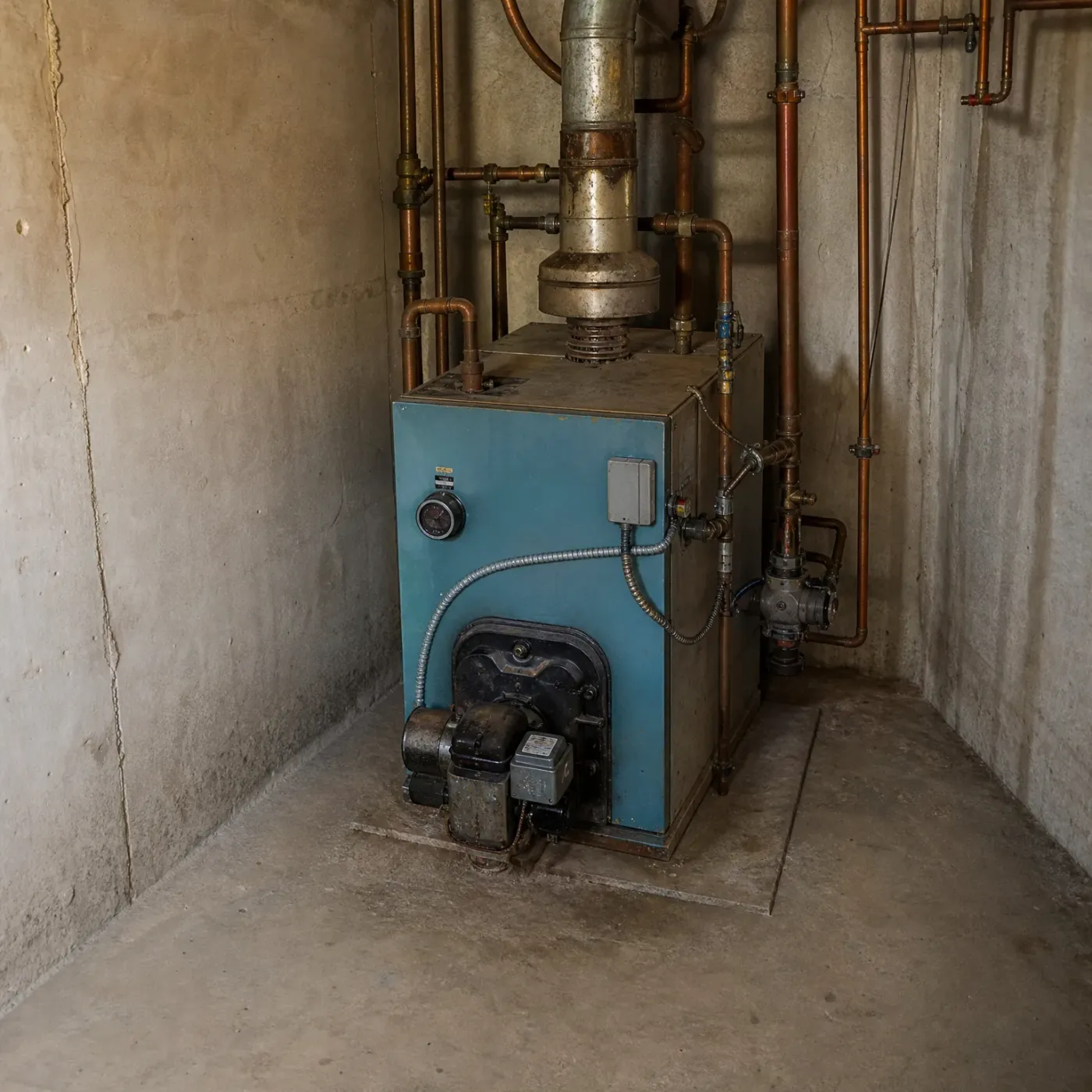
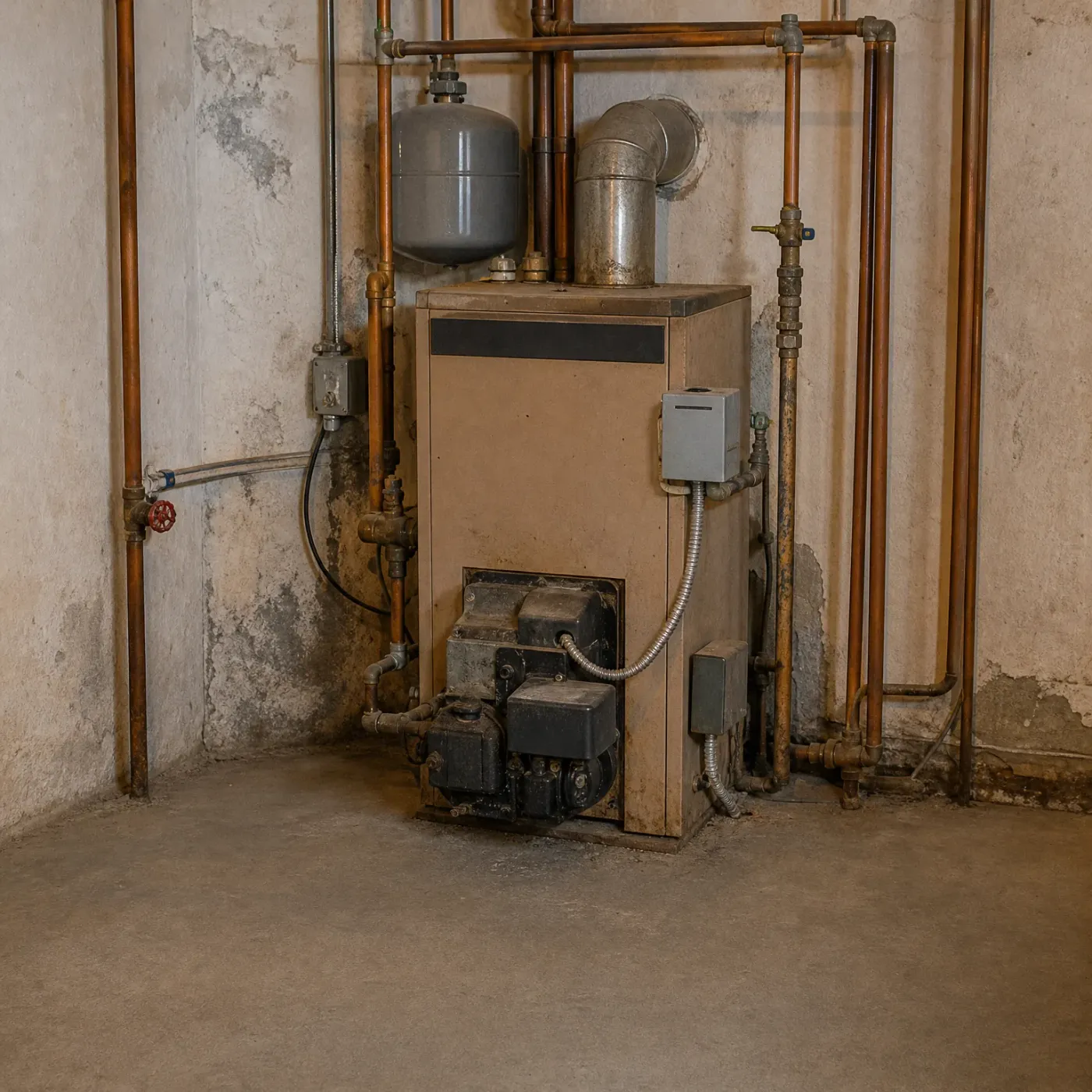
An older unit with a burner assembly and fuel pump working harder than they should, copper lines rising to the ceiling under more pressure than the system wants. This is where a loose joint or a worn seal starts to weep.
Winter nights here average 30°F, and your boiler runs long stretches to keep up. That's more hours of pressure cycling through every joint and fitting, which is exactly where a slow leak starts to show.
NOAA nClimDiv 1991-2020 county normals weighted by homes


Answer a few questions instead of calling shop after shop.
Say what's going on with your boiler, and a pro who works on them reaches out.
Sending the form costs nothing.

A slow drip near the boiler doesn't stay slow. Water finds the floor, then the wall behind it, then whatever's stored nearby in the mechanical room or basement. Gas is the common fuel here, and a leak that reaches the burner compartment or the gas line connections turns a repair into something you don't want to wait on. Left alone through a cold snap, a small leak can also mean the boiler loses pressure faster than it can hold heat, and you're the one who notices the house isn't as warm as it was last week.
You don't have to track down who handles boiler repair in your area, call around, and explain the same thing to three different people before you get a quote you can compare. Once you put in what's going on with your boiler, a contractor who works on this equipment gets in touch with you directly. You spend your evening on something other than the phone.





A boiler leaks because something inside it is past holding water where it should. A bad valve, a loose fitting, a cracked tank, pressure that's climbed too high. The fix depends on which one it is, but the water on your floor means it's time to find out, not wait through another cold night watching it. You could spend the evening calling around, explaining the same drip and the same rust ring to one contractor after another, then sitting with quotes trying to guess which one actually knows boilers instead of just furnaces. Or you could skip that part. Answer a few questions about what you're seeing and get matched with a contractor who works on boilers in Oklahoma, one who'll call you to talk through the repair. The leak itself still needs a licensed hand on it. But the part where you track down who to call, that part's done.

Get the right pro for your boiler