A large broad-crowned tree stands alone in a flat grassland of dry golden grass with patches of bare reddish soil, under a mostly clear blue sky in low warm light.Get a local pro

Why your boiler is kettling in Oklahoma

Tell a local repair pro what your boiler is doing.

That rumbling or popping sound from your boiler is kettling. It happens when scale builds up on the heat exchanger and water gets trapped against it, flashing to steam before it can circulate. The noise is water hammering against hot metal.

It's common in Oklahoma because of hard water. Scale forms faster where the water carries more minerals, and it builds up on the hottest surface in the system first. Left alone, that scale keeps the heat exchanger from doing its job.

Kettling doesn't fix itself. The boiler is working harder to push heat through a layer of scale, and that shows up on your gas bill even with power as cheap as it is here. Worse, a heat exchanger that keeps overheating in spots can crack. That turns a repair into a replacement.

You don't have to figure out whether this is a quick fix or something bigger. That's not a call to make by sound alone, and guessing at it isn't worth the risk to a system you rely on all winter. The sound means something specific is wrong inside the boiler, and a contractor who works on these systems in Oklahoma can tell you what, usually by looking at the exchanger and the water quality feeding it.

Send the details on your boiler and someone who handles this kind of repair in your area will reach out to you. You won't be the one tracking down who's available or sorting through who actually works on boilers versus furnaces. That part is off your plate once you send the form. What's left is a conversation with someone who already knows what kettling usually means and can tell you what it means in your case.

Why is my boiler making a kettling noise?

You've heard the knocking or rumbling start up when the boiler fires, maybe louder than it was a few months ago. It's not a sound you want to just live with, especially with Oklahoma's gas prices and a long heating stretch ahead. You want to know what's actually making that noise before it turns into something that leaves you without heat.

Scale buildup is making your boiler kettle

Scale forms on the heat exchanger over time, especially in homes with harder water. That layer traps a thin pocket of water against the hot metal, and the water flashes to steam faster than it can escape, which is the popping and rumbling you're hearing. The buildup only gets thicker the longer it sits, and a heat exchanger working around scale has to run hotter to do the same job, which shows up on your gas bill. Left alone, the trapped steam can stress the metal enough to crack it. With gas heating most Oklahoma homes and winters here putting real hours on a boiler, catching kettling early is worth it before the noise turns into a repair that can't wait.

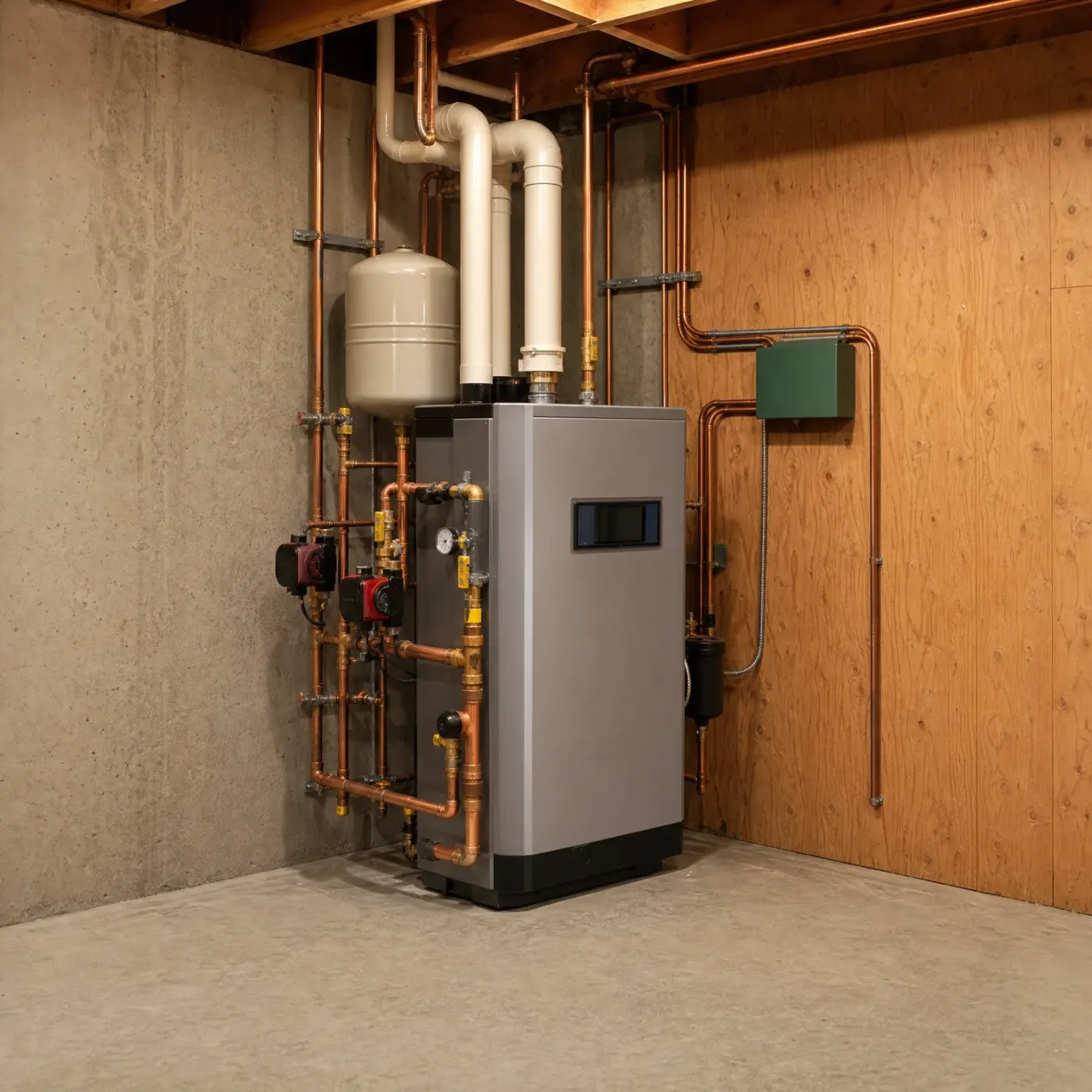
A gray floor-standing boiler in a basement corner with copper piping, two red circulator pumps, a beige expansion tank, white PVC vent pipes, concrete and plywood walls.

Quiet and firing clean

A boiler without scale fires up and you barely notice. Water moves freely past the heat exchanger, the burner cycles on and off, and the only sign it's working is heat coming up through the house. No knocking, no rumble, just the pilot or igniter catching and the pump running.
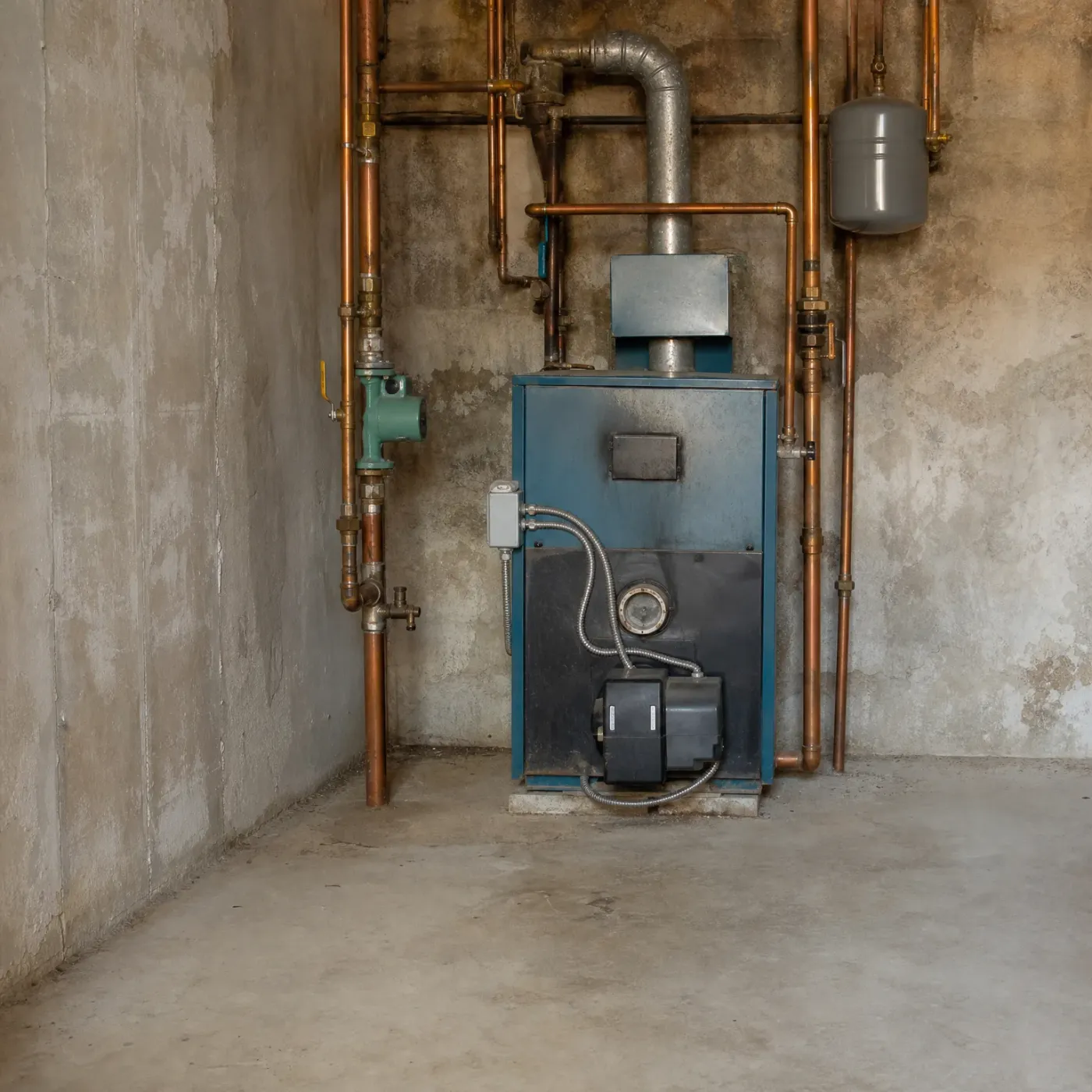

A blue residential boiler with a metal flue, pressure gauge and burner unit stands against a stained concrete basement wall, surrounded by copper pipes, a green circulator pump and a gray expansion tank.

Scale trapping steam against the metal

Once scale coats the heat exchanger, water sits against it instead of moving through. That water flashes to steam and collapses again and again, and you hear it as knocking or rumbling at startup. Left alone, the exchanger is working against that trapped steam every time it fires.

Kettling Now or Later

Let it keep kettling

  • Scale keeps building on the heat exchanger, so the trapped water flashes to steam harder each time the burner fires.
  • The boiler works against that buildup to push heat through the house, which shows up on your gas bill over time.
  • A heat exchanger that overheats under scale can crack, and that turns a repair into a full replacement.
  • The noise usually gets louder month to month, not quieter, since nothing removes the scale on its own.
  • Oklahoma's water leaves mineral deposits behind, so the longer it sits the thicker that layer gets.
  • A cracked exchanger can mean a boiler out of service in the middle of a cold snap.

Get it looked at now

  • A contractor can flush the system and clear scale from the heat exchanger before it cracks anything.
  • Catching it early usually means a repair instead of replacing the whole unit.
  • Once the scale is cleared, the boiler fires quietly again and heats the house the way it did when it was new.
  • A technician can check the water quality and recommend whether an inline filter or treatment makes sense for your home.
  • Fixing it now means one visit instead of an emergency call when the exchanger finally gives out.
  • Sending the form hands the search for a contractor off to someone else, so you're not the one chasing it down.
A woman in a cream cowl-neck sweater sits by a window with snow outside, in a dimly lit living room with a sofa, lit lamp, mirror, candles and a fireplace.
A woman in a gray turtleneck sweater sits beside a large window looking out at snow-covered evergreen trees, in a dimly lit living room with a lit fireplace, lamps, couch and houseplant.
A woman in a cream turtleneck sweater stands beside a large window with snow-covered ground and bare trees outside, in a dimly lit living room with lamps, a sofa and framed art.
A woman in a grey cowl-neck sweater stands indoors near a window, looking out at falling snow, with a lamp, framed picture and couch in the warmly lit room behind her.

The right pro for this job

Send it once and finding someone is no longer on you.

You only hire the pro if you want to.

Why hard water speeds this up

Scale is mineral left behind when water heats up, mostly calcium and magnesium. Oklahoma's water running through a boiler leaves that behind on the heat exchanger faster in some homes than others, depending on the supply. Once a thin layer forms, it insulates that spot from the water meant to carry heat away, so the metal underneath runs hotter than it should. Heat built up against scale has nowhere to go but into the water trapped right at that surface, and that's the water flashing to steam. The thicker the layer gets, the less water touches bare metal, and the louder the kettling gets.

What the heat exchanger is doing

The heat exchanger is the part of the boiler where the burner's heat actually passes into the water. It's built to handle that heat evenly across the metal, with water moving past to carry it off right away. Scale breaks that even transfer. Instead of heat spreading into water that keeps moving, it concentrates on a spot where water is stuck behind buildup. A technician checking kettling usually starts here, because the noise is the exchanger telling you where the scale sits and how long it's been building before anyone noticed.

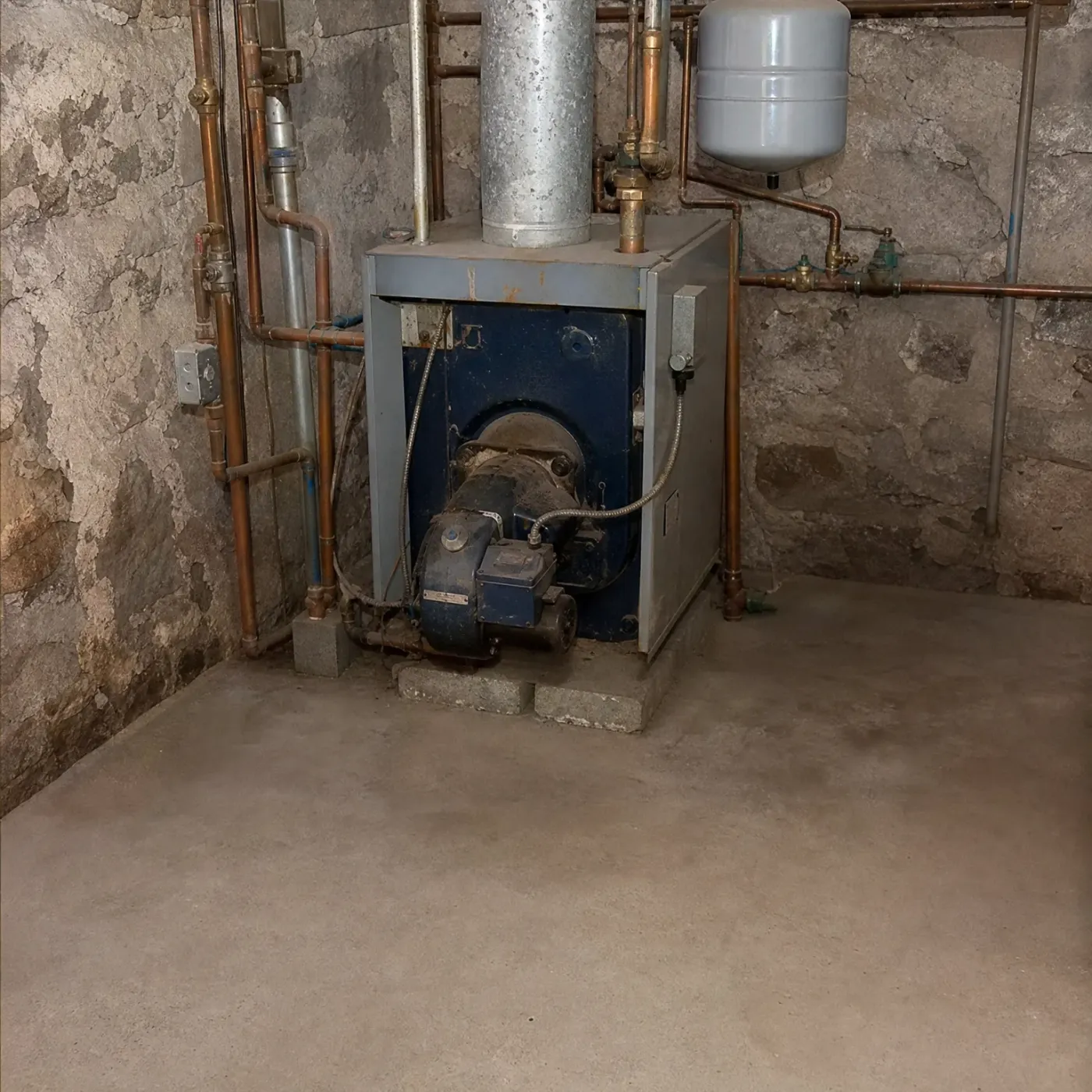
An oil-fired boiler with a blue and gray cabinet and burner sits on concrete blocks in a basement corner with stone walls, connected to copper pipes, a metal flue, and a wall-mounted expansion tank.
Before you get your boiler repair
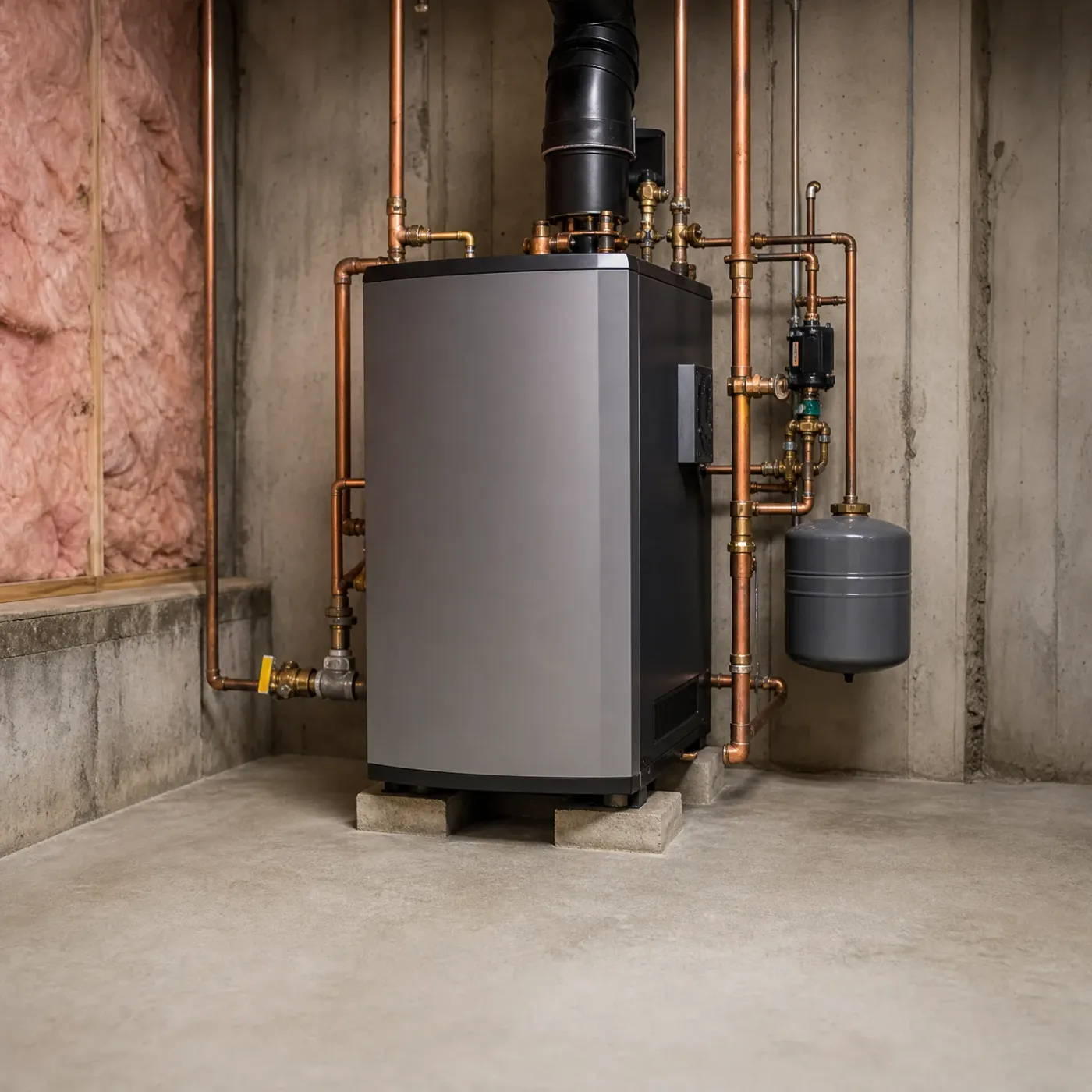
A gray and black boiler unit sits on concrete blocks in a basement corner, connected to copper piping, valves, a black flue duct, and a gray expansion tank, with bare concrete walls and exposed pink insulation at left.
After you get your boiler repair
  1. Scale coats the heat exchanger where water normally flows freely

  2. A layer of water gets trapped between the scale and the metal

  3. The burner fires and heats that trapped water faster than it can escape

  4. Trapped water flashes into steam pockets against the hot metal

Winter nights average 30°F statewide

Those 30°F nights mean your boiler is firing often all winter, and every cycle runs hot water past whatever scale has built up on the heat exchanger. The more it fires, the more chances that trapped water has to flash into steam and knock.

NOAA nClimDiv 1991-2020 county normals weighted by homes

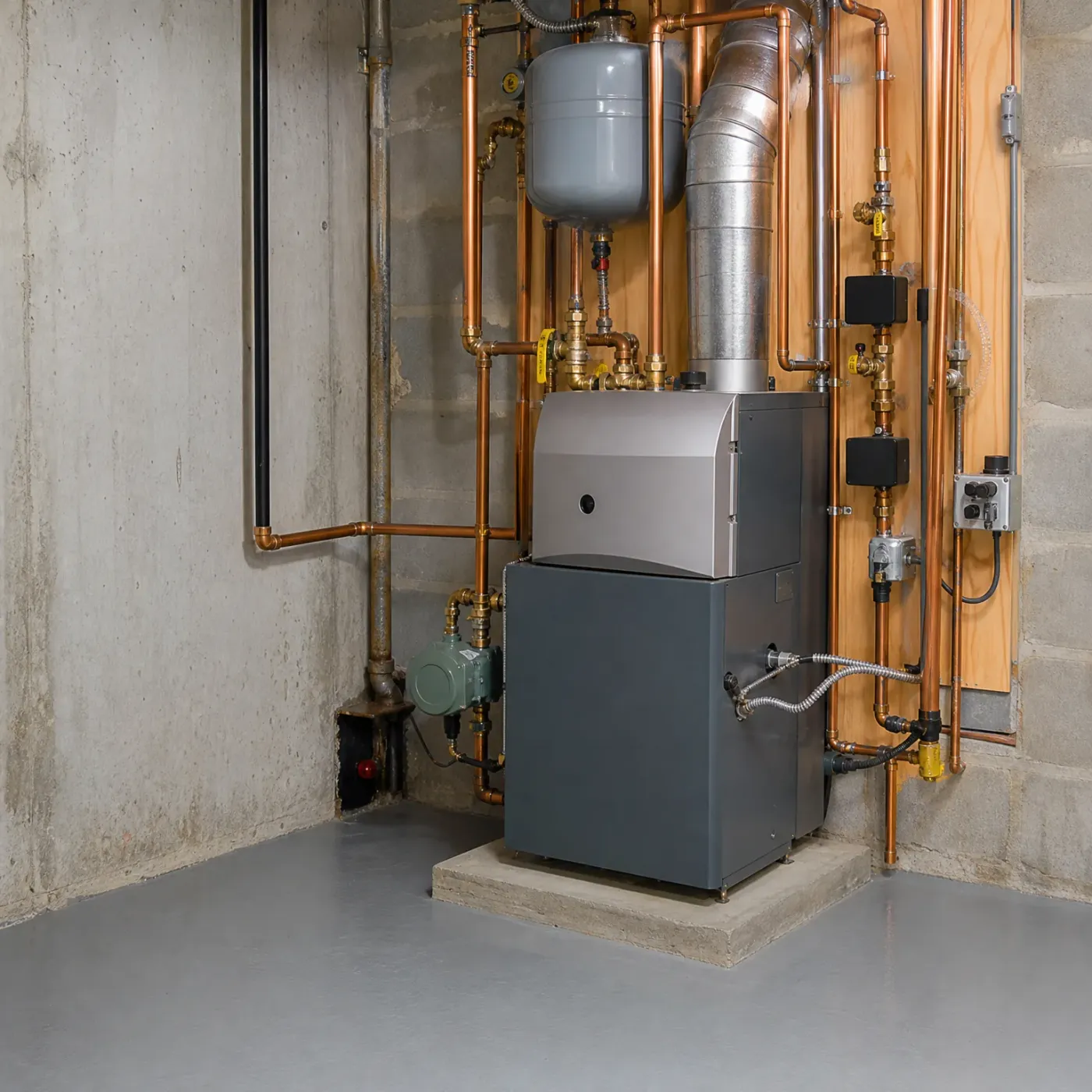
A gray residential boiler on a concrete pad in a basement corner, connected to copper piping, an expansion tank, circulator pumps and insulated flue ducting against concrete and plywood walls.

Running clean

Copper piping and valves in good order, water moving freely to the circulator pump, exhaust venting out through the duct without strain. A boiler set up like this fires, heats the water, and shuts off. Nothing underneath is working harder than it needs to.

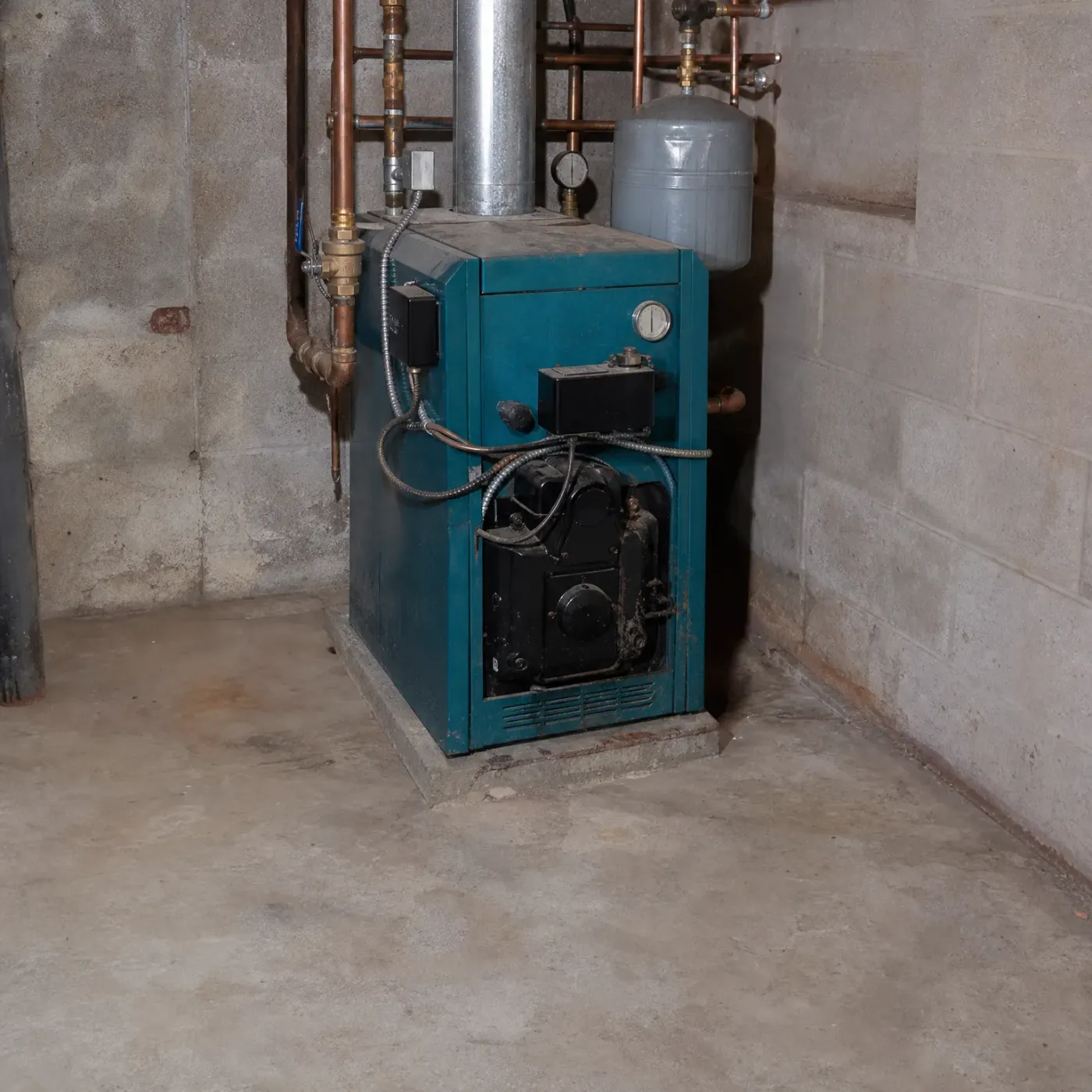
A teal boiler with a pressure gauge and black burner unit sits on a concrete pad in a basement corner, with copper pipes, a flue vent, and a gray expansion tank above against concrete block walls.

Scaled and straining

A boiler like this, older and sitting on its own for years, is the kind that's built up scale nobody's seen. The pressure gauge still reads fine, the piping still holds, but inside the heat exchanger water is getting trapped and flashing to steam. That's where the kettling starts.

The kettling isn't going to fix itself, and it won't get quieter on its own. Scale on the heat exchanger builds up a little more each time the burner fires, and the noise you hear now is about as good as it's going to get without someone opening up that boiler. That's the whole answer: the knocking is trapped water turning to steam against built-up scale, and it means the exchanger needs attention before Oklahoma's cold nights put it through its paces for months. You don't have to spend your evening calling around for someone who works on boilers. Send the form and that search is off your plate. A contractor who handles this gets matched to your situation and reaches out to you. You've already done the hard part, which is figuring out what that sound is. The rest is someone else's job now.

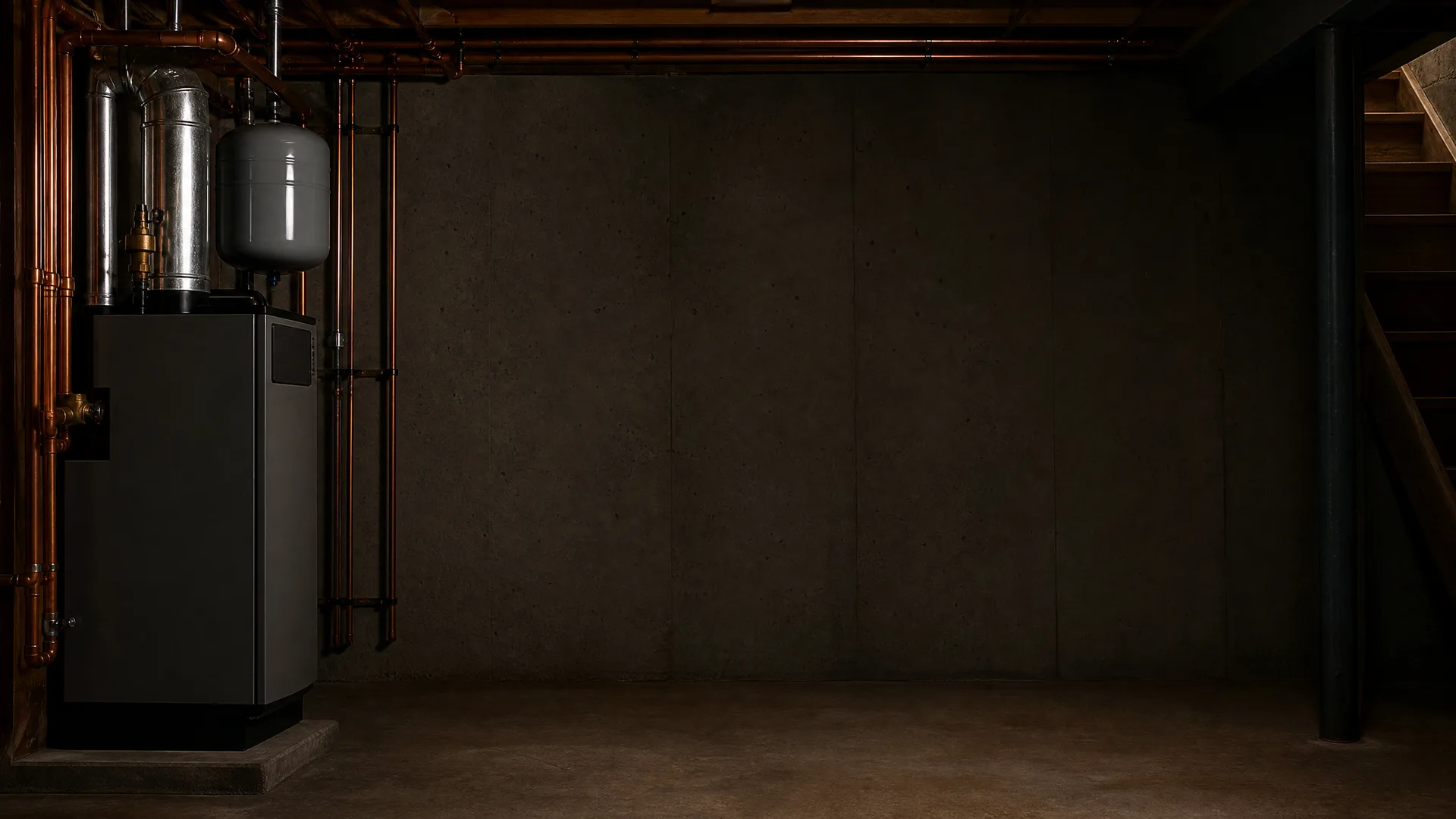
A dark basement with a gray boiler unit, expansion tank, and copper pipes along a concrete wall, with a steel support post and wooden stairs at right.

Matched to your boiler job

Send the request today and let a boiler pro reach out to you.

Step 1 of 3: Equipment