A boiler pro near you
What your boiler pressure should be in Oklahoma
Most boilers want 12 to 15 psi cold, a little higher once the system's running. Too low and you get air in the lines, too high and the relief valve starts dripping. This page covers what your gauge should read and what it means if it isn't. If you want a local pro to check the pressure and look at the rest of the system while they're at it, you can get matched with one who works on boilers all winter.
Find a pro near meA cold boiler should read 12 to 15 psi on the gauge. That's the pressure needed to push water through the system once the burner kicks on and everything heats up and expands. Run it lower and air works its way into the lines, which shows up as a radiator that's hot on the bottom and cold at the top, or a system that gurgles. Run it higher and the relief valve does its job and starts dripping, which is the valve protecting the boiler, not a sign it's broken. Oklahoma winters aren't the harshest, but the boiler still cycles on and off for months, and pressure that was fine in October can drift by January. If your gauge sits outside 12 to 15 psi cold, or climbs well past 20 once the heat's running, that's worth a second look before it turns into a bigger repair.
Why the gauge moves
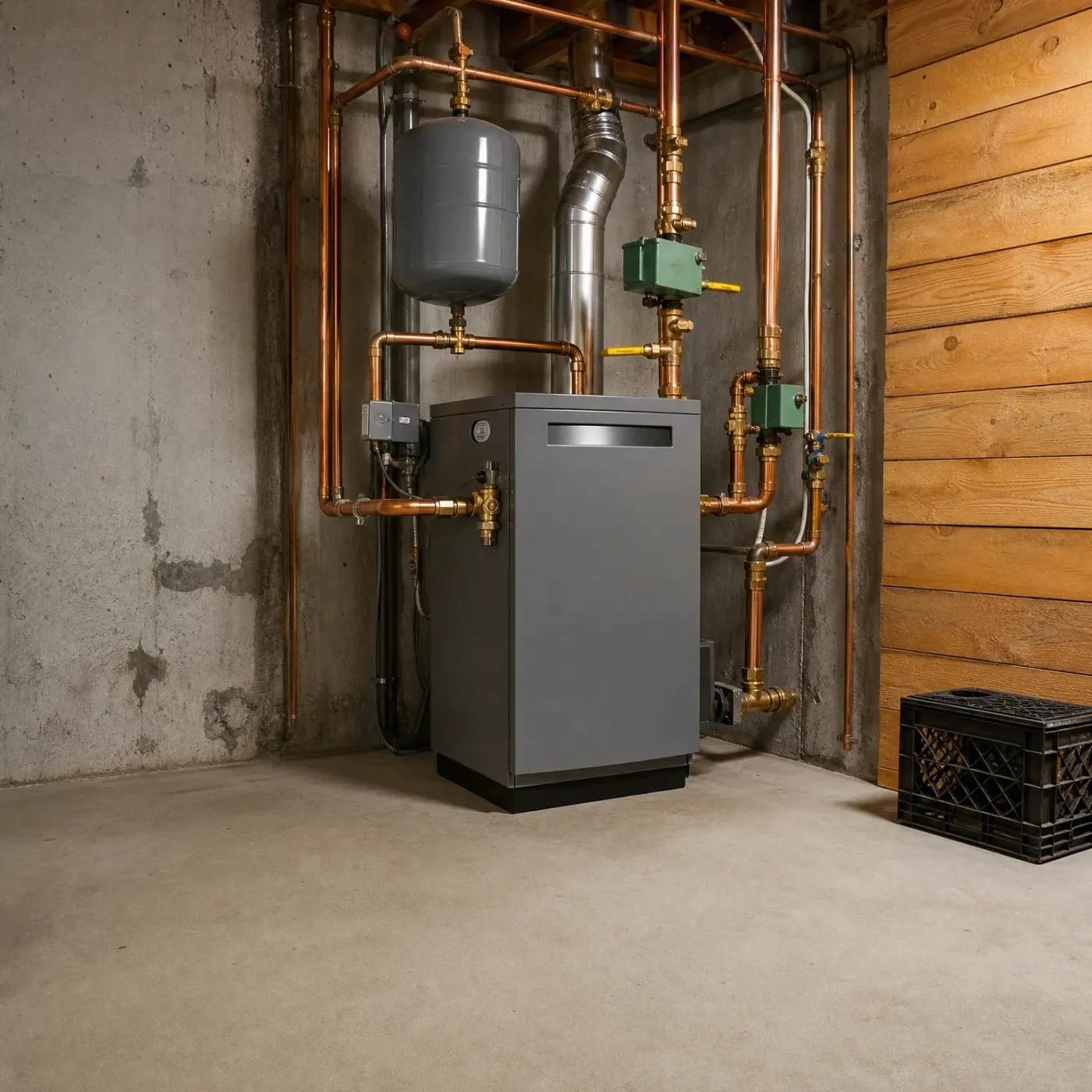
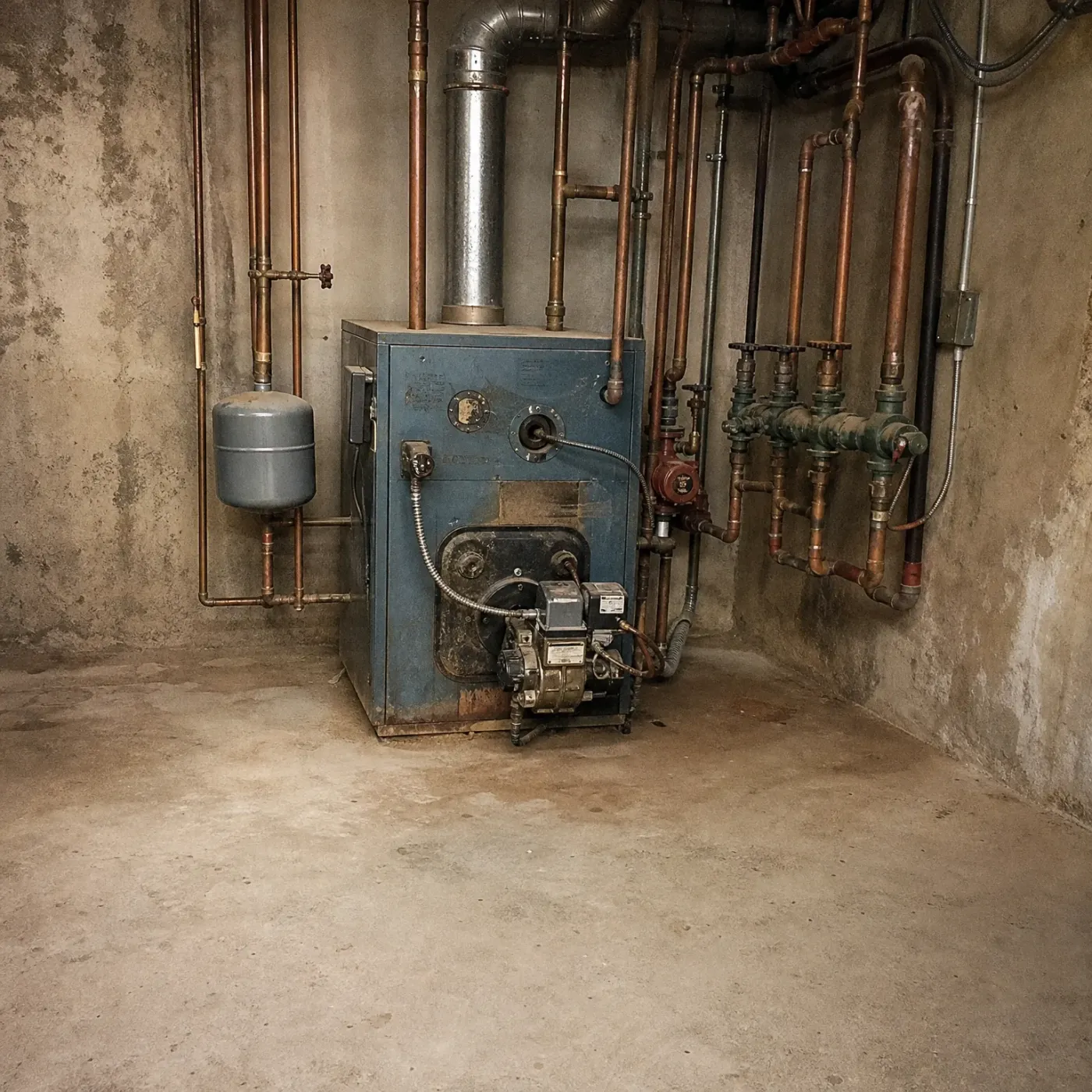
- The expansion tank holds a cushion of air that absorbs the water's expansion as the boiler heats up.
- If that tank waterlogs, the system has nowhere for the extra volume to go and pressure climbs fast.
- The pressure reducing valve on the feed line is set to refill to around 12 psi automatically when the system runs low.
- A relief valve opens on its own once pressure passes 30 psi, and it won't reseat cleanly once it's been tripped.
- Pressure reads higher on a hot system than a cold one, so check the gauge before the burner has fired for the day.
- A gauge that won't move at all, stuck at the same number day after day, usually means the gauge itself has failed, not the system.
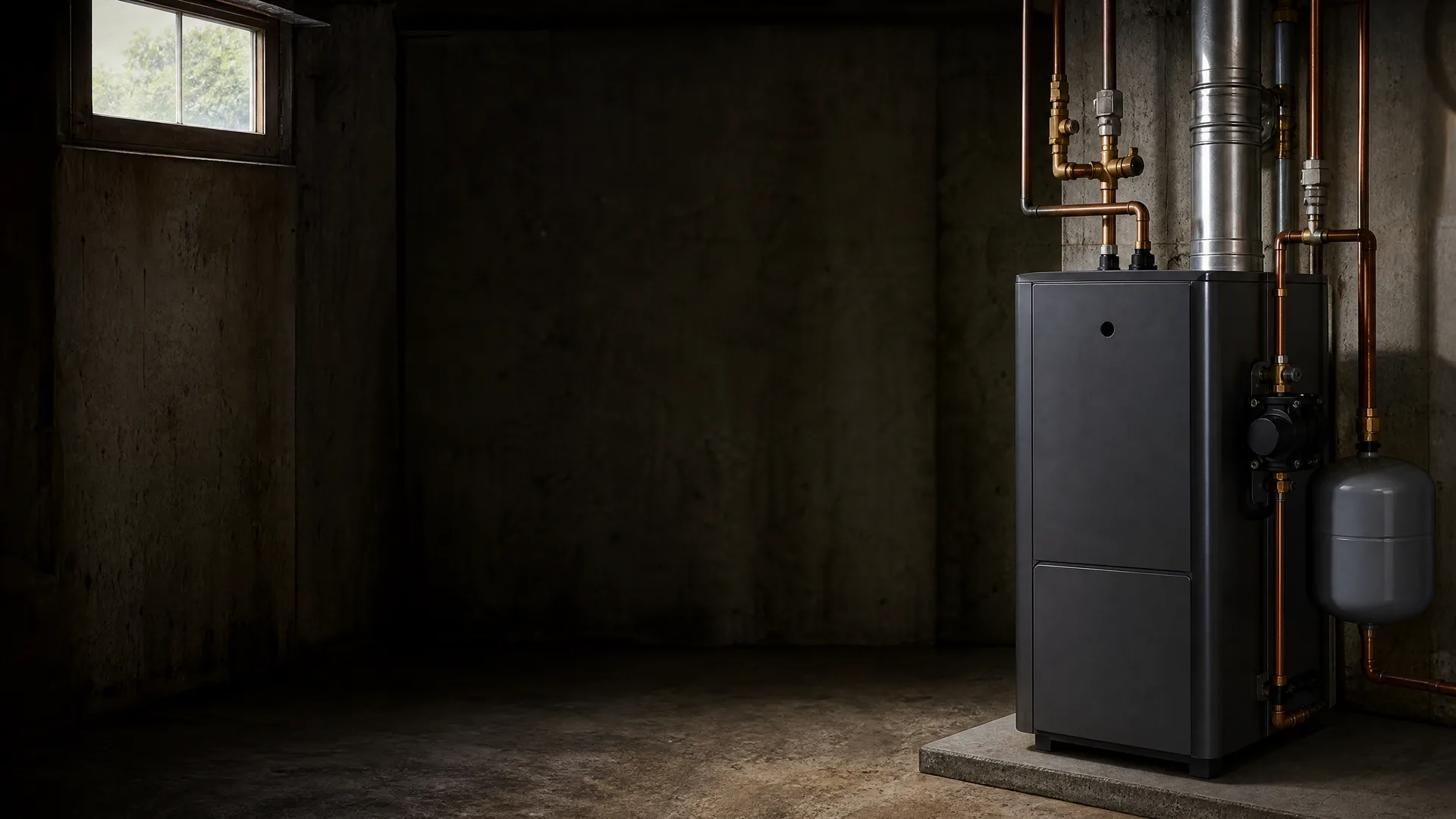
The expansion tank is doing most of the work behind that number. Water expands as it heats, and the tank gives it a pocket of air to push into instead of forcing the pressure up through the whole system. When the tank waterlogs, that air cushion is gone, and pressure has nowhere to go but up. That's one of the more common reasons a boiler in Oklahoma starts creeping past where it should sit.
The feed valve is the other half of it. It's set to bring the system back to around 12 psi on its own whenever pressure drops below that, which is why a slow leak can go unnoticed for a long time. The system just keeps topping itself off.
Thirty psi is the line the relief valve is built to protect. Past that, it opens and dumps water, and once it's been tripped, it often won't seat back down clean. That's a sign something upstream needs a look, not something to reset and ignore.
Check the gauge cold, before the burner has run for the day. A hot system always reads higher, and comparing a hot reading to the 12 to 15 psi target will tell you the wrong thing. And if the needle never moves, not up, not down, no matter what the system is doing, that's usually a dead gauge rather than a system holding perfectly steady.
A local pro for your boiler maintenance
A licensed local pro takes the request for your boiler tune-up.
A local pro who services boilers gets in touch about the tune-up.
Asking costs nothing, and the choice to hire stays yours.
Why does your boiler gauge keep dropping?
You top it off, and a week later it's low again. That usually means water is leaving the system somewhere, through a fitting, a valve, or a pinhole in a radiator, even if you never see a puddle. Some of it can also leave as air, bled off at a radiator vent and never replaced. Either way the needle keeps sliding back toward zero between fill-ups. Left alone, a boiler running low on pressure can trip out on its low-water cutoff and leave the house without heat on a cold morning, and a system that's lost enough water risks running the pump dry and burning it out. If you're refilling more than once every few weeks, something's letting water out.
What the gauge reads when it's running
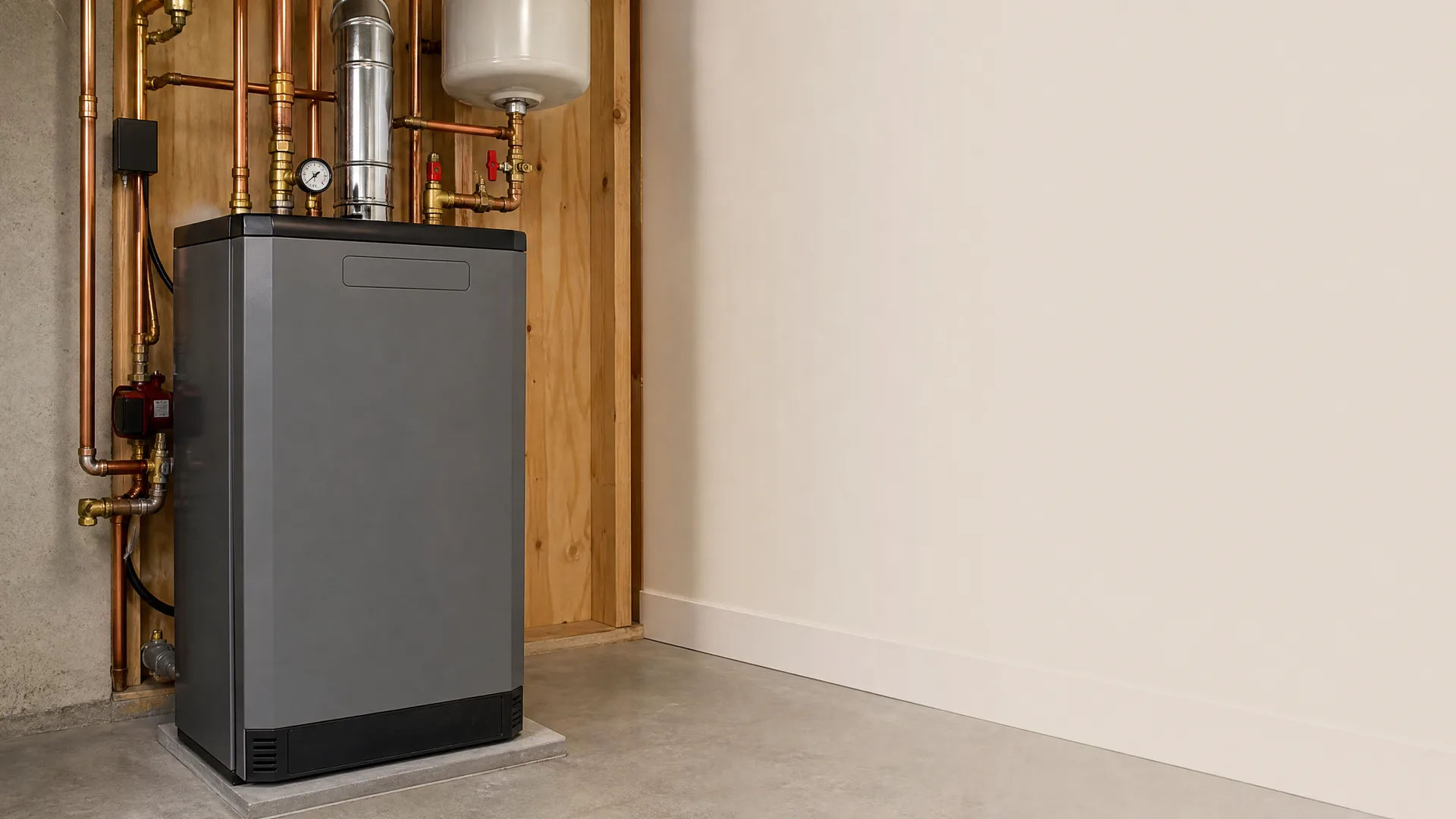
Once the burner fires, the water heats up and expands, and the needle climbs a few pounds above where it sat cold. A boiler filled to 12 psi cold might show 18 or 20 psi while it's running. That rise is normal. The relief valve is set to open around 30 psi, so there's room between a normal running pressure and a problem. If the needle climbs past 25 or so while the system is going, something's keeping that expansion from having anywhere to go.
What a dropping needle costs you
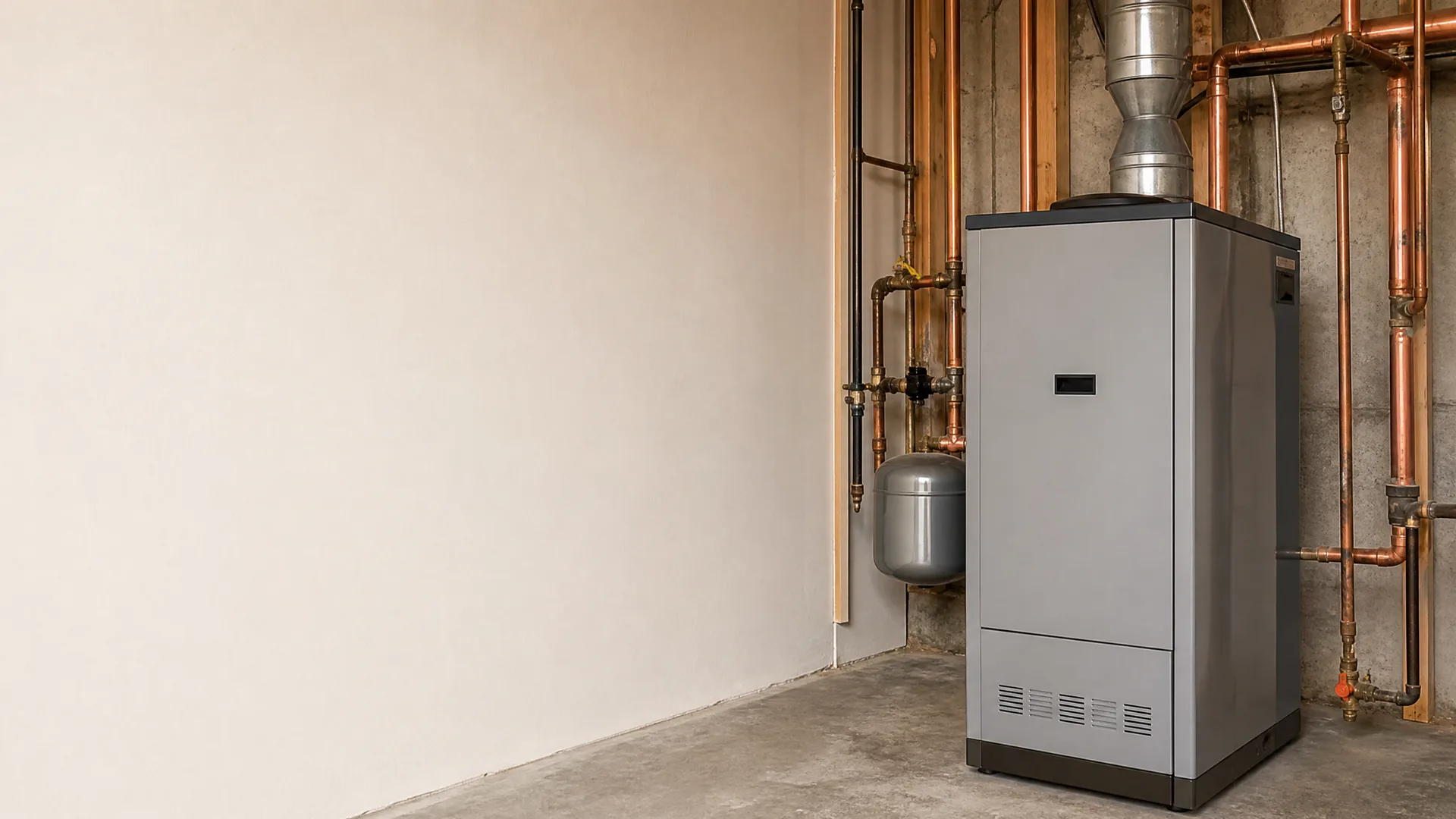
Pressure that keeps falling means the circulator is working against air instead of water, and a pump moving air wears differently than one moving water it was built for. Radiators that gurgle or heat unevenly are often the first sign, well before the gauge gets low enough to trip a low-water cutoff and shut the boiler down. Oklahoma winters aren't the longest, but a boiler that cuts out on a cold morning because pressure dropped overnight is still a boiler that isn't heating the house.
Why does my boiler's pressure relief valve keep dripping?
A dripping relief valve is usually what gets someone checking their pressure in the first place. It's a mess at the bottom of the boiler, sometimes just a few drops, sometimes a steady trickle, and it keeps coming back even after you wipe it up. The valve is doing its job when it drips, which is part of what makes it unsettling. It means something upstream is pushing past where it should.
The valve is releasing pressure because the system is running above 30 psi
That valve is built to open once pressure gets to around 30 psi, as a safety step so the system doesn't build past what the pipes and fittings can handle. If it's dripping, your boiler is hitting that mark somewhere in its cycle, usually right after the burner fires and the water expands. A waterlogged expansion tank is the common reason, since there's no air cushion left to absorb that expansion, so the extra volume has nowhere to go but out the valve. A feed valve stuck open can do the same thing, holding pressure high all the time instead of just when the burner runs. Either way, the drip is a symptom, not the problem itself.

Cold water fills the system through the feed valve first.
Boiler fires and heats the standing water in the loop.
Heated water expands and pushes into the expansion tank.
Tank's air cushion compresses, keeping the rise in pressure small.


Winter nights average 30°F statewide
Those 30°F nights mean your boiler is running long stretches through the night, not just kicking on now and then. A system holding steady at 12 to 15 psi cold handles that fine. One that's already low gets worse the more it runs.
NOAA nClimDiv 1991-2020 county normals weighted by homes





A gauge that holds steady is doing its job
12 to 15 psi cold, a few pounds higher once it's running. That's all the number needs to do. If yours sits there and stays there, the boiler is handling the winter fine and there's nothing to chase.
If it's drifting, low and losing ground or high enough to wet the relief valve, that's worth having someone look at before the cold nights in January and February push it further off. A contractor who services boilers around Oklahoma all winter can tell you quickly whether it's the expansion tank, the feed valve, or a leak working its way through a fitting somewhere in the loop. Get matched with one who works near you, and they'll reach out to go over what your system's actually doing.

Get the right pro for your boiler
Your request goes to one pro, not a list of companies.