A local installer who puts in boilers gets your project.
A boiler that's too big for your house cycles on and off more than it should, and that wears out the burner and the controls faster than they should wear. One that's too small runs long stretches on the coldest days and still can't get every room to temperature. Getting the size right matters more than most of what gets written about boilers.
Sizing a boiler the right way isn't a matter of matching your old unit's number or going by square footage alone. It comes from a heat loss calculation that accounts for your walls, your windows, your insulation, and how your house holds heat on a cold Oklahoma night. Two homes the same size down the street from each other can need different sized boilers if one has more windows or less insulation in the attic.
That calculation is something a contractor does by walking your house, not something a page can do for you. What this page can do is put you in touch with one who installs boilers and sizes them properly before quoting the job. You fill out the form once, with a few details about your home, and a contractor who handles installations in your area gets in touch.
Gas is how most Oklahoma homes heat, and a properly sized gas boiler installed by someone who ran the numbers on your house, not just the last one they worked on, is going to serve you better over the years it's in your basement or your utility closet. You don't have to figure out the formulas or learn the terms contractors use. You tell the contractor about your house, they measure what matters, and they size the unit to it.
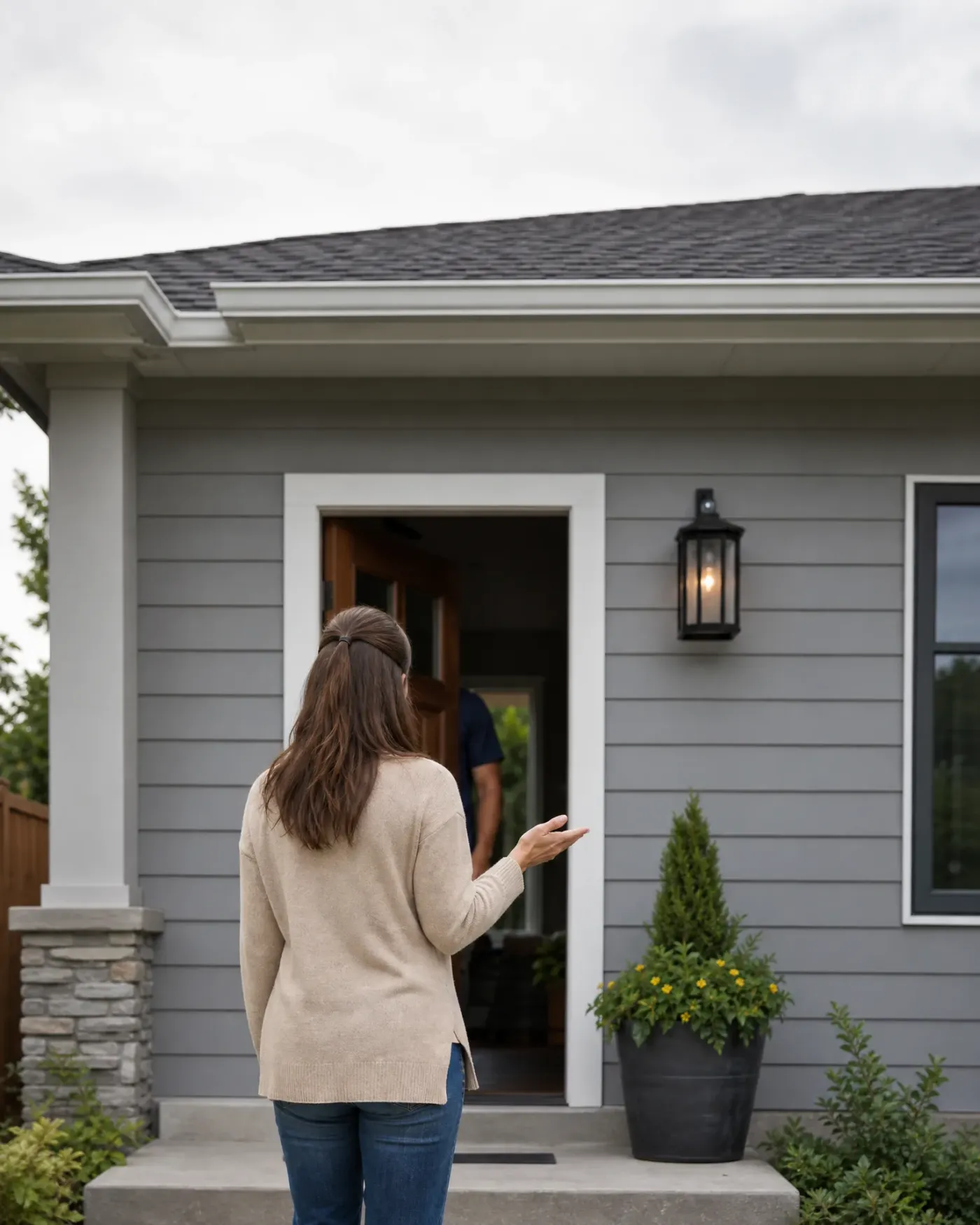
Once you send the form, you're not the one tracking down a contractor anymore. That part is off your plate. Someone who installs boilers in Oklahoma and sizes them correctly reaches out to you directly, and you take it from there.
The right boiler size comes from a heat loss calculation for your house, not from a chart based on square footage. A contractor works out how much heat your house loses on the coldest night, accounting for your insulation, your windows, and how the rooms are laid out, then sizes the boiler to match that number. Two houses the same size in the same Oklahoma neighborhood can need different sized boilers if one has more windows or less insulation in the attic. Oklahoma winters don't demand the output that northern states need, so a boiler sized off a generic rule of thumb usually runs bigger than your house actually calls for. Getting the number right means the boiler runs in longer, steadier cycles instead of short bursts, which is what keeps rooms at an even temperature and keeps the burner and controls from wearing out early.
The right pro for this job
Send the form and the search for an installer is over.
Get in touch with a local installer about a new boiler.
Short cycles that start and stop in a few minutes instead of running a full, steady stretch.
That cycling is what wears out igniters and controls before they should fail.
Rooms near the thermostat heat up fast while rooms farther from it lag behind.
Higher gas bills than a correctly sized unit, since each cycle burns fuel to get the burner up to temperature before it actually heats your house.
More upfront cost for a bigger unit you don't get the benefit of.
Undersized boiler
Runs for hours at a stretch on the coldest days and still may not bring every room up to temperature.
No reserve capacity, so a cold snap or a drafty room exposes the shortfall immediately.
Constant long runtimes put steady wear on the burner even though it's not short cycling.
Lower installed cost up front, but it's sized to a budget rather than to your house.
May need a backup heat source in the rooms farthest from the boiler during the coldest stretches of winter.
Sized right
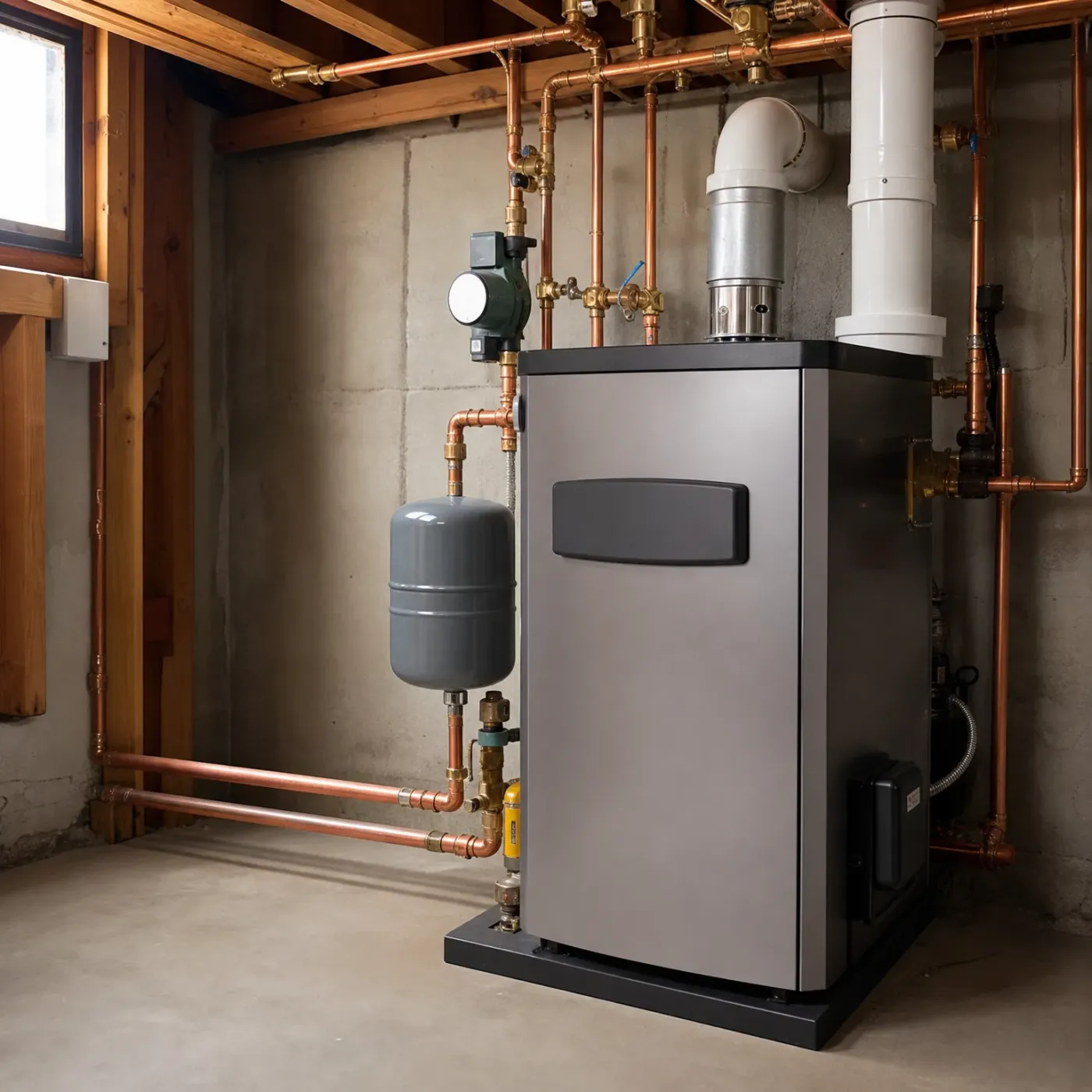
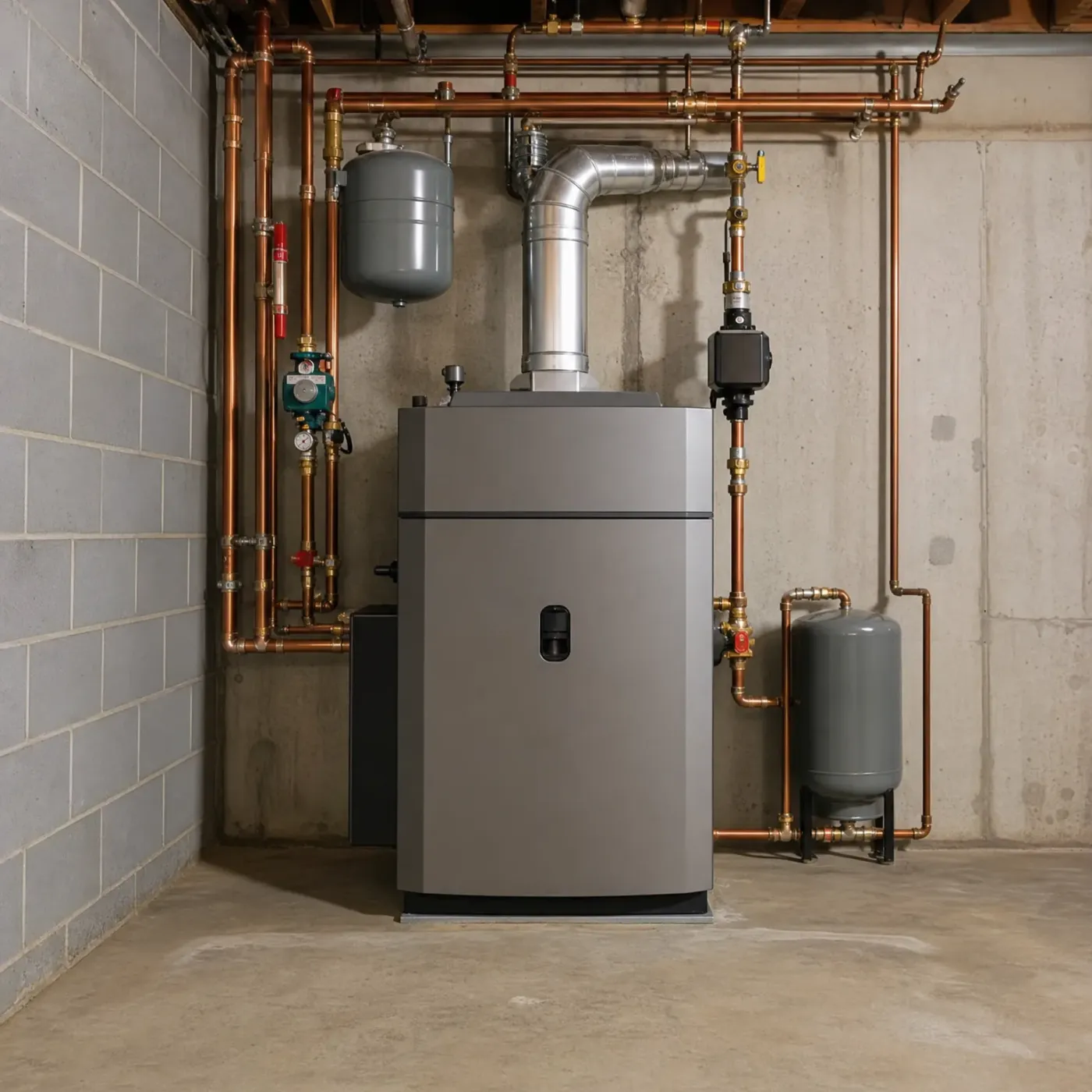
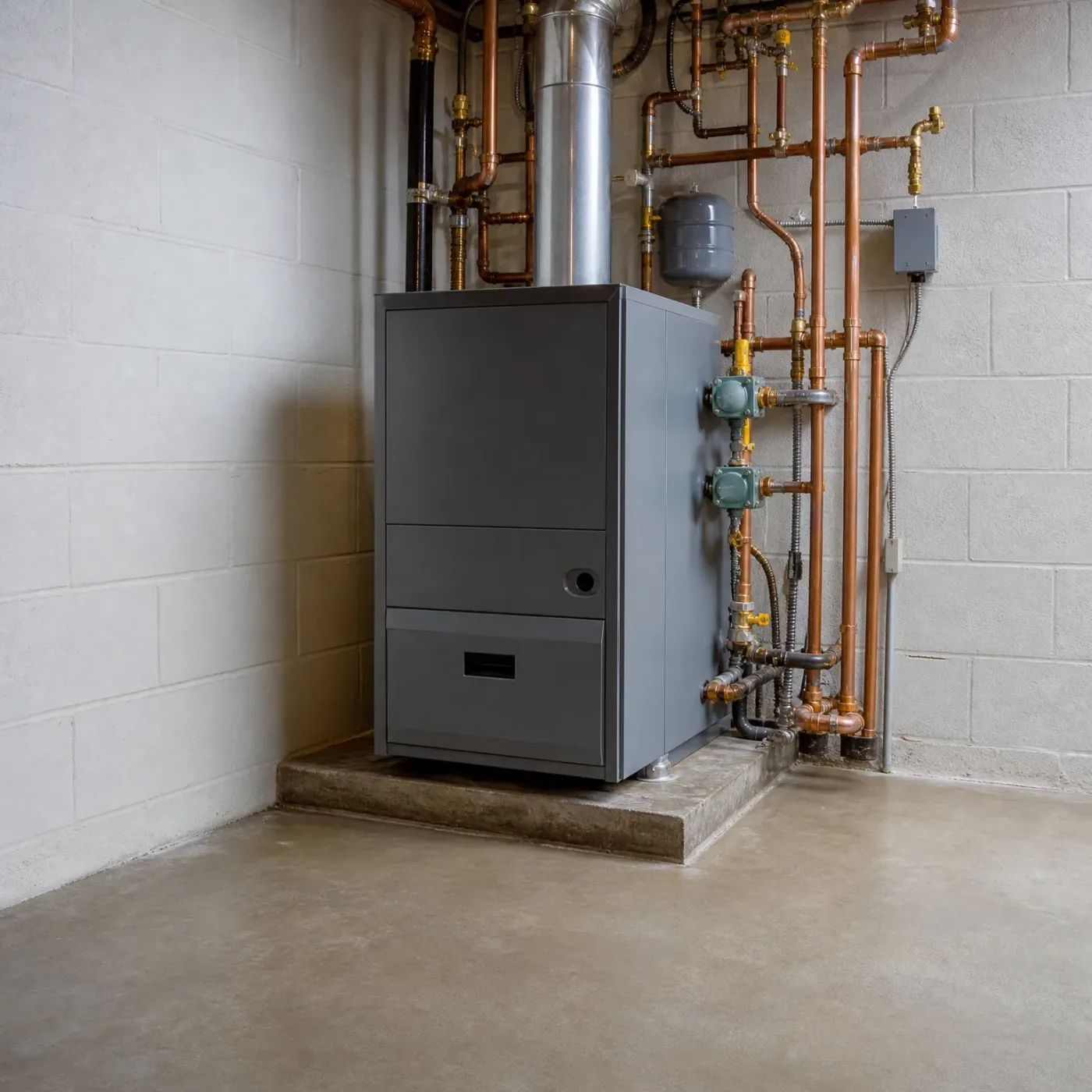
A properly sized boiler runs long, steady cycles that bring the house up to temperature evenly, room to room. The expansion tanks hold steady pressure, the gauges read where they should, and the circulator pump moves heat through the system without strain.
Sized wrong
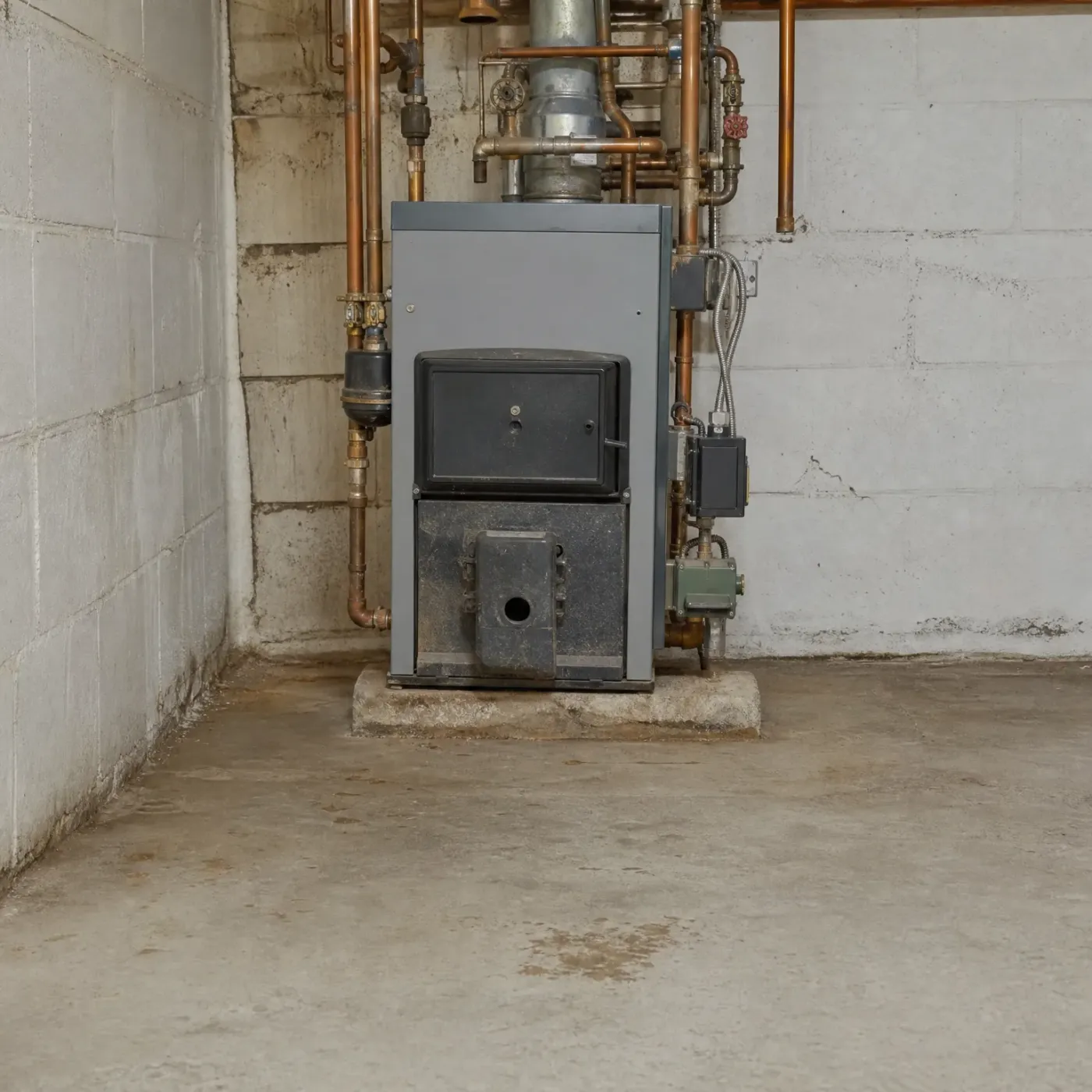
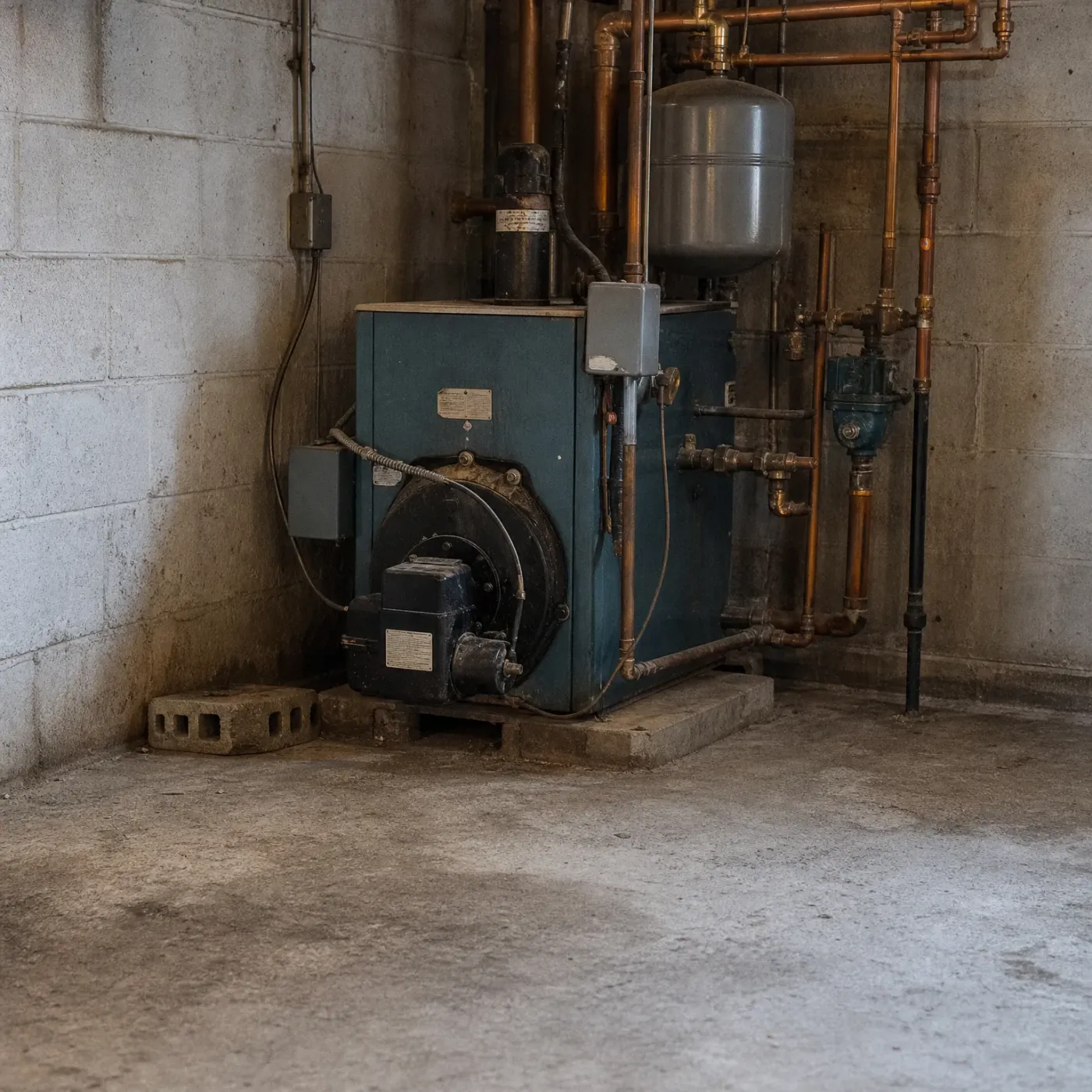
A boiler that doesn't match your house shows it in the flue, the controls, and the pad it sits on. Wrong sizing pushes the burner and controls harder than they're built for, and a unit worked this way wears out before it should.
Before you get your boiler installationAfter you get your boiler installation
Winter nights average 30°F statewide
A 30°F overnight low is the kind of cold your boiler has to answer for most of the winter, not just on the worst night. Size it off that average and the odd single-digit night won't catch your house short.
NOAA nClimDiv 1991-2020 county normals weighted by homes
1
Contractor measures every room's windows, walls, and doors
2
Those measurements add up to your house's total heat loss
3
That heat loss number sets the boiler size you need
4
Contractor sizes the circulator pump to match the boiler
The right size comes from your house, not a guess
A heat loss calculation is what tells you the boiler size, and that number belongs to your house alone. Two homes on the same street can need different sizes if their windows, walls, and layout aren't the same. Oklahoma winters put a steady load on a boiler most nights, so getting that number right matters more than matching whatever was installed before.
Once you know that, the rest is finding someone to size it and put it in. Send the form and a contractor who handles boiler installation in your area will reach out to you directly. You won't be the one tracking down quotes or chasing a callback. That part is off your plate.
Boiler Installation
Matched to your boiler job
Send the form and stop researching installers for the new boiler.