








What a boiler tune-up covers before an Oklahoma winter

Send the form, and lining up the boiler tune-up stops being yours to chase.

Hand off the search

A boiler tune-up before winter here covers the burner, the igniter or pilot assembly, the pressure relief valve, the circulator pump, and the expansion tank. A technician checks the water pressure, bleeds air from the lines, looks for leaks at the fittings, and tests that the thermostat is actually calling for heat and getting it. Combustion gets checked too, since a boiler burning gas wrong wastes fuel and can put carbon monoxide into the house. Most Oklahoma winters bring a real cold snap or two, not months of hard freeze, so the boiler sits unused a lot of the year and then gets asked to run hard with no warning. A tune-up catches the part that would have failed on that first cold morning while there's still time to fix it on a normal schedule instead of an emergency one.

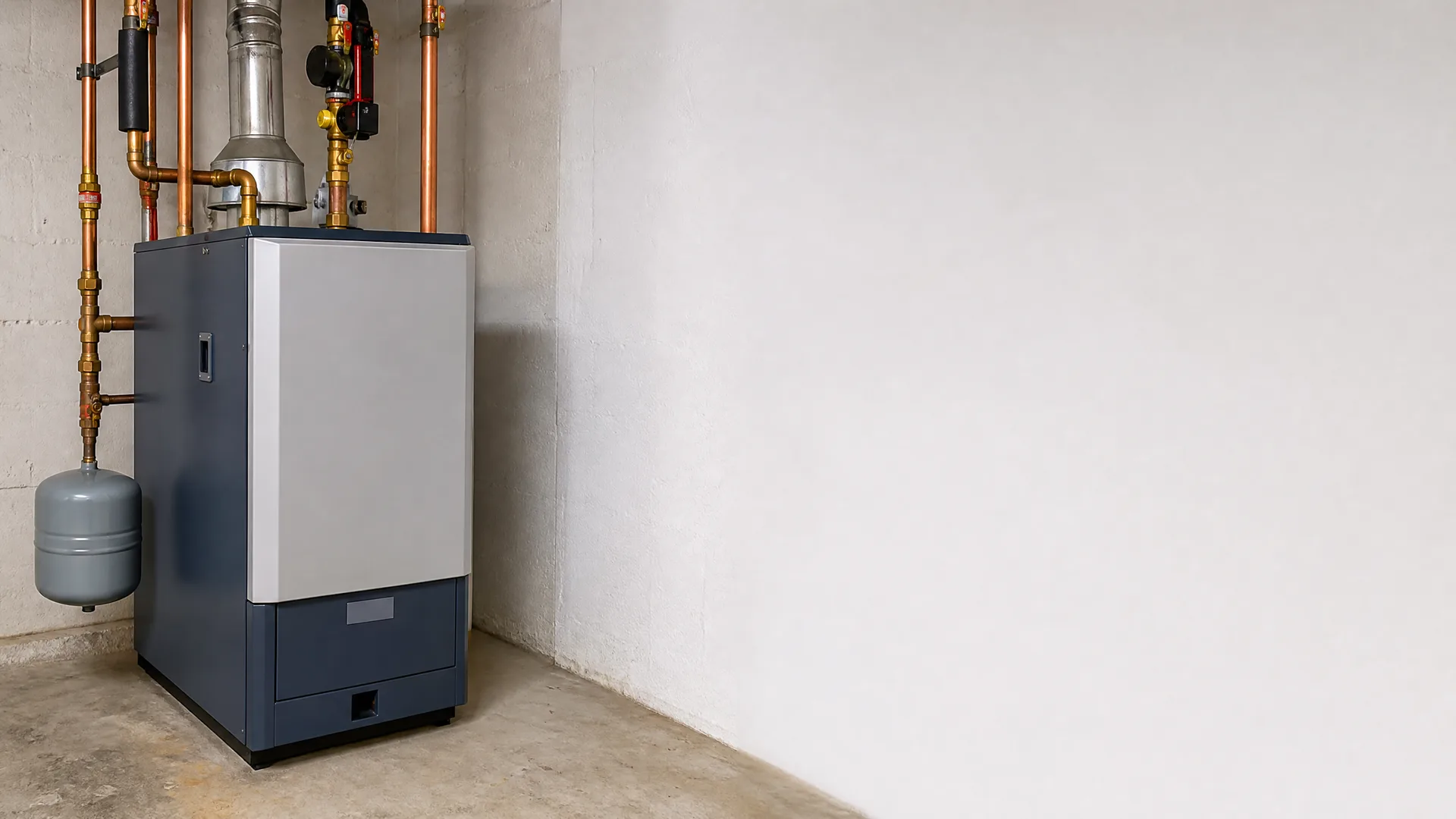
A gray and dark blue floor-standing boiler with copper pipes, a flue, and a small expansion tank stands in a basement corner with painted walls and a concrete floor.

Why the pressure check matters

Boiler systems run on water pressure, not air pressure. If it's too low, the circulator pump can't move hot water through the lines and rooms stay cold no matter how long the burner runs. If it's too high, the relief valve can start weeping water onto the floor. A technician brings it back to where the system was designed to run before the cold sets in.

A grey floor-standing boiler with a vented front panel stands against a plain light wall, connected to copper and galvanised pipework, a metal flue, and a cylindrical expansion vessel above.

What a dirty burner does

Soot builds up on a burner over months of use, and a sooty flame burns yellow instead of blue. That flame heats the heat exchanger unevenly and wastes gas doing it. A yellow flame can also mean the burner isn't getting enough air, which is worth catching before the boiler runs daily instead of a few times a month.

Is your boiler telling you something right now

Maybe the radiators clank and hiss before they ever get warm. Maybe one room upstairs stays cold while the rest of the house heats fine. Maybe you've glanced at the pressure gauge and it's sitting low, or you've seen a small puddle near the base of the boiler that wasn't there last winter. A pilot light that won't hold, a burner that cycles on and off more than it used to, a faint metallic smell when the system kicks on. None of that fixes itself once the weather turns cold and the boiler is running most of the day. A system already struggling in October is the one you'll be calling about in January, at the point where the house has no heat at all.

  1. Technician checks water pressure and adds water if it's low

  2. Air gets bled from the radiators or lines one by one

  3. Burner and igniter or pilot assembly are inspected and cleaned

  4. Pressure relief valve is tested to confirm it opens correctly

A man in a gray sweater reclines in a brown leather armchair with his eyes closed, beside a wooden side table holding a mug, a folded newspaper and a potted plant, with a bookshelf and sunlit window behind him.
A man with greying hair and a dark sweater leans back on an armchair with his eyes closed and a slight smile, in a living room with a bookshelf, plant, folded newspaper and mug on a wooden table.
A man in a gray fleece jacket sits reclined in a leather chair with his eyes closed, in a room with bookshelves, a table lamp, a window, and a desk holding a folded newspaper and a dark mug.
A bearded man in a gray fleece pullover sits with eyes closed in a brown leather armchair in a living room, with a floor lamp, bookshelf, potted plants, a side table holding newspapers and a dark mug, and a bright window behind him.

Send one request and you're done looking

A licensed local pro takes the request for your boiler tune-up.

It costs nothing to send, and you don't have to hire anyone.

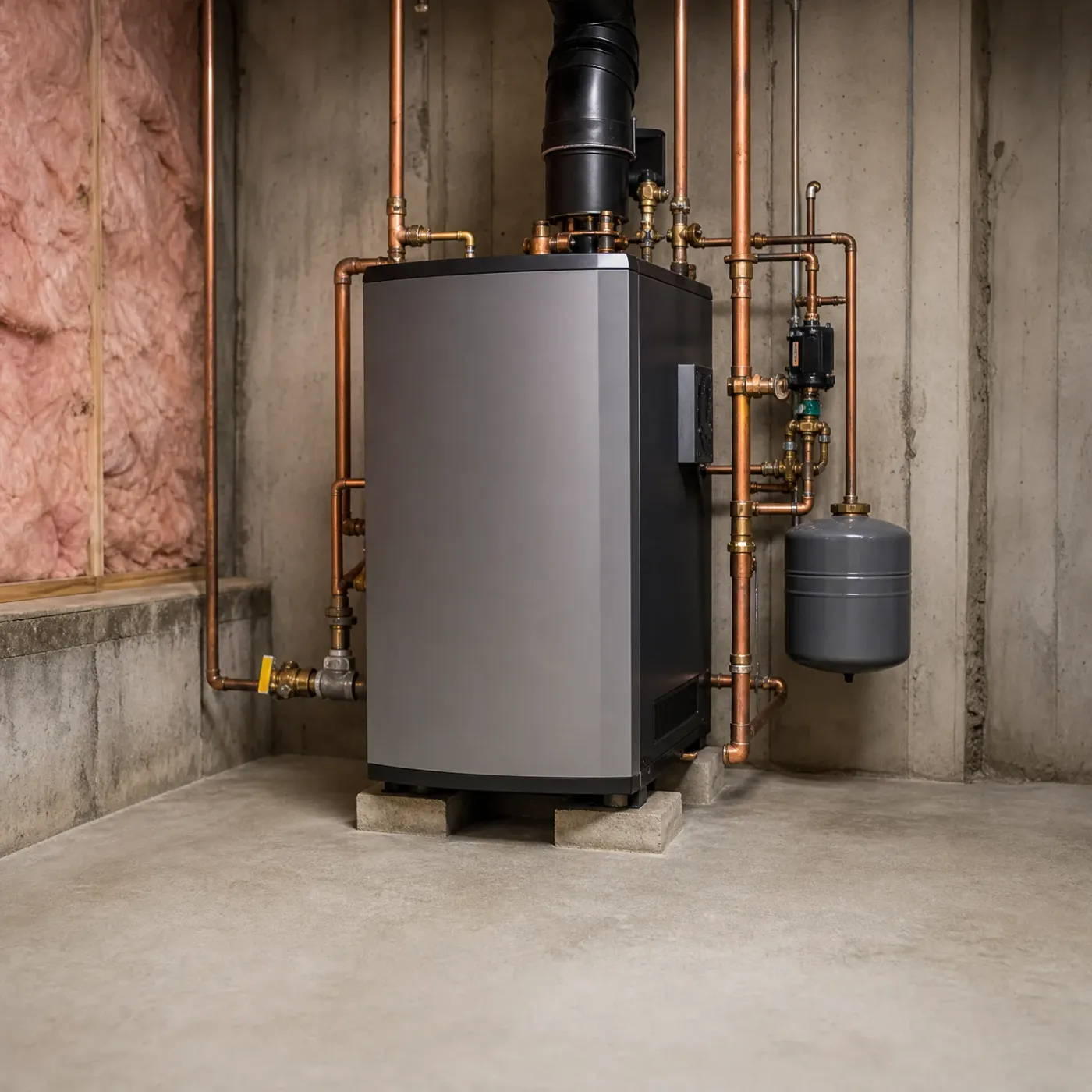
A gray and black boiler unit sits on concrete blocks in a basement corner, connected to copper piping, valves, a black flue duct, and a gray expansion tank, with bare concrete walls and exposed pink insulation at left.
A boiler like this one runs clean because someone checked it before the cold set in, pressure steady and every joint dry.
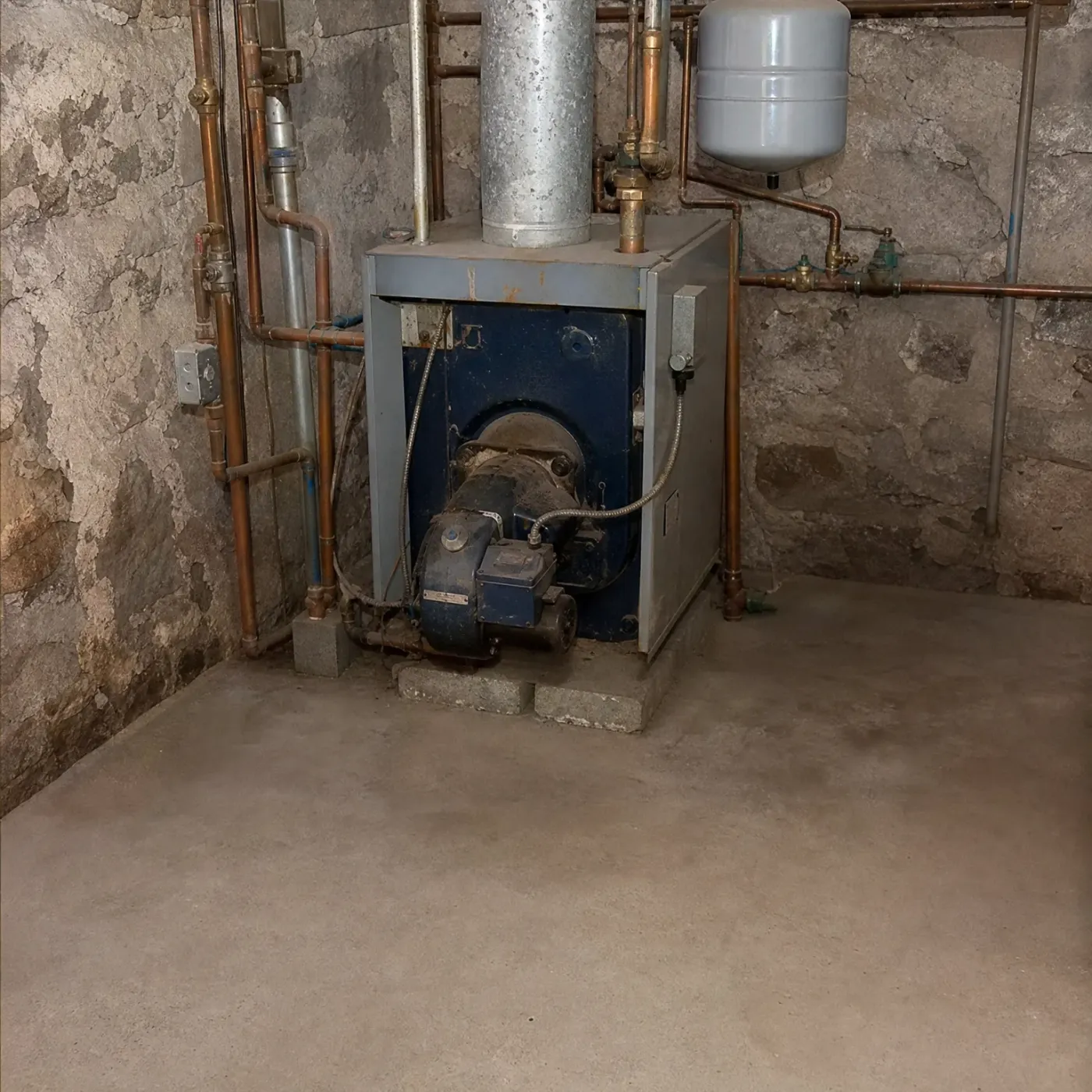
An oil-fired boiler with a blue and gray cabinet and burner sits on concrete blocks in a basement corner with stone walls, connected to copper pipes, a metal flue, and a wall-mounted expansion tank.
Left alone, a boiler ends up like this: propped on blocks, flue pipe going to rust, and nobody certain when it was last opened up.

Winter nights average 30°F statewide

Those 30-degree nights are when your boiler runs longest, holding heat through hours of cold rather than a quick burst in the afternoon. That's more hours for a weak joint or a slow leak to show itself, and more hours for low pressure to leave a room cold.

NOAA nClimDiv 1991-2020 county normals weighted by homes

Get the tune-up done now

A technician comes out while the schedule is open, checks the pressure, bleeds the lines, inspects the burner and the relief valve, and tells you plainly what shape the boiler is in. If something's worn, there's time to order the part and fix it before a cold night makes the decision for you. You're not waiting on a repair call while the house drops into the 50s. The system goes into winter already checked, not hoping it holds.


Wait and see what happens

The boiler might run fine all winter without anyone looking at it. Plenty do. But if the igniter's going or the pressure's been creeping down, you won't know until a January morning when the radiators stay cold and every other boiler owner in Oklahoma had the same idea on the same cold week. Parts take longer to source when a contractor's booked solid, and a house without heat for a few days is a harder problem than a pressure check would have been.

A gray-haired man in a blue quarter-zip sweater sits in an armchair with his eyes closed, beside a large window with bare trees outside and a potted plant and lamp nearby.
A woman in a cream knit sweater sits in an armchair with her eyes closed and head tilted back, beside a window showing orange autumn foliage and a wooden side table with a mug.

What a tune-up settles before winter

  • A tune-up before the cold hits checks the pressure, the burner, and every joint where a leak would start.
  • Low pressure, a dirty burner, or a stuck relief valve all get caught before a 30-degree night finds them first.
  • A local technician who services boilers all season knows which parts in Oklahoma systems tend to fail first.
  • One contractor takes the job, so you're not fielding calls from three different companies about the same boiler.
  • A boiler checked now runs steady through the coldest nights instead of leaving you guessing at the gauge.
  • Worn parts found early can be ordered ahead of time instead of waited on during a cold snap.

A boiler tune-up before an Oklahoma winter comes down to a few things checked in person: the pressure, the burner, the relief valve, the joints where water would show a leak first. None of it takes guessing once someone's looked. A gauge sitting low gets water added. A burner running dirty gets cleaned. A valve that won't open gets found before a cold night asks it to.

That's the kind of thing a technician who works on these systems all season catches without much searching, because the same parts tend to wear the same way in the boilers around here. Knowing that comes from doing the work locally, not from a checklist. It's also why one contractor handling the job works better than several. The person who shows up is the one who looks at the pressure, the burner, and the valve, and who'd be the one to come back if something needs more than a tune-up.

Once that visit happens, you're not left watching the gauge wondering if tonight's the night something gives out. The boiler either holds pressure and runs clean, or something's found and dealt with while there's still time to order a part instead of waiting on one during a cold snap. Either way, you know where you stand going into the months that matter.

A single-story stone-clad house with low-voltage path lights along a gravel bed and lawn at dusk, with a tree line and orange sky on the horizon.

Boiler Maintenance

Finding a pro stops being your job

Step 1 of 3: Equipment
  • A brown leather and wood armchair with a cream knit throw sits in a corner beside a woven basket holding a dark cushion, under a framed mountain photograph, with a wood-trimmed window showing yellow and green foliage.
    • A local pro who services boilers gets in touch about the tune-up.
    • A local pro who knows boilers gets your details and gets in touch.
  • A dark wood dresser against a pale wall holds a ceramic vase of eucalyptus branches, a stack of books with a wooden bowl, and a woven basket, with a framed landscape painting above and a woven basket holding a knit blanket on the floor beside a window.
    • Send it once and finding someone is no longer on you.
    • Once you send the form, finding a pro is off your list.
  • A window seat with beige linen and brown textured cushions, a chunky knit blanket, and an open book, beside a window showing blurred yellow autumn foliage.
    • Fill out one form instead of calling around for a boiler tune-up.
    • Skip calling around to set up a boiler tune-up.
  • A cream upholstered armchair with a rust-colored pillow and knit fringed throw sits beside a window with a ceramic vase of orange-leafed branches on the sill, overlooking autumn trees and leaf-covered ground.
    • The pro who reaches out is licensed in Oklahoma.
    • Only one pro gets your request, so you hear from one company.