

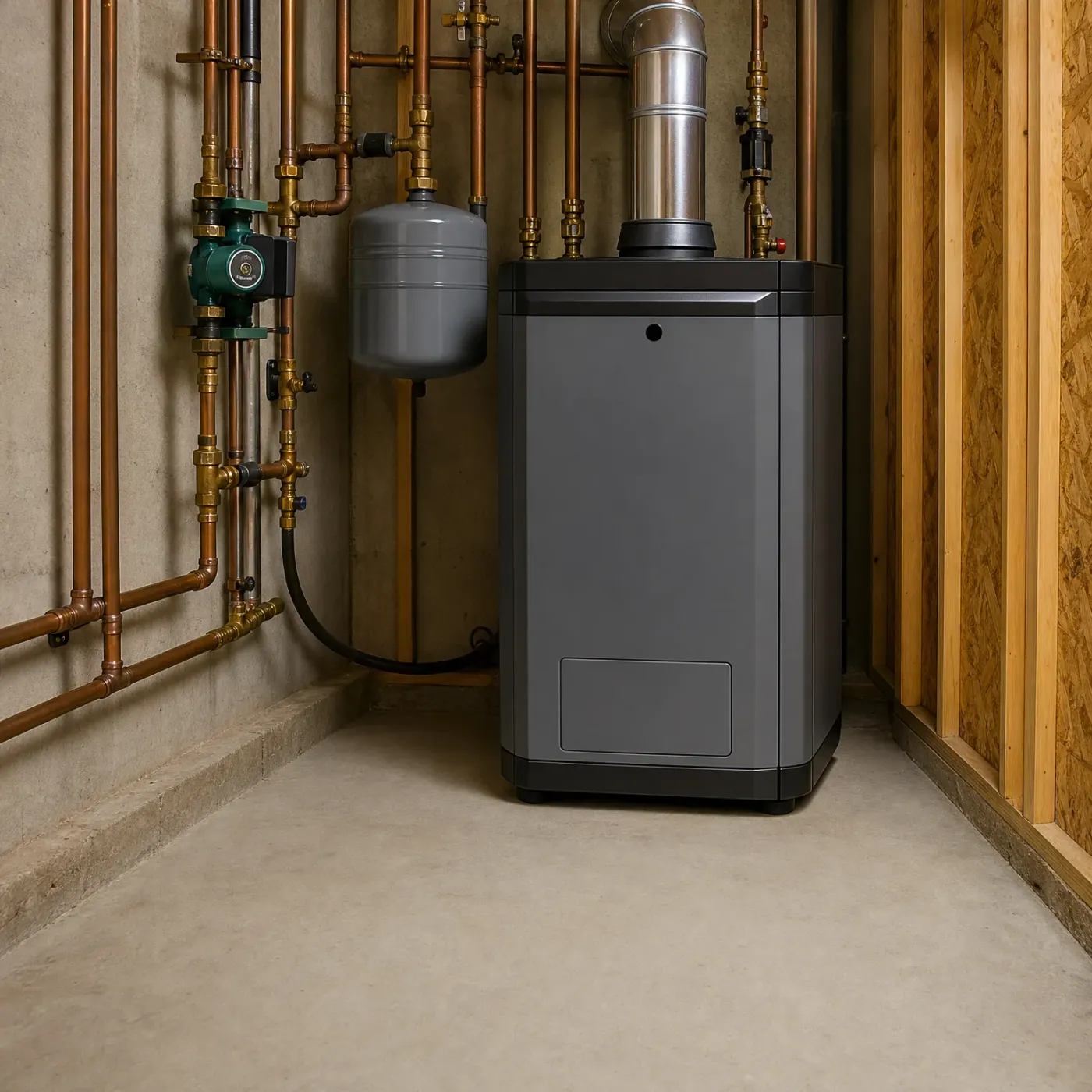
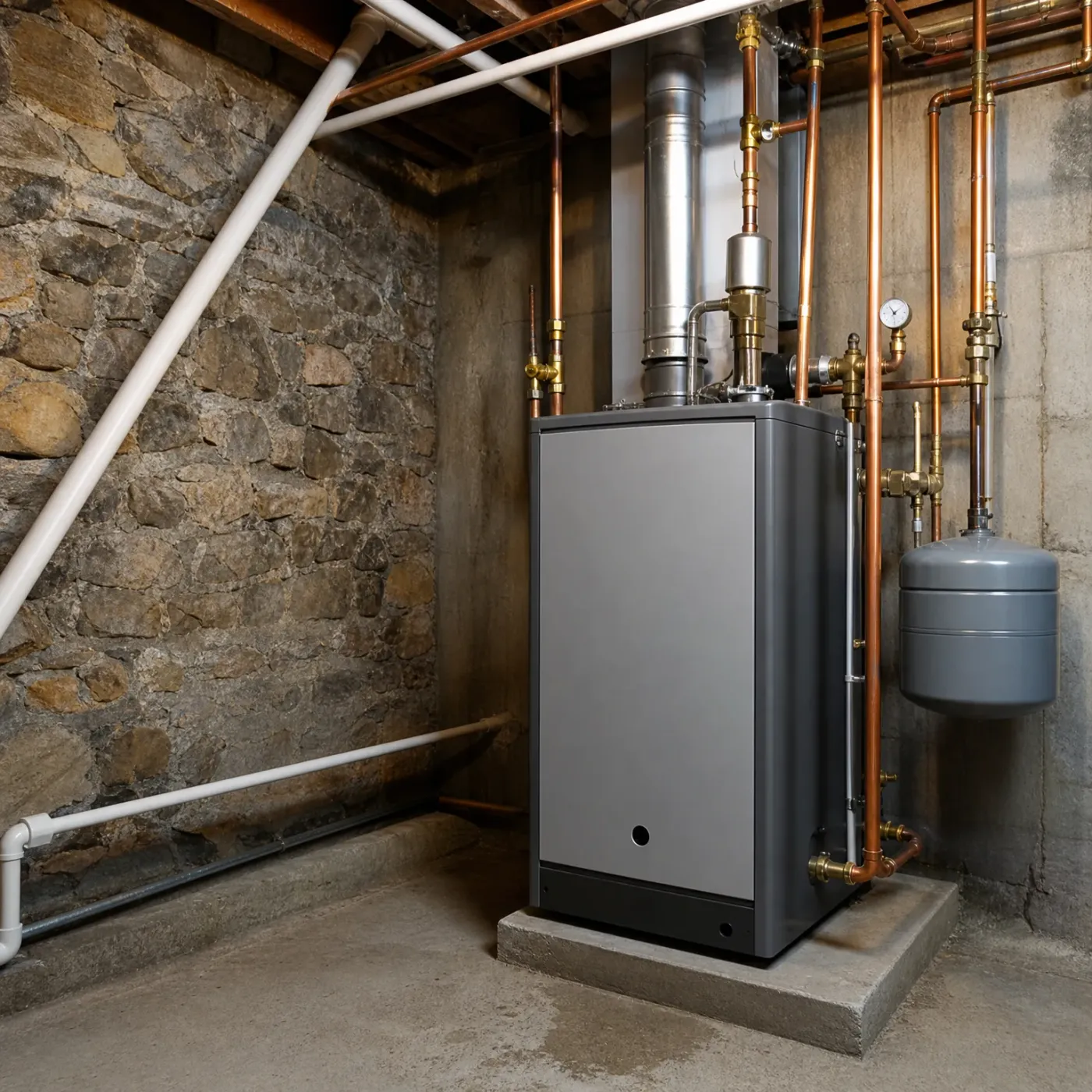
The boiler running the way it should
This is what a radiant system depends on. Pressure holds steady, the pump moves water through the loops, and the gauge reads where it should. As long as the boiler keeps that up, the floors above stay warm.
Get in touch with a local installer about a new boiler.
Radiant floor heat works well with your boiler, and most homeowners who have it in Oklahoma are glad they do. A boiler already heats water, and radiant floors just send that hot water through tubing under the floor instead of out to radiators, so you're not adding a separate heating system, just a different way of delivering the heat you already pay for. The floor warms the room evenly, without the drafts or dry air that come from forced air, and it runs quietly with no vents to dust or blow. The real question in Oklahoma is less about the system and more about your floors and your layout, since radiant heat works best under tile or stone and in rooms that stay closed off rather than open to the rest of the house. It won't do much for cooling, so you'll still need something else for the muggy months, but for winter comfort on a boiler you already have, it's a solid use of what's running anyway.
Your boiler heats water to the temperature the system calls for.
A pump pushes that hot water into tubing loops under the floor.
The floor itself warms up and radiates heat into the room.
A thermostat senses room temperature and signals the pump to stop or start.
Walk the house barefoot in January. If one room runs cold while the rest stays even, a loop under that floor may not be heating the way the others are, or the thermostat zone covering it is out of balance. You might also notice a room that takes a long time to warm up after the heat's been off, or flooring that feels warm in spots and cool in others instead of even underfoot. None of that means the system is failing. It usually means a loop needs balancing or the boiler's water temperature needs adjusting for that zone. Left alone for a long stretch, an unbalanced system just means higher bills for comfort you're not actually getting.
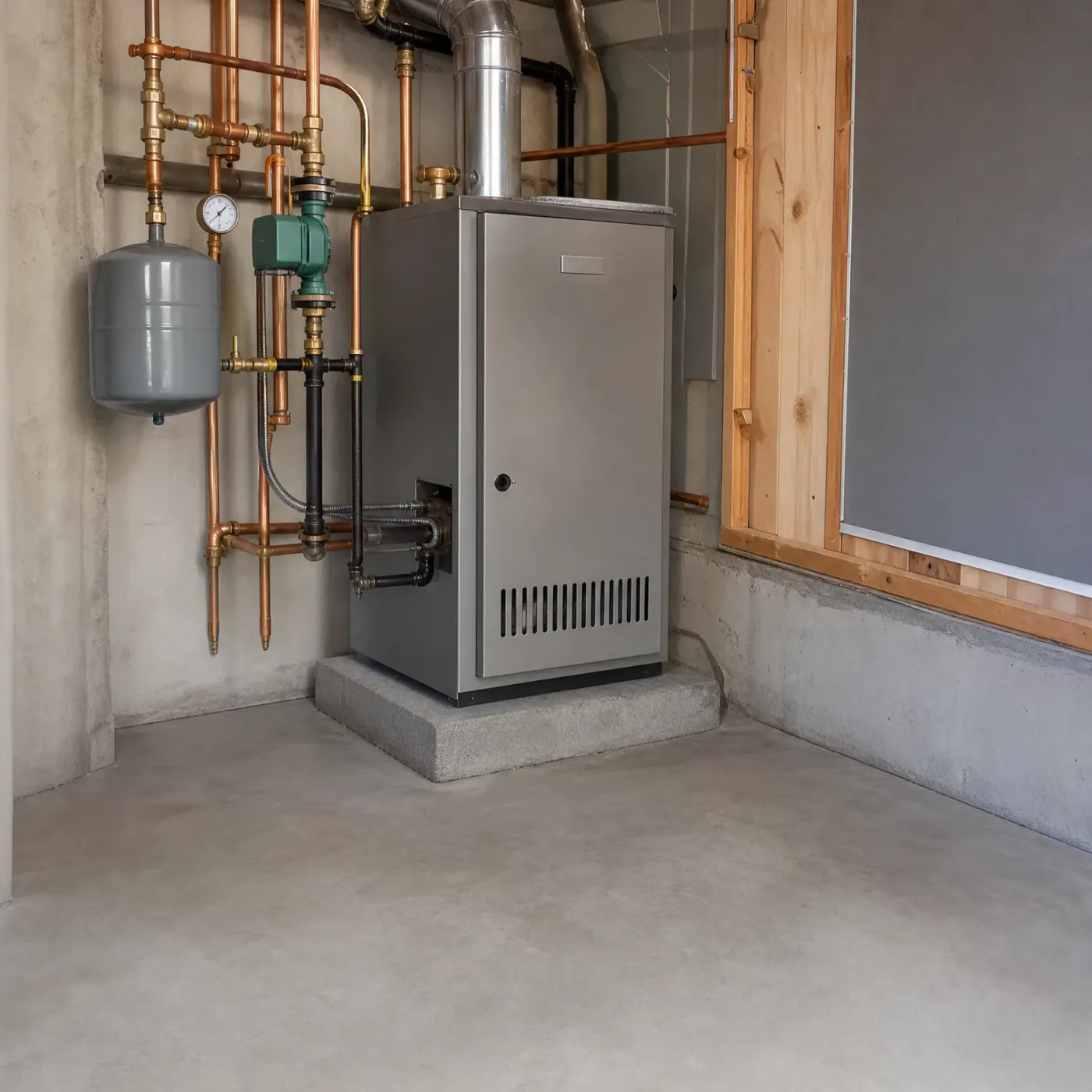
This is what a radiant system depends on. Pressure holds steady, the pump moves water through the loops, and the gauge reads where it should. As long as the boiler keeps that up, the floors above stay warm.
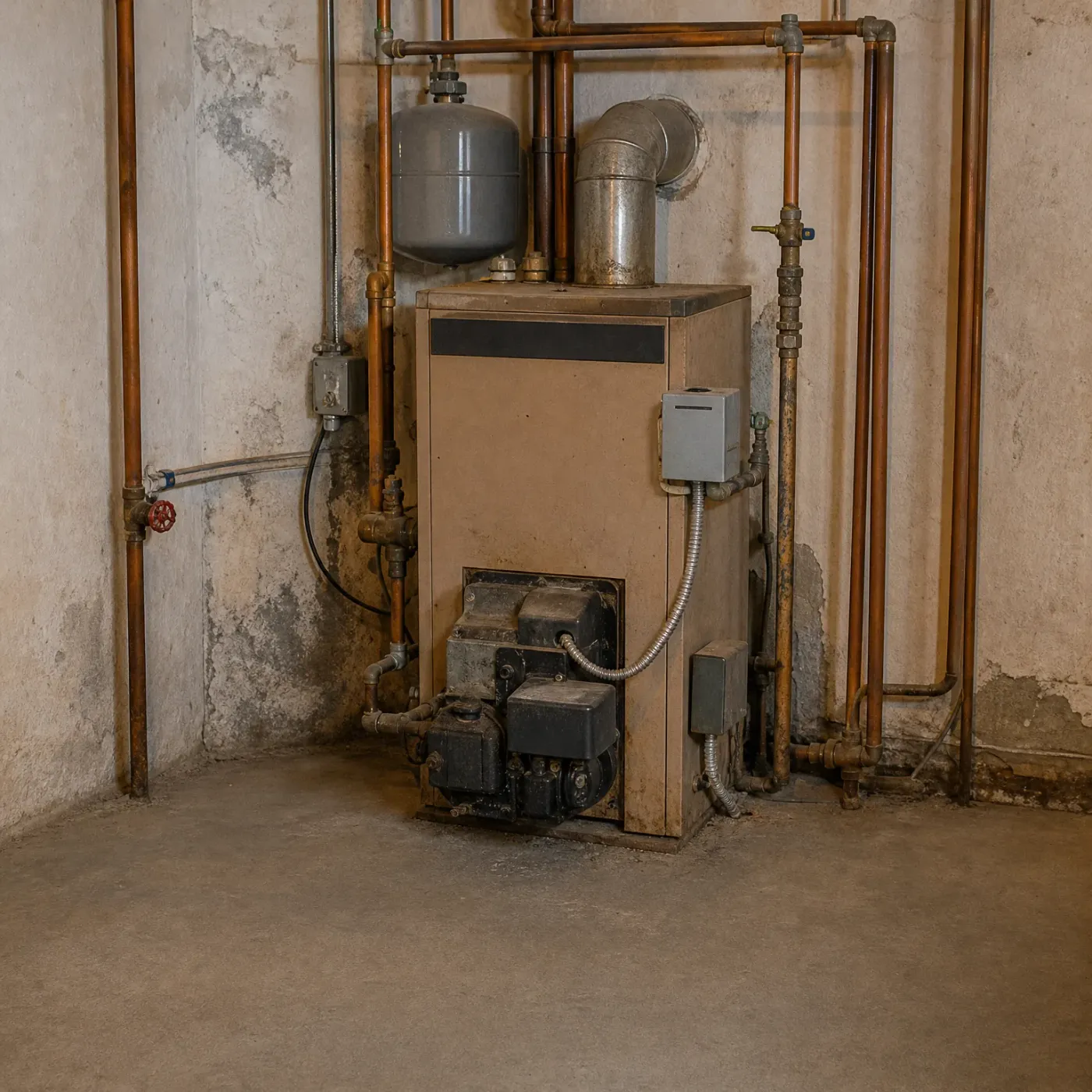
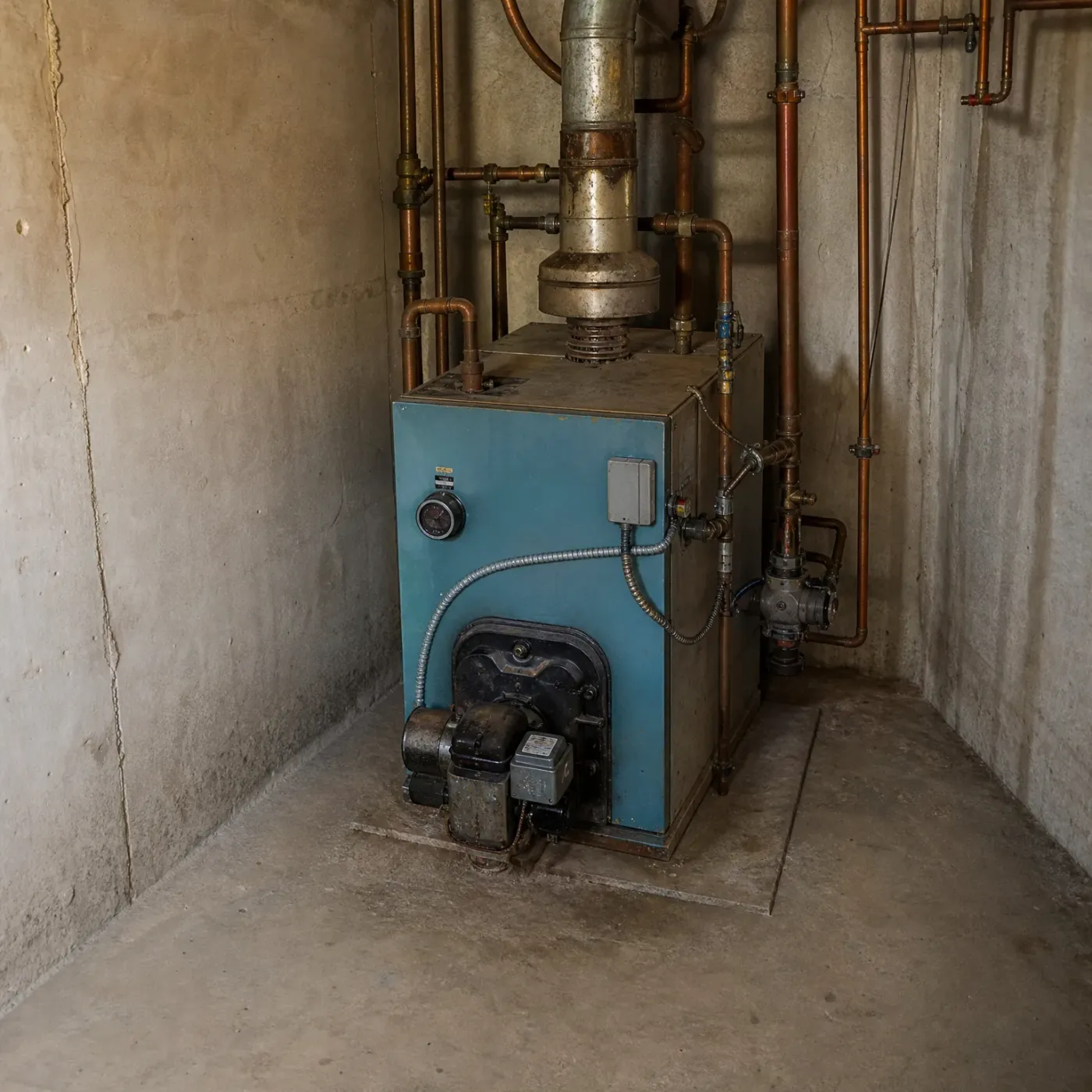
Old copper runs along every wall, and the burner and pump sit exposed at the base. Before any radiant loops get added, a contractor needs to check whether this unit and its piping can take on the job.




Radiant heat loses no warmth to ductwork because there's no ductwork to lose it to. A gas furnace pushes air through sheet metal runs that can leak into the attic or crawlspace before it ever reaches a room.
That's part of why radiant floors feel steady in a way forced air doesn't. The water in the tubing holds its heat and releases it slowly, so the room doesn't swing hot then cold every time the burner cycles.


One installer gets your project, so there's no bidding war over it.
A local installer who puts in boilers gets your project.
Asking costs nothing, and the choice to hire stays yours.
Radiant floors don't blast warm air the way a furnace does, so the first time a homeowner turns one on, or switches it up after a cold night, it's fair to wonder how long you're waiting before the room actually feels warm. With a boiler already in the house, the answer has as much to do with the floor itself as the equipment behind it.
A furnace warms the air in a room fast because it's heating air directly. Radiant floor heat works the other way. The boiler sends hot water into the tubing, the tubing heats the floor material itself, usually concrete, tile, or the subfloor under it, and only then does that warmth radiate up into the room. Concrete especially holds and releases heat slowly, so from a cold start you may wait an hour or two before you notice it underfoot. Once the floor is up to temperature, though, it holds steady, which is why most homeowners leave the system running through the cold months rather than cycling it on and off like a furnace. If a room is slow to warm every time, not just at startup, that's worth having a contractor look at.
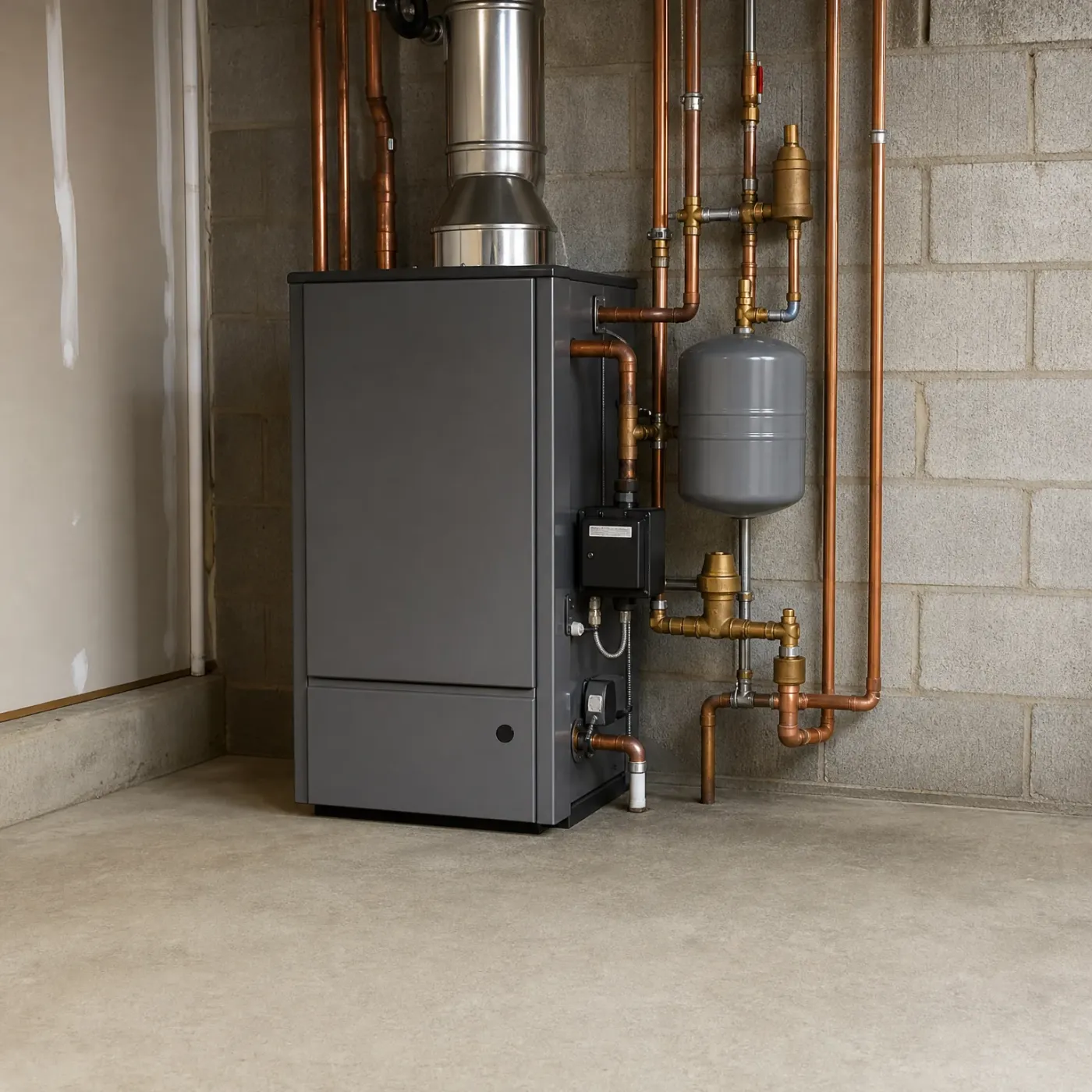
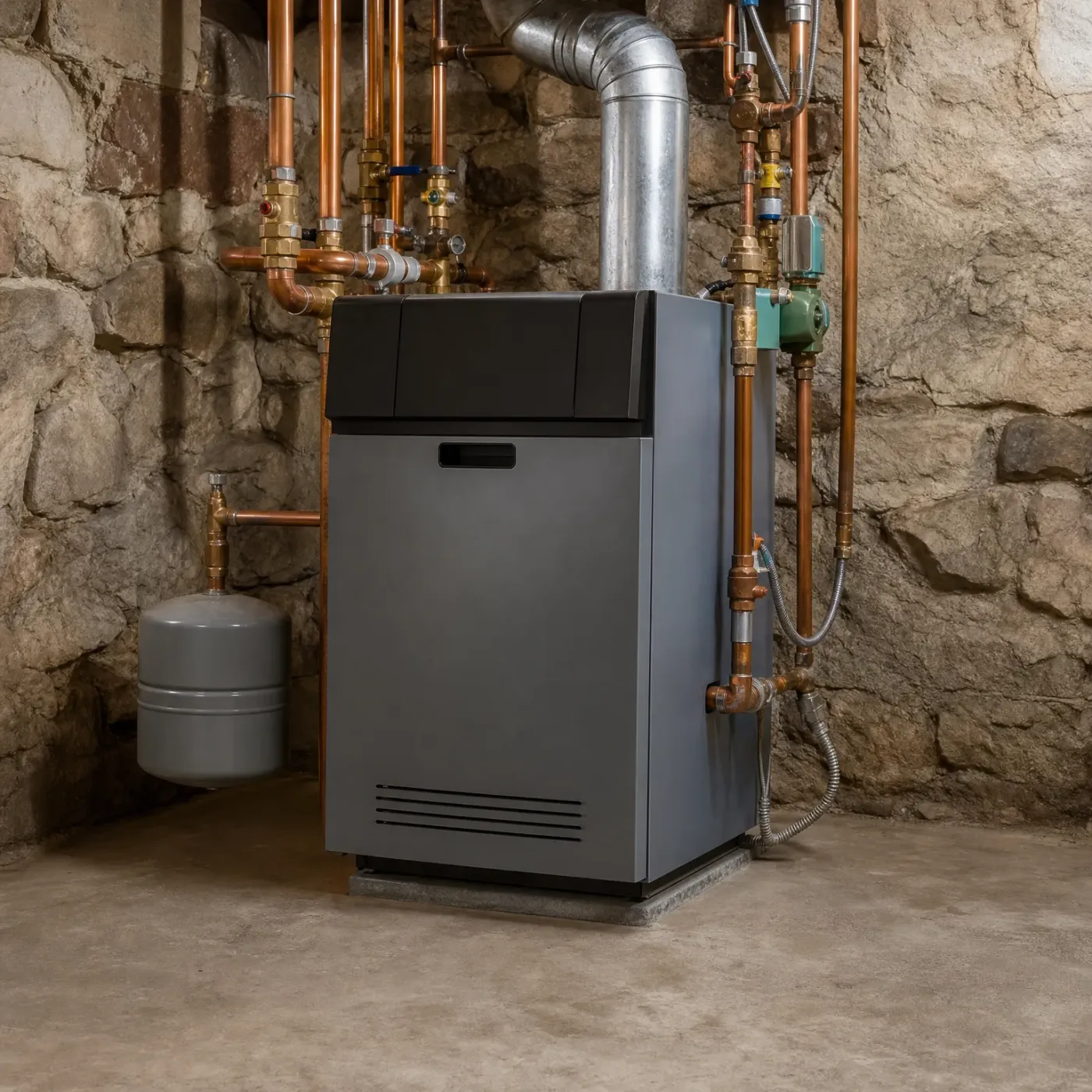
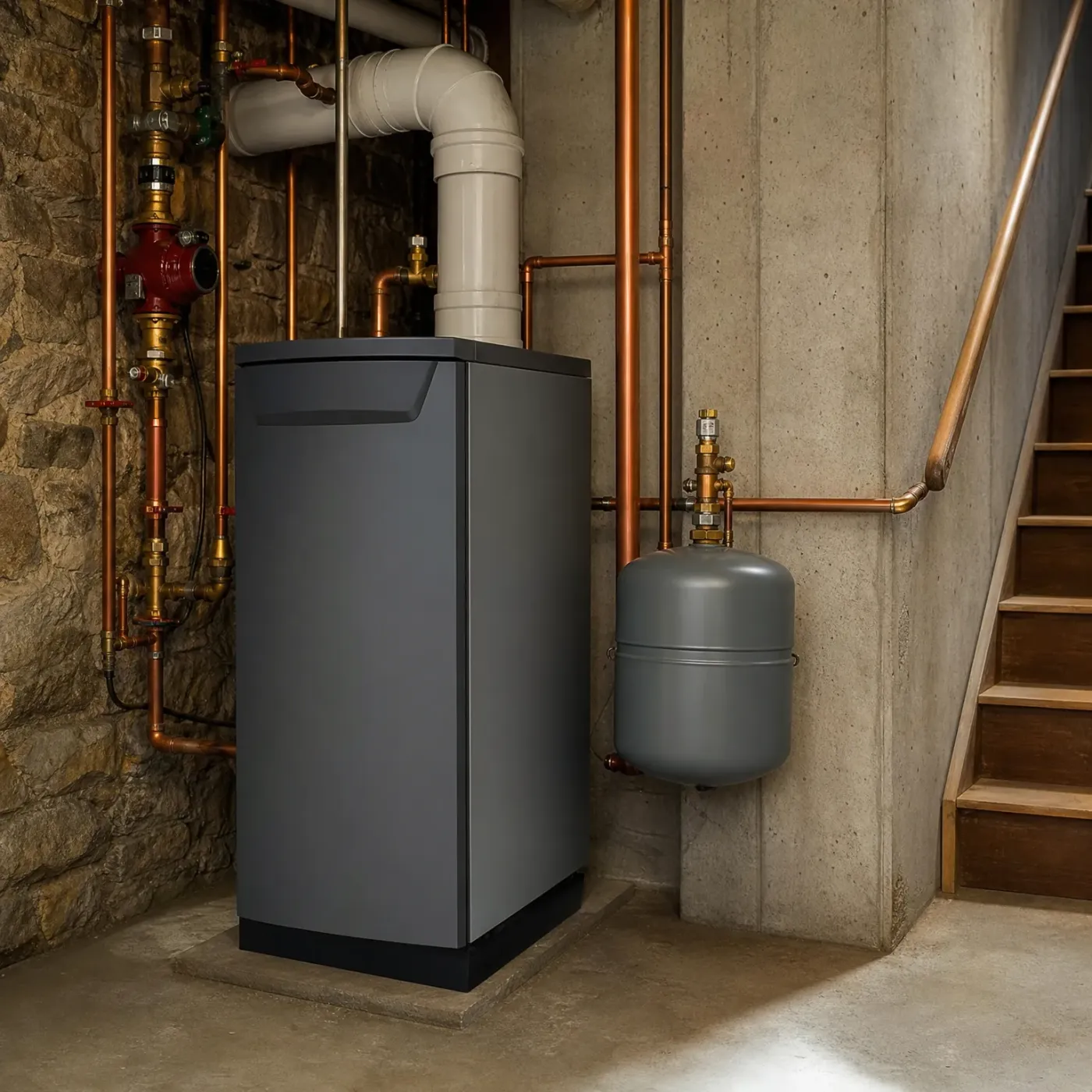
This is what you want to see behind the wall: steady copper lines, a working circulator pump, pressure where it should be. A boiler in this shape has no trouble sending hot water out to radiant loops, and the floors above stay even all winter.
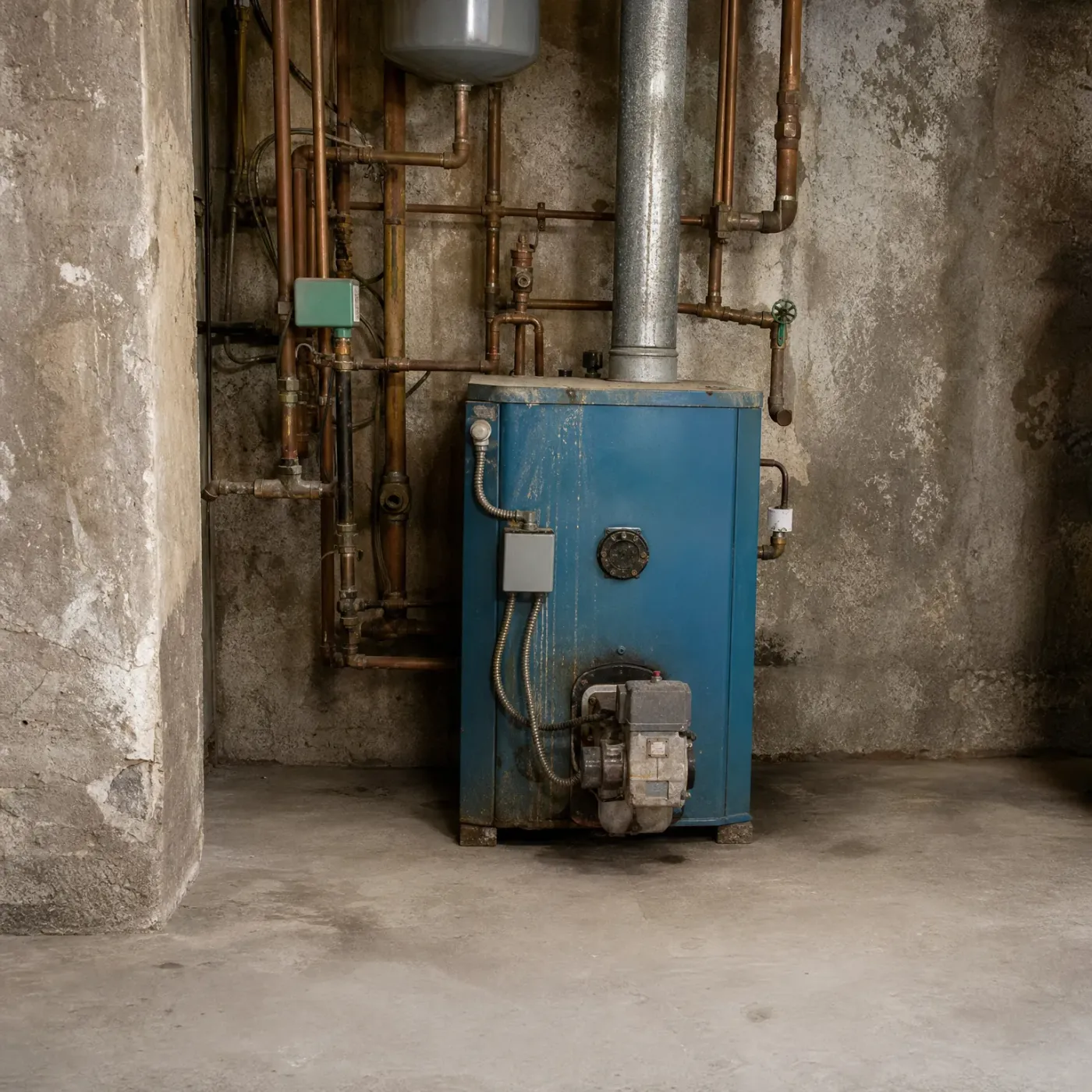
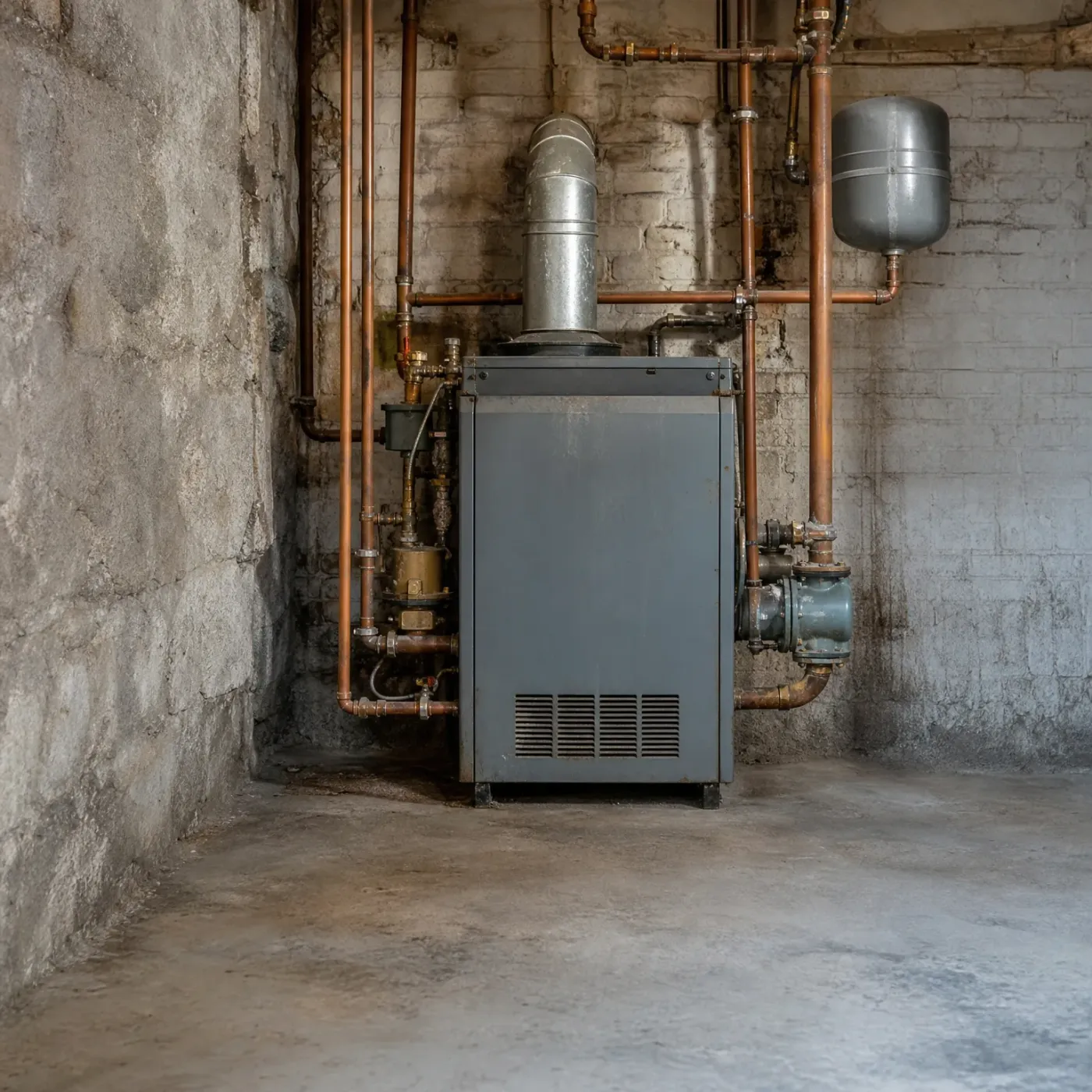
Bare pipes, an old flue, a burner that's seen better days. A boiler like this needs a look before anyone adds radiant tubing to it. Pushing a new system onto an unreliable unit just means the cold spots show up sooner, not later.
Nights average 30°F across December, January and February here, and that's a long, steady draw on your boiler, not a few hard freezes. Radiant floors answer that kind of cold well, since the floor stays warm straight through instead of cycling on and off like a furnace.
NOAA nClimDiv 1991-2020 county normals weighted by homes

If you've got a boiler already, radiant floor heat is worth putting in. It uses the hot water your boiler makes anyway, it keeps the whole floor even through a long stretch of cold nights, and it skips the duct losses a furnace deals with. The main thing that decides how well it goes is the shape your boiler is in now, which is worth having a look before anything gets installed.
A local contractor who works on boilers and radiant systems all winter has seen what tends to hold up and what doesn't in houses around here. Getting matched with one means someone who already knows the local gas lines, the local water, and the kind of boiler that's common in this area looks at your setup specifically, not a general case. You'd hear from that one contractor directly, so you're dealing with a single person who understands your situation rather than fielding calls from several.

Only one pro gets your request, so you hear from one company.
No fee to send it, and nothing to sign.