A local pro who services boilers gets in touch about the tune-up.
A boiler with air in the radiators runs harder than it needs to. You'll hear it in the clanking, or feel it in a radiator that's warm at the bottom and cold at the top. Here in Oklahoma, gas heat carries most homes through the cold months, and once that first front comes through you want every radiator putting out full heat, not half.
Bleeding radiators isn't hard to understand, but it means working through every radiator in the house, one at a time, with the system cold, and getting the valve open just enough to let the air out without flooding the floor. Miss one and that room stays cool all winter while the rest of the house heats fine. It's the kind of job that's easy to put off and easy to do wrong the first time.
If you'd rather have someone who does this regularly take care of it, that's a different path than figuring it out room by room on your own. Instead of searching for who works on boilers in your area, calling a few, explaining the same thing about your radiators each time, then sitting with quotes trying to compare them, you tell us what's going on once. You get matched with a contractor who takes on boiler maintenance and knows the kind of systems common here. They reach out to you directly to talk about your radiators and your house.
That doesn't mean the job itself is quick or simple. A contractor still has to go through the same rooms you would. What it means is you're not the one tracking down who's available, who answers the phone, and who actually shows up. The work of finding someone goes away. What's left is a straightforward conversation with someone who already knows what you're dealing with before they walk in the door.
Below is what bleeding a radiator actually involves, so you know what to expect whether you do it yourself or someone does it for you.
How do I bleed my radiators before winter hits?
You've heard you're supposed to bleed your radiators before the cold sets in, but if you've never done it, you're probably not sure what that actually means or what you're checking for. You just want to know the steps and what to expect once you start.
Open the bleed valve on each radiator until the hiss of air turns to a steady trickle of water
Every radiator has a small valve, usually near the top on one end, that you open with a radiator key or a flathead screwdriver. Turn it a quarter turn and you'll hear air hissing out. Keep a cloth under it, because once the air clears, water follows, and that's your sign to close the valve. Do this on every radiator in the house, starting with the one farthest from the boiler and working toward it. A radiator with trapped air heats unevenly, warm at the bottom and cold at the top, and the boiler ends up running longer to make up for it. Clearing that air now means the system isn't working against itself once you turn the heat on for good.
A system moving heat the way it should
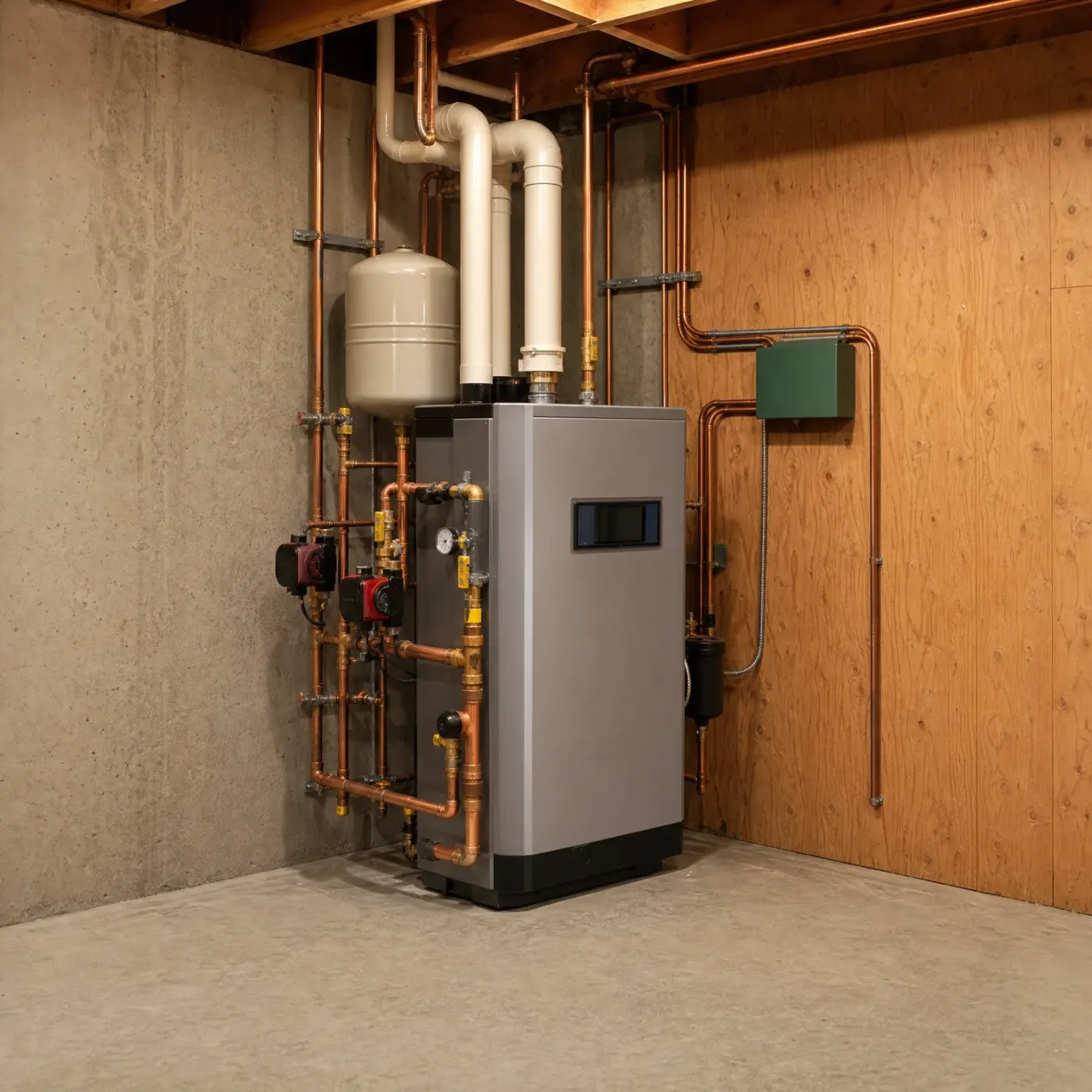
Every radiator in the house gets warm top to bottom, and the boiler cycles on, heats the water, and shuts back off. No knocking in the pipes, no cold spots upstairs while the thermostat says the room should be warm.
A system working around trapped air
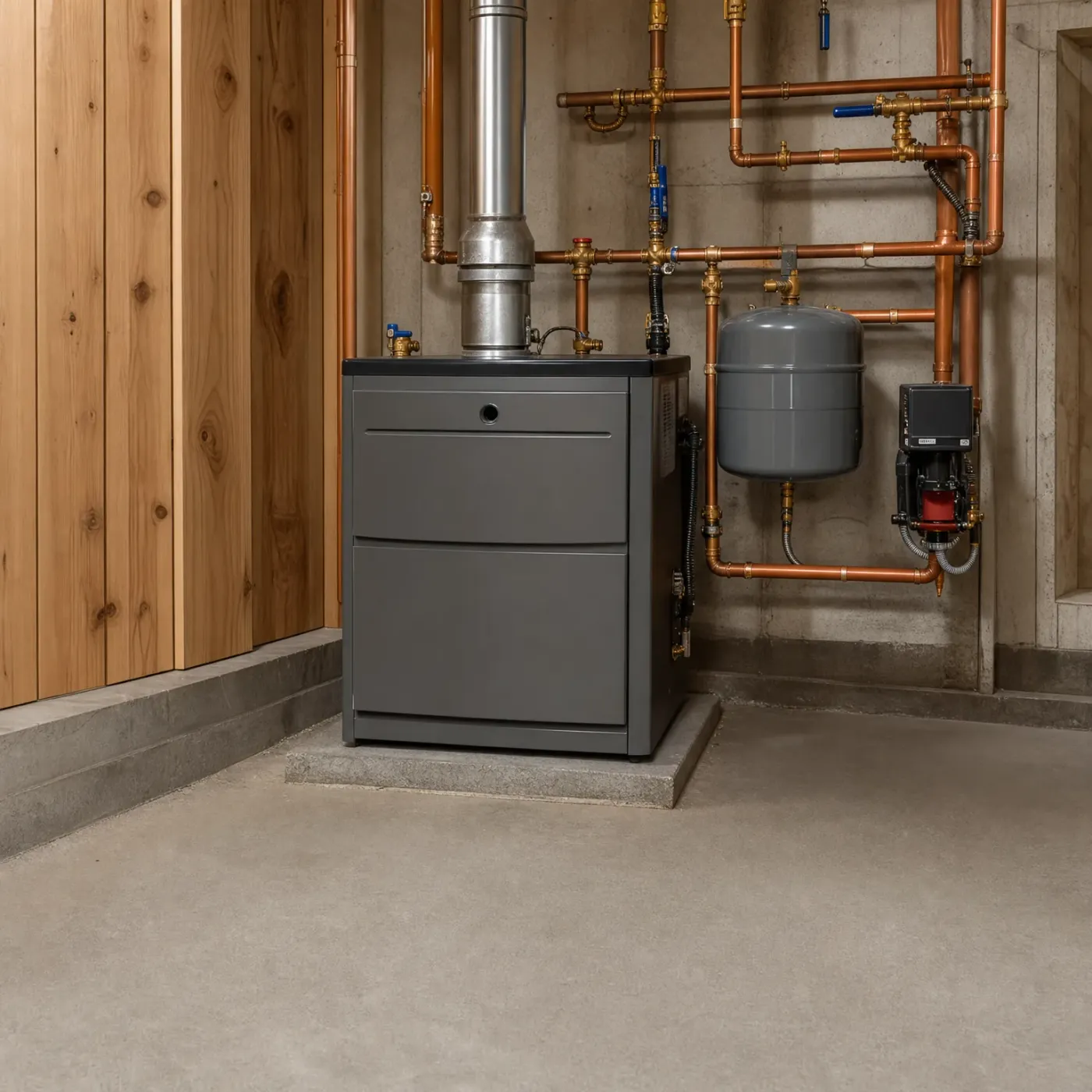
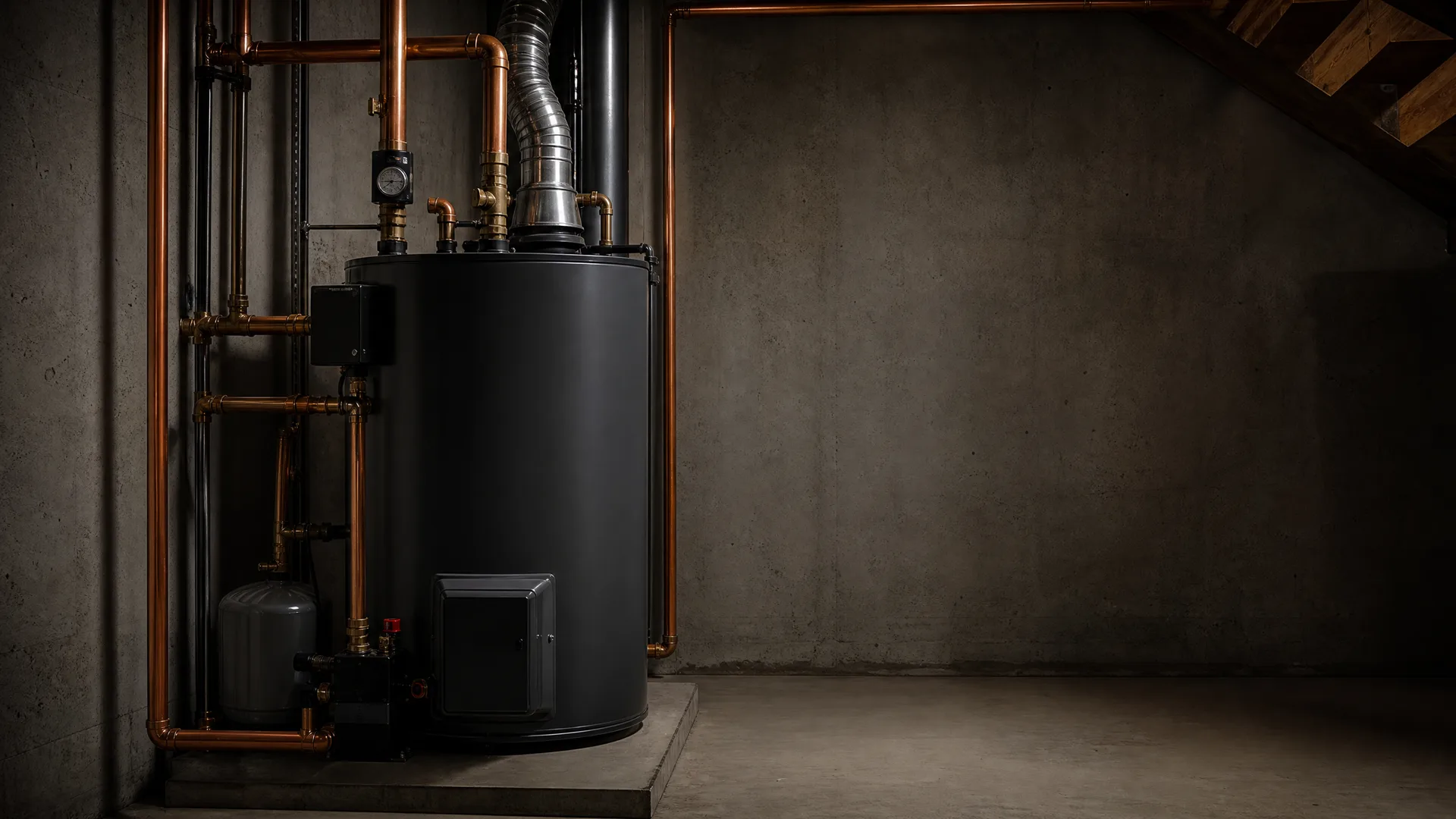
Air pockets sit in the radiators and the boiler runs longer to push heat through them. The valves and fittings overhead are doing their job, but if nobody's bled a radiator in a while, that trapped air is still in there come January.
Bleed It Yourself or Call a Contractor
Bleed it yourself
You need a radiator key, a cloth, and a shallow container to catch the water that comes out.
Turn the boiler off first, since bleeding a hot system can spray hot water out of the valve.
Open the valve slowly at the top of each radiator until the hiss of air stops and water starts to dribble out.
Work from the radiator farthest from the boiler to the one closest, so you clear the whole loop in order.
After bleeding, check the boiler's pressure gauge, since letting air out drops the pressure and it may need topping up.
If a valve won't turn, or the radiator stays cold after bleeding, that usually points to something past what a key can fix.
Have a contractor check it
A contractor can bleed every radiator in the house in one visit instead of you working through them room by room.
If one radiator still runs cold after bleeding, a contractor can tell you whether it's a stuck valve, a blocked line, or something with the pump.
You won't have to track down a radiator key, figure out the pressure gauge, or guess at how much water is normal to let out.
A contractor can check the boiler's pressure and refill it correctly after the air is out, instead of you eyeballing the gauge.
Instead of calling around and explaining the clanking and cold spots more than once, you get matched with someone who already knows what you're describing.
If the system needs more than bleeding, like a new valve or a pump issue, that same visit can catch it before the cold months are in full swing.
Fill out one form instead of calling around for a boiler tune-up.
No fee to send it, and nothing to sign.
Why air gets in every fall
A boiler loses a little water over the months through small amounts of evaporation and through the system naturally releasing dissolved gas as it heats and cools. That space gets filled with air. It collects at the top of each radiator, since air rises above the water. Once summer ends and the boiler starts cycling again for the first time, that trapped air is already sitting there waiting. It's why the problem shows up right when the weather turns, not gradually over the course of the winter. Bleeding clears it out before the system has to work against it all season.
What a stuck valve tells you
If a radiator key won't turn the valve, or it turns but nothing happens, the valve itself may have seized from a year of sitting unused. That's different from an air problem, and bleeding won't fix it. A valve that's corroded or stuck can leak once it's forced, or it may not seal again after you close it. If you run into that on any radiator, it's worth having someone look at the valve itself rather than working it harder. Oklahoma winters put real hours on a boiler, and a valve that won't hold is a bigger issue than trapped air.
Before you get your boiler maintenanceAfter you get your boiler maintenance
One cold radiator, a gas bill that climbs anyway
A radiator with trapped air takes longer to heat the room, so the boiler runs longer to make up for it. That shows up on your gas bill before you ever trace it to the cause.
A contractor can bleed every radiator, check the system pressure, and catch anything else worth knowing about before you're relying on it every day this winter.
You bleed the radiators yourself and the clanking stops, but you're the one who has to catch it if the boiler pressure drops too low afterward or a valve won't reseat right.
You have someone look at the whole system before the cold settles in, and bleeding the radiators is just one line on a list that also checks the pressure, the valves, and whatever else is feeding that air in every fall.
Winter nights average 30°F statewide
Thirty degrees is a cold start most nights by the time your boiler settles into its winter routine. Air trapped in a radiator means it takes longer to reach that heat, so the boiler runs longer on those nights just to keep the room where you set it.
NOAA nClimDiv 1991-2020 county normals weighted by homes
Bleeding a radiator yourself takes a key, a few minutes, and a willingness to check your work after. A full look at the boiler before the cold sets in is a different job, one that catches a pressure drop, a valve that won't reseat, or a pilot that's about to give out on the first thirty degree night. If you'd rather not spend an evening on hold explaining the same knocking-pipe story to three different companies, comparing quotes, and hoping whoever shows up actually knows boilers and not just furnaces, you don't have to. Answer a few questions about your system and you'll be matched with a contractor who works on boilers like yours in Oklahoma, and they'll reach out to set up a time that works. Your radiators either need bleeding or they don't, and now you know how to tell. What's left is deciding whether you want to handle the rest yourself or hand it to someone before the first cold morning gets here.
The right pro for this job
One form instead of hunting for a pro who does boiler tune-ups.