
15 to 20 years
That's the stretch you can expect from a gas boiler here if the water stays clean and the heat exchanger holds. Past that, repairs start costing more than they're worth.

A boiler in Oklahoma typically lasts 15 to 20 years. Most homes here heat with gas, and a gas boiler's life comes down to the heat exchanger: years of heating and cooling cycles eventually crack or corrode it, and once that happens, repair isn't the answer anymore. Oklahoma winters don't push a boiler as hard as colder states do, so the exchanger and the rest of the system see less strain over the years, which is part of why boilers here often reach the far end of that range rather than the near end. Age isn't the only sign to watch. A boiler that short-cycles, that can't hold a room at temperature, or that needs a repair call every winter is telling you something regardless of how old it is. If yours came with the house and you don't know its age, that's worth finding out, since a boiler past 15 years is a different conversation than one at five.
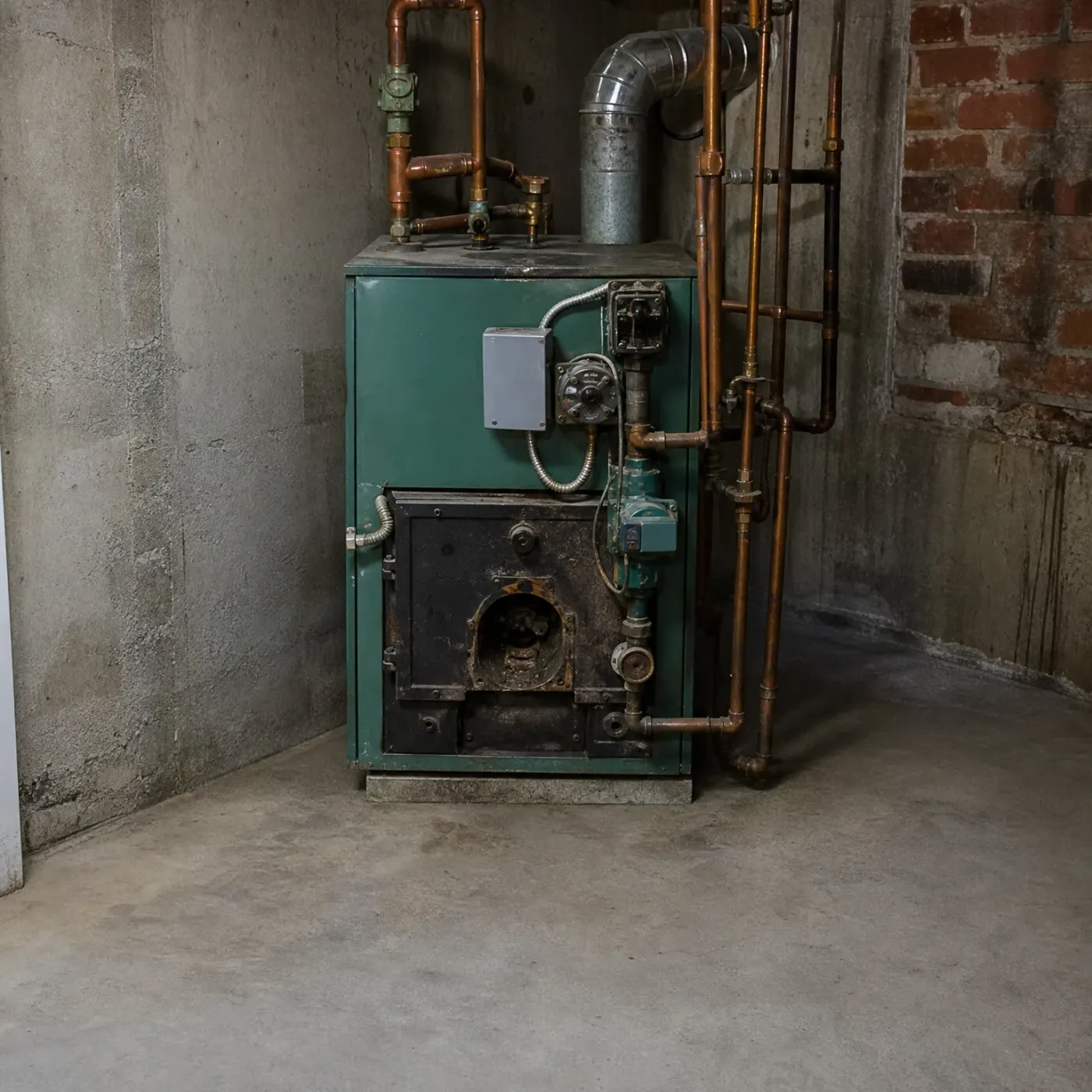
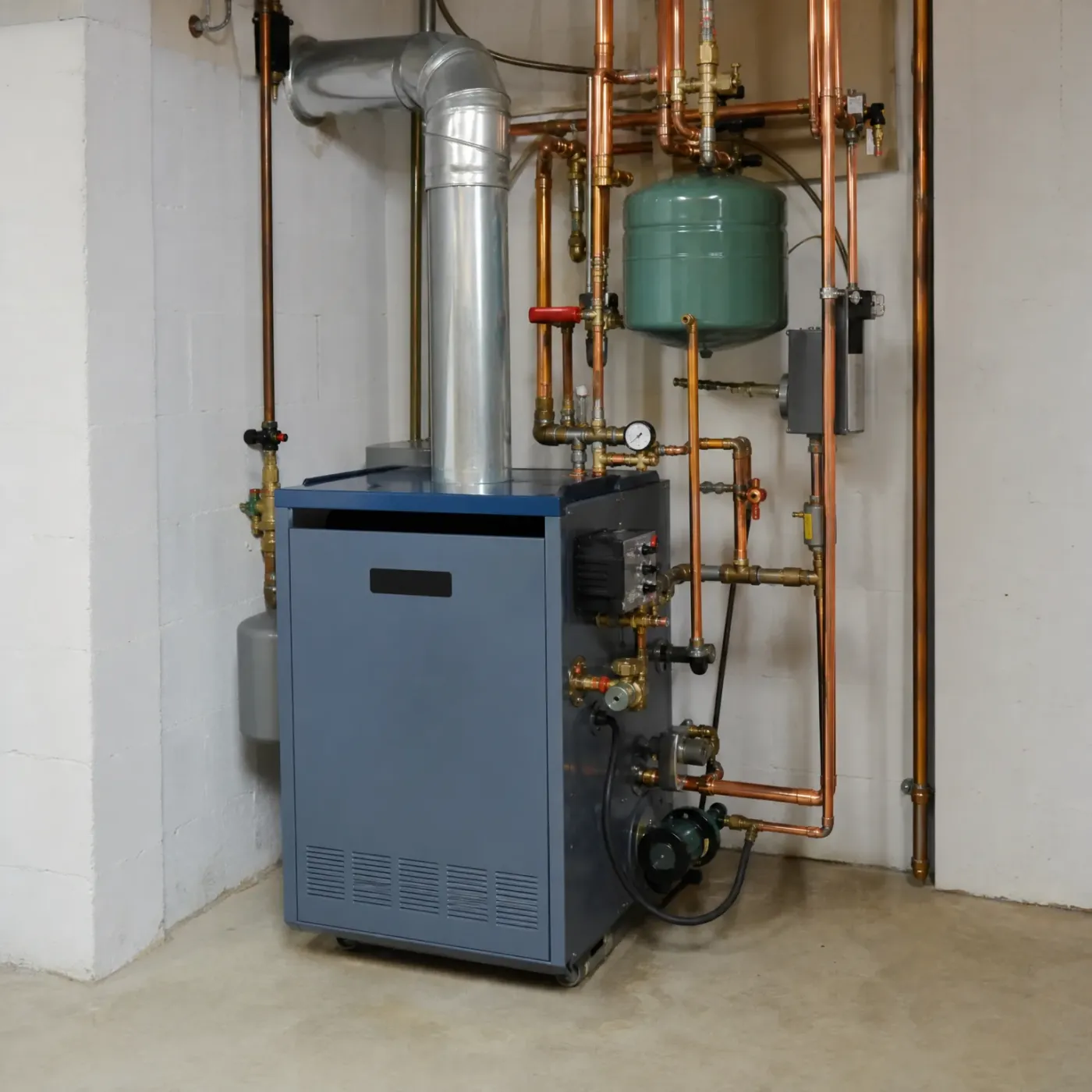
Your boiler heats water and sends it out through pipes to radiators or baseboard units around the house. The water gives up its heat to the room, then comes back to the boiler to be heated again. A circulator pump is what keeps that loop moving. When the pump seizes up, the boiler can still be firing away and the rooms stay cold, because the heated water isn't going anywhere. The part doing the hardest work through all of this is the heat exchanger. Every time it heats up and cools back down, it expands and contracts a little, and over enough winters that wears on the metal until it cracks. Low water pressure or sediment sitting in the tank makes the exchanger work harder than it should, which speeds that up. Hard water adds to the problem too, coating the inside of the exchanger with scale that slows down how well it passes heat into the water. An aquastat is supposed to keep the burner from running longer than it needs to, but a faulty one lets it run past that point.




Describe the project once instead of to every installer.
Sending the form costs nothing.
Mild winters in Oklahoma mean a boiler doesn't run as hard, or as long, as it would farther north. That should stretch its life past twenty years. What cuts it short instead is usually the water, not the weather. Minerals in the water scale the inside of the heat exchanger over time, and scale insulates metal from the water meant to carry its heat away. The exchanger runs hotter than it should, and that's what leads to the cracks that end a boiler's life. A boiler on a yearly service schedule tends to reach the far end of that fifteen to twenty year range. One that's never been flushed usually doesn't.
A tech can tell a lot about a heat exchanger without opening the boiler up. Soot or scorch marks near the burner, a popping or rumbling sound as water hits scaled metal, or a pilot flame that's gone yellow instead of blue all point to a problem building inside. Rust-colored water from the drain valve is another sign, since clean steel doesn't rust that color on its own. None of these guarantee the exchanger is cracked, but they tell a tech where to look first, and catching it before it fails outright is the difference between a repair and a full installation.


That's the stretch you can expect from a gas boiler here if the water stays clean and the heat exchanger holds. Past that, repairs start costing more than they're worth.
Once a boiler's heat exchanger cracks or corrodes, it's not a repair anymore. You're choosing between a failing system in January and a planned replacement now.
On a 30°F night your boiler holds steady, cycling on and off instead of running flat out the way it would somewhere colder. That's lighter duty on the heat exchanger over a winter, which is part of why a well-kept unit here can reach the higher end of its life.
NOAA nClimDiv 1991-2020 county normals weighted by homes
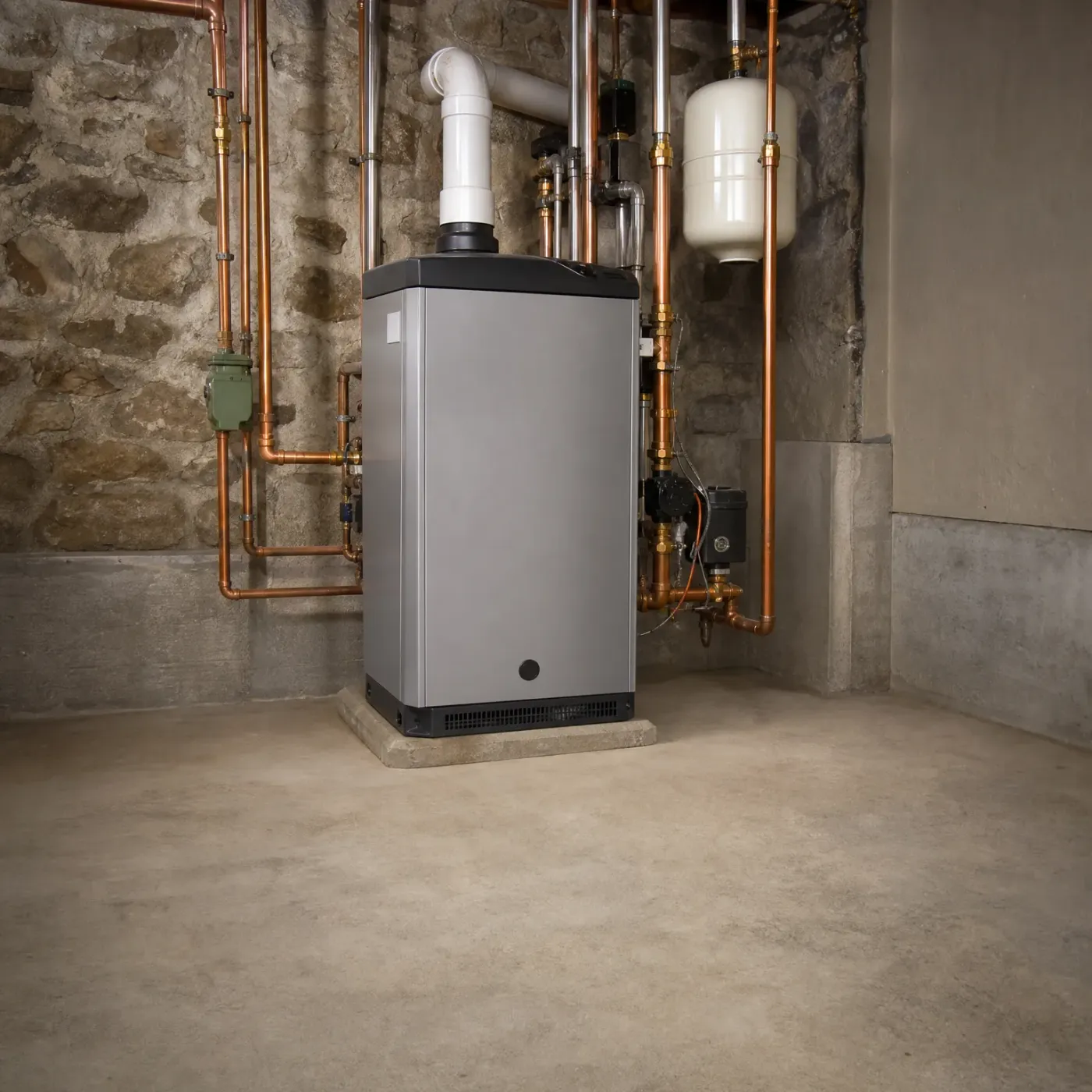
A boiler like this heats water, sends it out through copper piping, and vents exhaust straight out through the pipe at the top. Pressure stays steady on the gauge. No rust at the fittings, no puddling on the pad underneath.
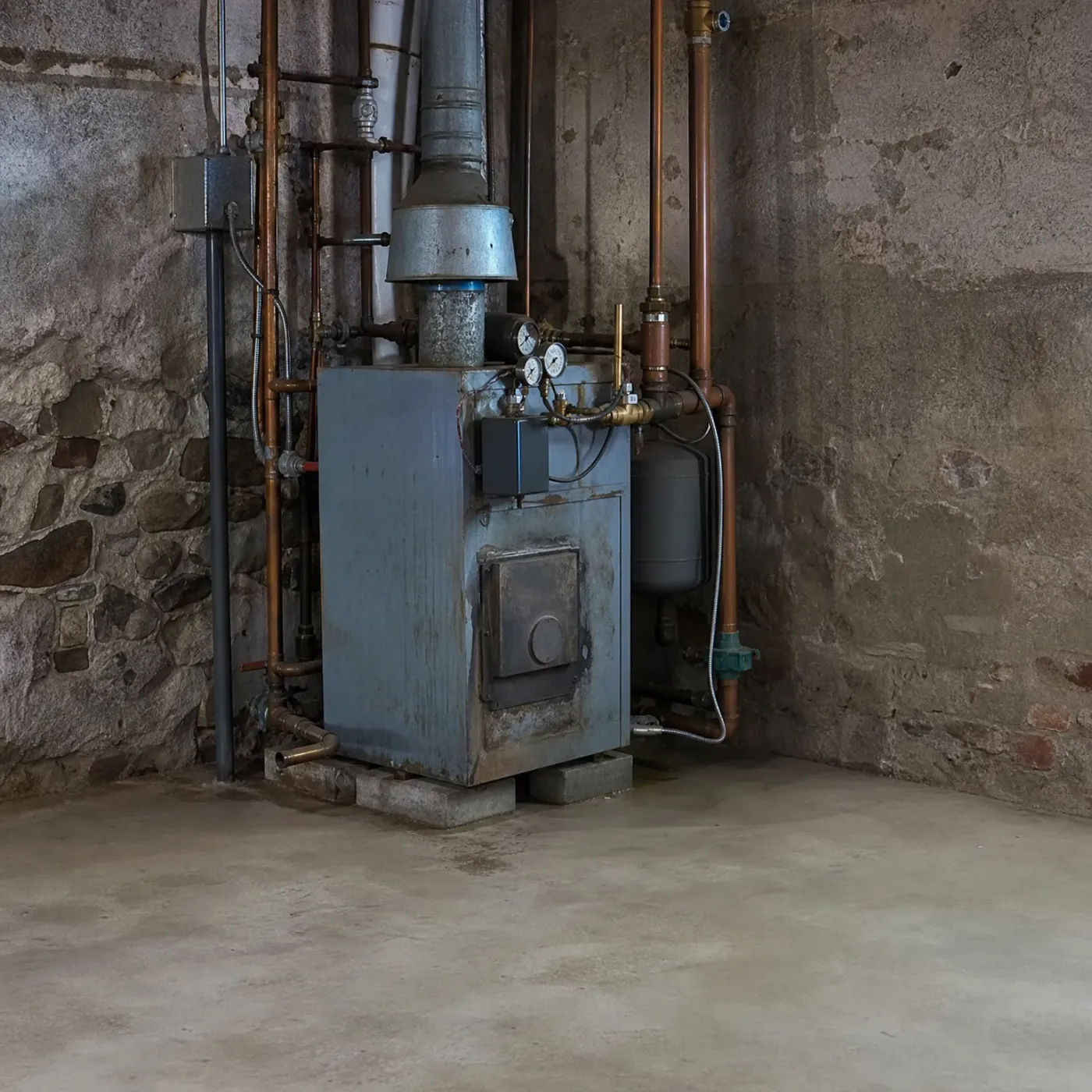
Cast iron like this held up a long time, but the flue pipe is wider than what newer units need, and that's a sign of age, not just size. Once a boiler like this starts losing pressure or won't hold heat, the heat exchanger inside is usually why.

Fifteen to twenty years, and the water is what decides whether you land near the front of that range or the back. That's the plain answer. What you do with it depends on where your boiler actually stands, and the only way to know that for certain is to have someone look at the heat exchanger and the pressure gauge rather than guess from the furnace's age.
If yours is past that mark, or acting like it, the part left that's hard is finding someone who'll give you a straight look instead of a sales pitch, then sitting on the phone comparing quotes and explaining the same problem three more times. Send the form and that part's done. You're not left sorting through names or repeating yourself to whoever picks up.





Fill out one short form instead of calling around.
It costs nothing to send, and you don't have to hire anyone.