





Profile view of a bearded man wearing a dark baseball cap and a dark gray T-shirt against a plain off-white background.

Boiler carbon monoxide signs in Oklahoma

Step 1 of 3: Equipment

What are the signs of carbon monoxide from a boiler?

A boiler running all winter in a closed-up house is where carbon monoxide gets dangerous. You want to know what to watch for before it's a problem, not after. Some signs show up on the equipment itself, others show up in your own body, and knowing both matters because by the time you feel sick, the gas has already been in the air a while.

Soot near the boiler, a yellow flame instead of blue, and headaches that ease when you leave the house

A gas boiler burns clean when it's working right, with a blue flame and nothing staining the area around it. Carbon monoxide shows up when combustion goes wrong, so look for soot or a brownish stain near the burner, a flame that burns yellow or orange, and excess moisture on nearby windows. In the room, watch for a smell like something burning, or for headaches, dizziness and nausea that several people in the house feel at once and that fade once you've been outside for a while. With most Oklahoma homes heating on gas and the boiler running hard for months, a venting problem or a cracked heat exchanger doesn't give you much warning beyond these signs.

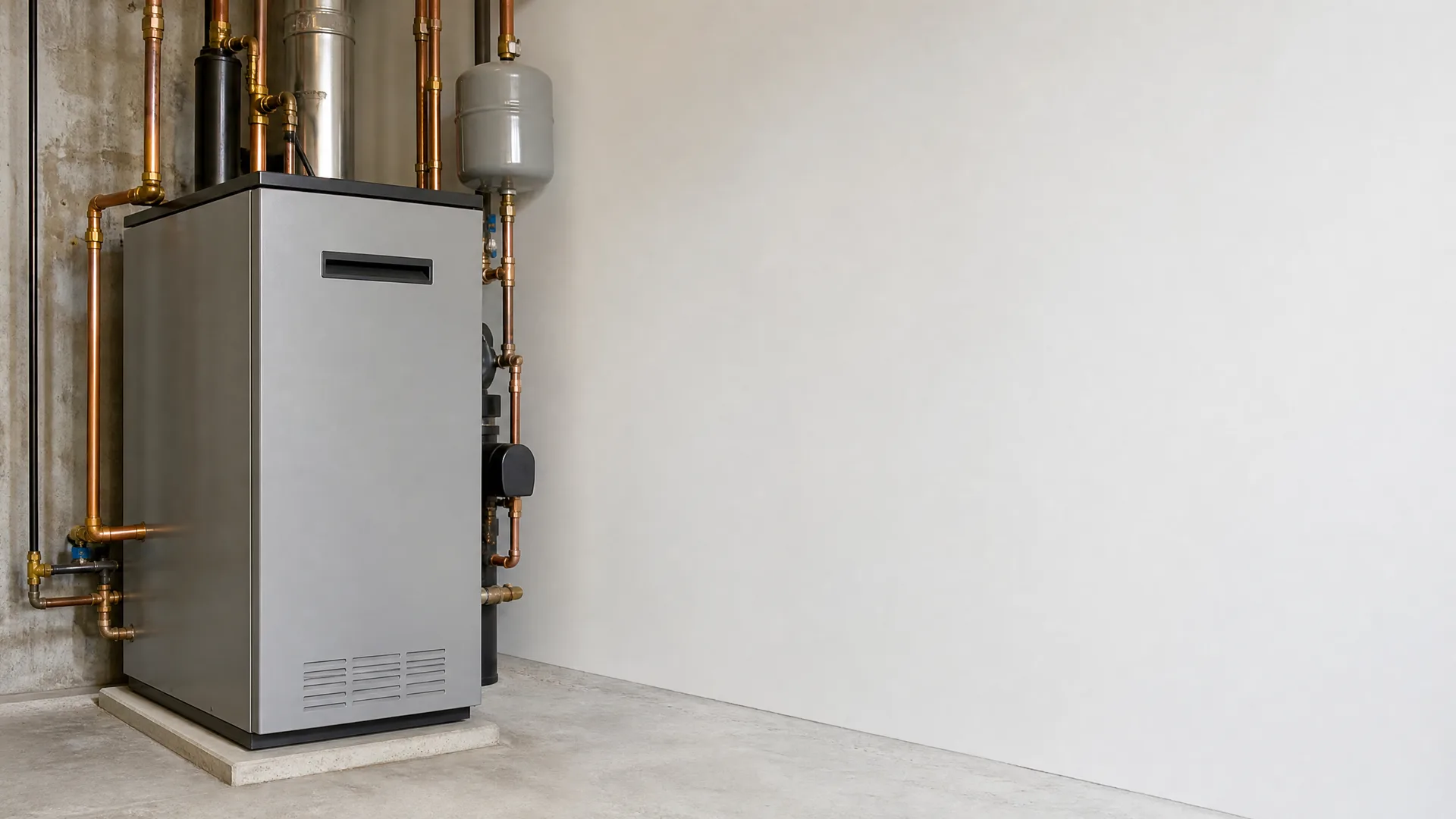
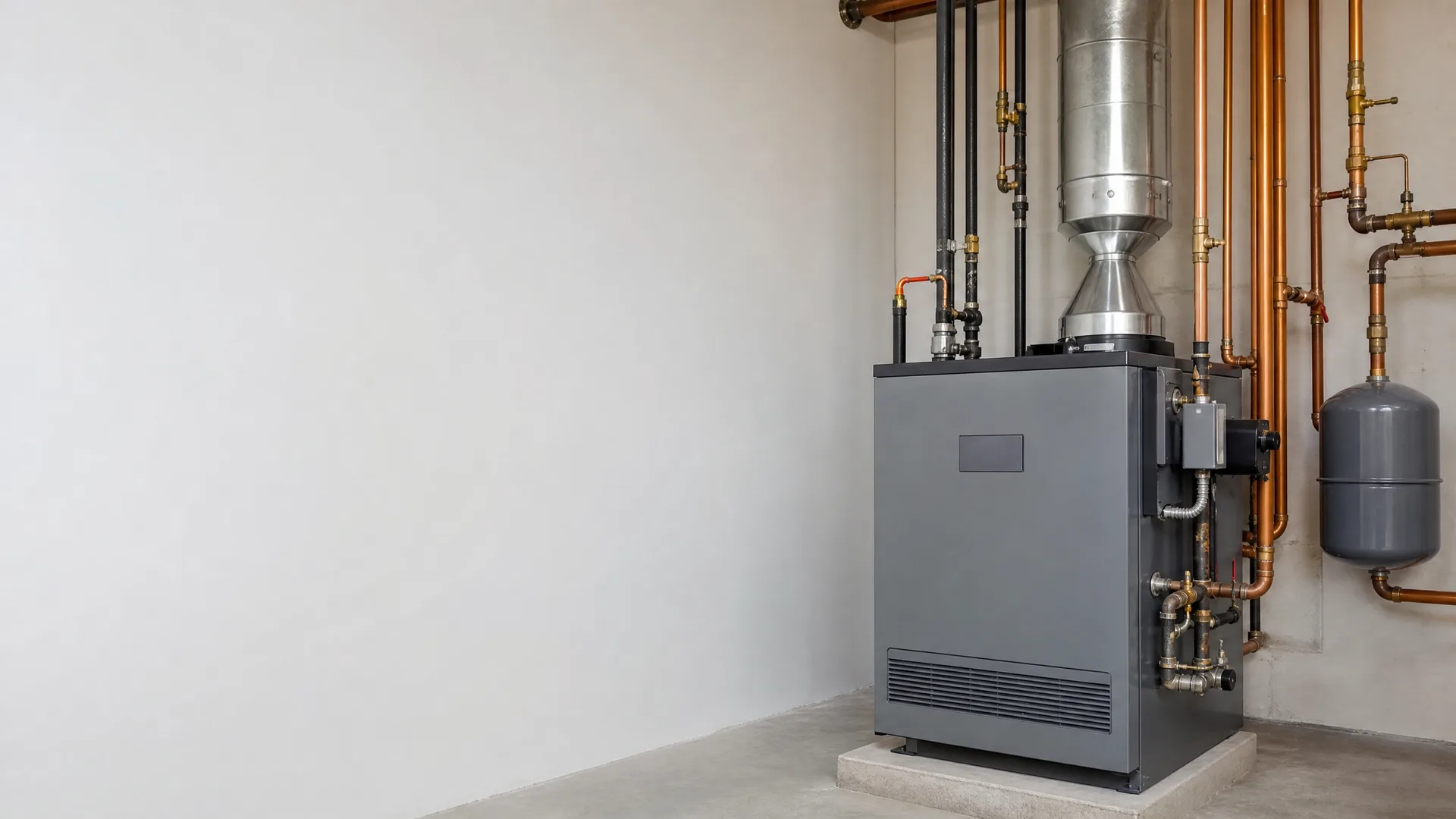
A gray floor-standing boiler on a concrete pad in a bare room, connected to copper pipes and an expansion tank against a plain light wall.

What the flame tells you

A gas boiler's burner flame should be steady and blue. Open the viewing port and look. Yellow or orange tips, or a flame that flickers and rolls instead of standing still, means combustion isn't complete. That's what sends carbon monoxide into the flue instead of burning clean. Soot around the burner door or streaking on nearby pipes points the same way. A sound flame doesn't rule out every problem, but a bad one is something you can confirm yourself without opening anything up.

A gray boiler on a concrete pad in a plain room, connected to copper and black pipes and a stainless steel flue.

Where the air has to go

A boiler draws combustion air and sends exhaust out through a vent pipe or chimney liner. If that path is blocked, cracked, or rusted through, the gas has nowhere to go but back into the room. Check the vent pipe where it leaves the boiler and where it exits the house for gaps, rust holes, or disconnected joints. A chimney liner that's old or corroded does the same thing. Backdrafting, where exhaust spills into the room instead of going outside, often shows up first as moisture fogging a nearby window.

Equipment Signs or Body Signs

Signs on the equipment

  • A burner flame that's yellow or orange instead of blue, or one that flickers and rolls rather than standing steady.
  • Soot or dark staining around the boiler's draft hood, burner compartment, or the seams of the flue pipe.
  • A flue pipe that's rusted, disconnected, or pulling away from the boiler where it should be sealed tight.
  • Excess moisture or condensation on windows near the boiler room that wasn't there before.
  • A pilot light that keeps going out, or one that burns yellow instead of a steady blue cone.
  • A burning or hot, stuffy smell coming from the boiler itself when it fires.

Signs in the people

  • Headaches that show up when the boiler's running and ease off once you're outside or the house airs out.
  • Everyone in the house feeling tired or short of breath in the same room, at the same time of day.
  • Dizziness or nausea that comes and goes with no clear cause, worse in rooms near the boiler.
  • A carbon monoxide detector that trips while the boiler is running, even briefly.
  • Confusion or trouble concentrating that lifts once you've left the house for a few hours.
  • Symptoms that hit everyone in the house at once rather than just one person, which points away from a cold or flu.
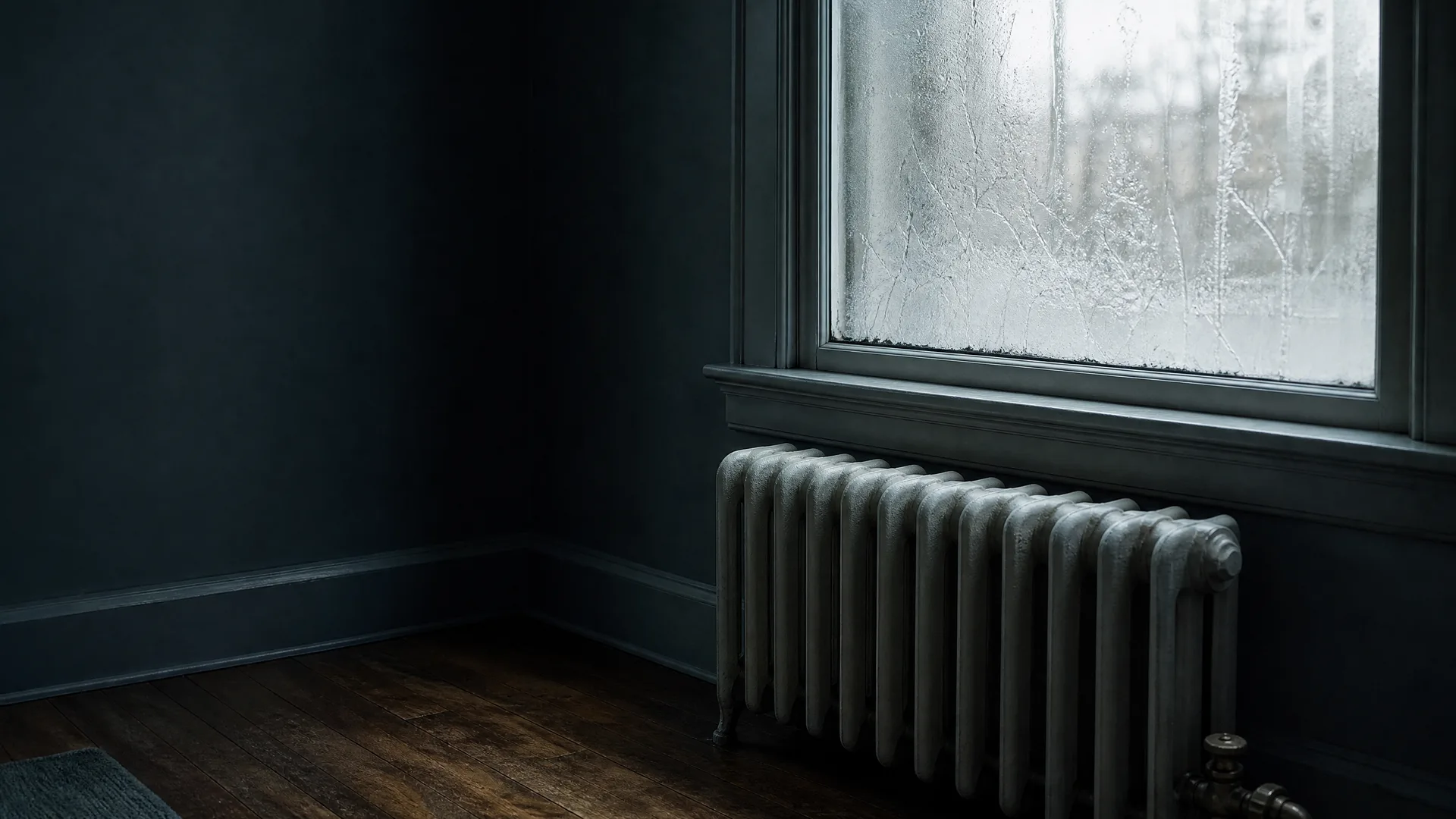
A cast iron column radiator under a condensation-covered window in a dim room with dark walls, dark baseboard trim and a worn wood floor.

Six in the morning and the house is still dark. You're in the living room with the radiator ticking under the window, the glass fogged over with a skim of ice on the inside pane. You've had the boiler running since November and the room usually warms up faster than this. Your head aches, low and dull, the kind you'd blame on sleep except it's been there three mornings running. The dog doesn't want to lift her head off the rug. You crack the window an inch, just to clear your head, and stand there in the cold a minute before you go check the burner.

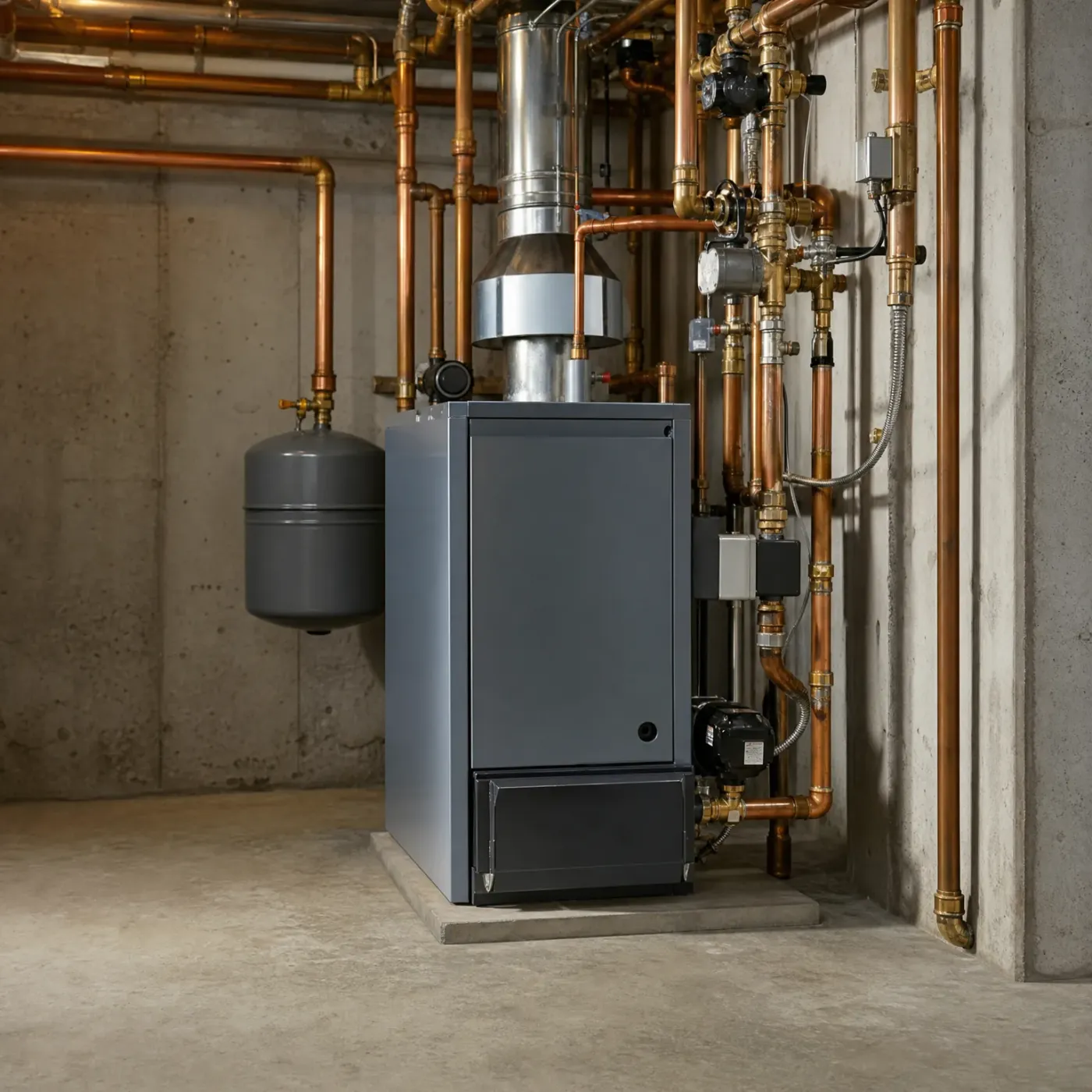
A gray boiler on a concrete pad in a basement, connected to copper piping, valves, circulator pumps, a metal flue, and a wall-mounted expansion tank.
A boiler like this one vents cleanly through the flue, and the burner stays out of sight behind a closed door where it doesn't need checking every day.
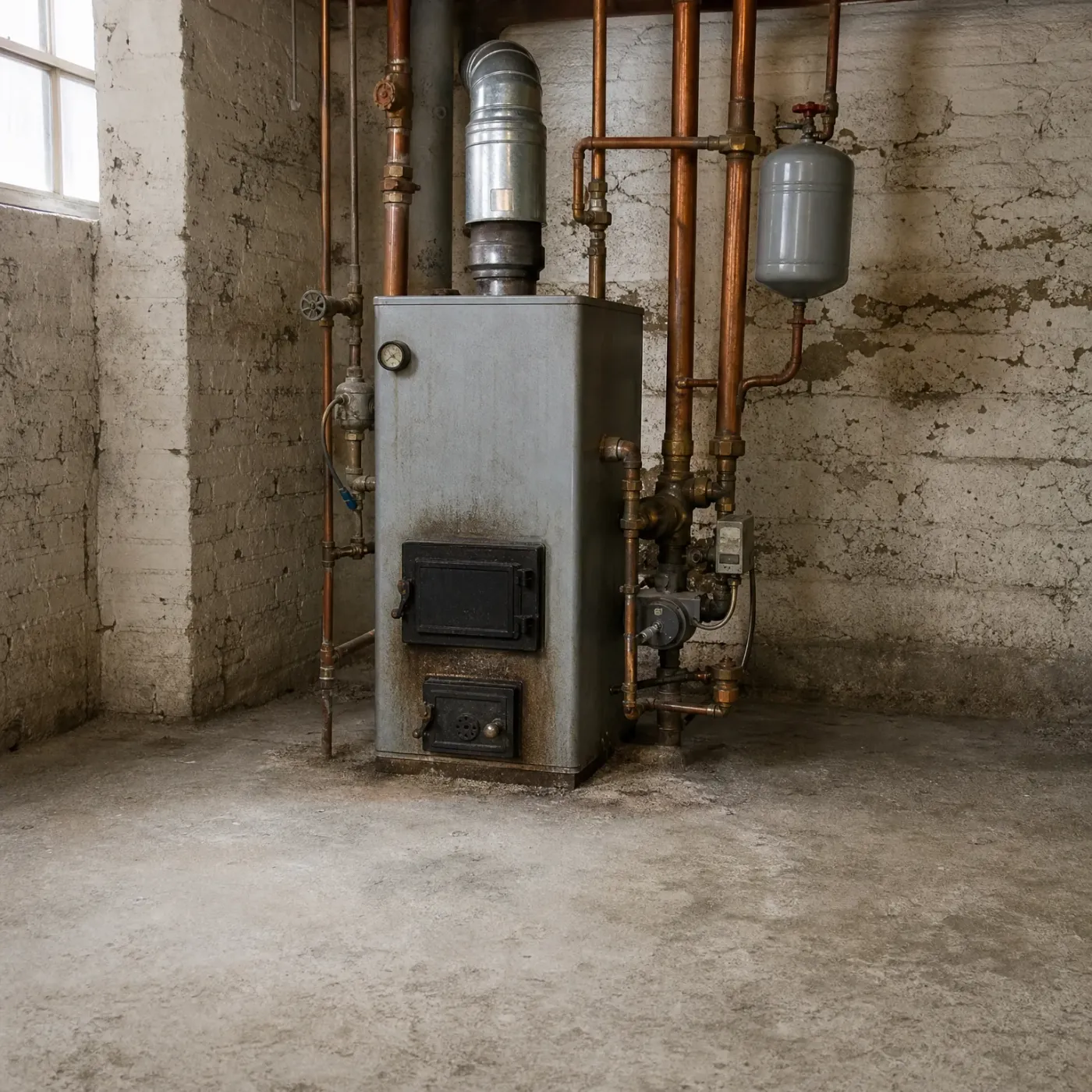
An old gray boiler with copper piping, a flue duct, pressure gauge and an expansion tank stands in the corner of a basement with painted masonry walls and a bare concrete floor.
Here the flue sits exposed against bare concrete, the kind of setup where a cracked seam or a blocked vent is easy to miss until something goes wrong.
A woman in a dark gray sweater reclines on a couch with her eyes closed and a knit blanket over her lap, an open book resting face-down in front of her, with a lit table lamp and shelving blurred in the background.
A bearded man in a dark navy sweater over a collared shirt smiles and looks off to the side while seated at a dinner table with a glass of red wine, a lit candle, and a plate of food in the foreground of a dimly lit room.

Done looking for a boiler pro

Fill out one short form instead of calling around.

Asking costs nothing, and the choice to hire stays yours.

How a boiler makes this gas

  • A boiler makes carbon monoxide by burning gas without enough air reaching the flame, which is why the burner compartment and air intake matter as much as the flue.
  • The flue carries exhaust up and out through a draft, and a cracked seam or blocked cap can push that exhaust back into the house instead.
  • Heat exchangers crack with age and let combustion gases cross into the water or air side of the system where they don't belong.
  • A pilot light or standing burner that keeps going out points to a draft problem pulling exhaust back down instead of up the flue.
  • Condensation pooling near the flue connection in cold weather can mean the exhaust isn't drafting properly and is cooling before it clears the pipe.
  • A carbon monoxide detector near the boiler room catches what you can't see or smell, since the gas itself has neither.

A boiler burns gas to make heat, and that burning needs a steady supply of air along with a clear path out for what's left over. When the burner isn't getting enough air, or the exhaust can't get out the way it's supposed to, carbon monoxide is the result. It has no smell and no color, so the equipment itself is what tells you something's wrong, if you know where to look.

The flue is the pipe that carries exhaust up and out of the house. It relies on a draft, warm air rising and pulling the exhaust with it. A cracked seam in that pipe, or a cap blocked by a bird's nest or ice, breaks the draft and sends exhaust back down into the room instead of out the roof. You might notice condensation sitting near where the flue connects to the boiler in cold weather. That's a sign the exhaust is cooling off before it clears the pipe, which means the draft isn't doing its job.

Inside the boiler, the heat exchanger keeps combustion gases separated from the water that heats your home. Years of heating and cooling cycles can crack that metal, and once it cracks, those gases cross into water or air that circulates through your house. A pilot light or burner that won't stay lit is often the same draft problem showing up a different way, something is pulling exhaust back down the flue instead of letting it rise.

None of this you can see or smell happening. A carbon monoxide detector near the boiler room is the only thing that catches it in time.

A smiling man with dark curly hair in a dark green henley shirt sits on a light sofa in a living room with large windows, a lamp, shelving, a stone fireplace, and a bowl of popcorn in the foreground.
A smiling man in a dark long-sleeved henley shirt sits on a beige sofa in a living room, with a bowl of popcorn and a remote on the table in the foreground and shelves, a lamp, and a doorway behind him.
A smiling man with graying hair and stubble in a blue henley shirt sits on a gray sofa with cushions in a living room, with a bowl of popcorn on a wooden table in the foreground.
A smiling man in a dark green long-sleeve shirt reclines on a sofa in a dimly lit living room, with a bowl of popcorn on a side table in the foreground and a bookshelf, lamp, and houseplant behind him.
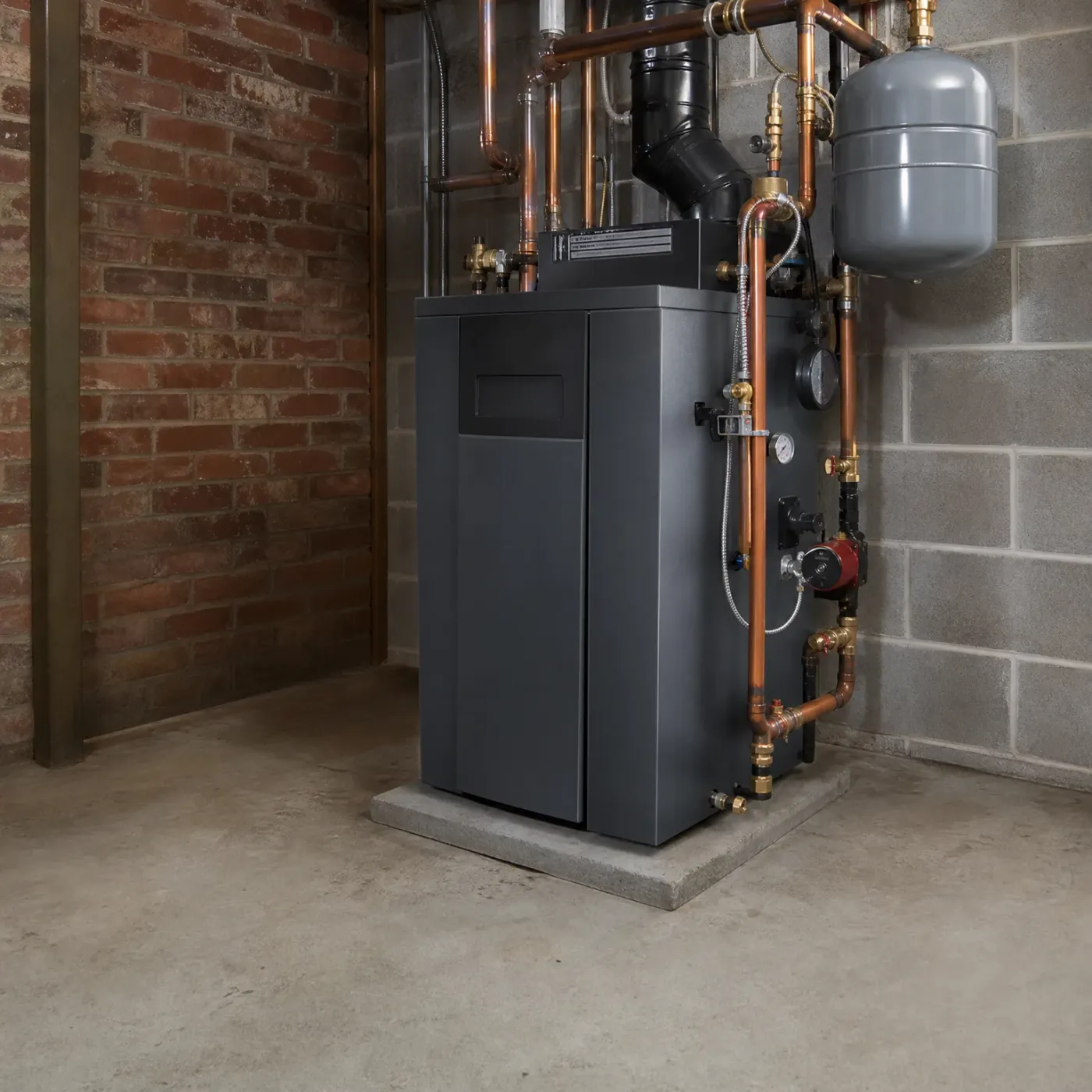
A dark gray floor-standing boiler on a concrete pad in a basement, connected to copper piping, valves, a circulator pump, a gauge, a black flue pipe, and a gray expansion tank, with a brick wall on the left and concrete block wall behind.

Venting clean

This is a boiler venting the way it should. The flue runs straight to the expansion tank and the wall, every joint tight, no staining anywhere on the jacket or the pipe. A setup like this still needs a yearly look at the burner, but there's nothing here working against it.
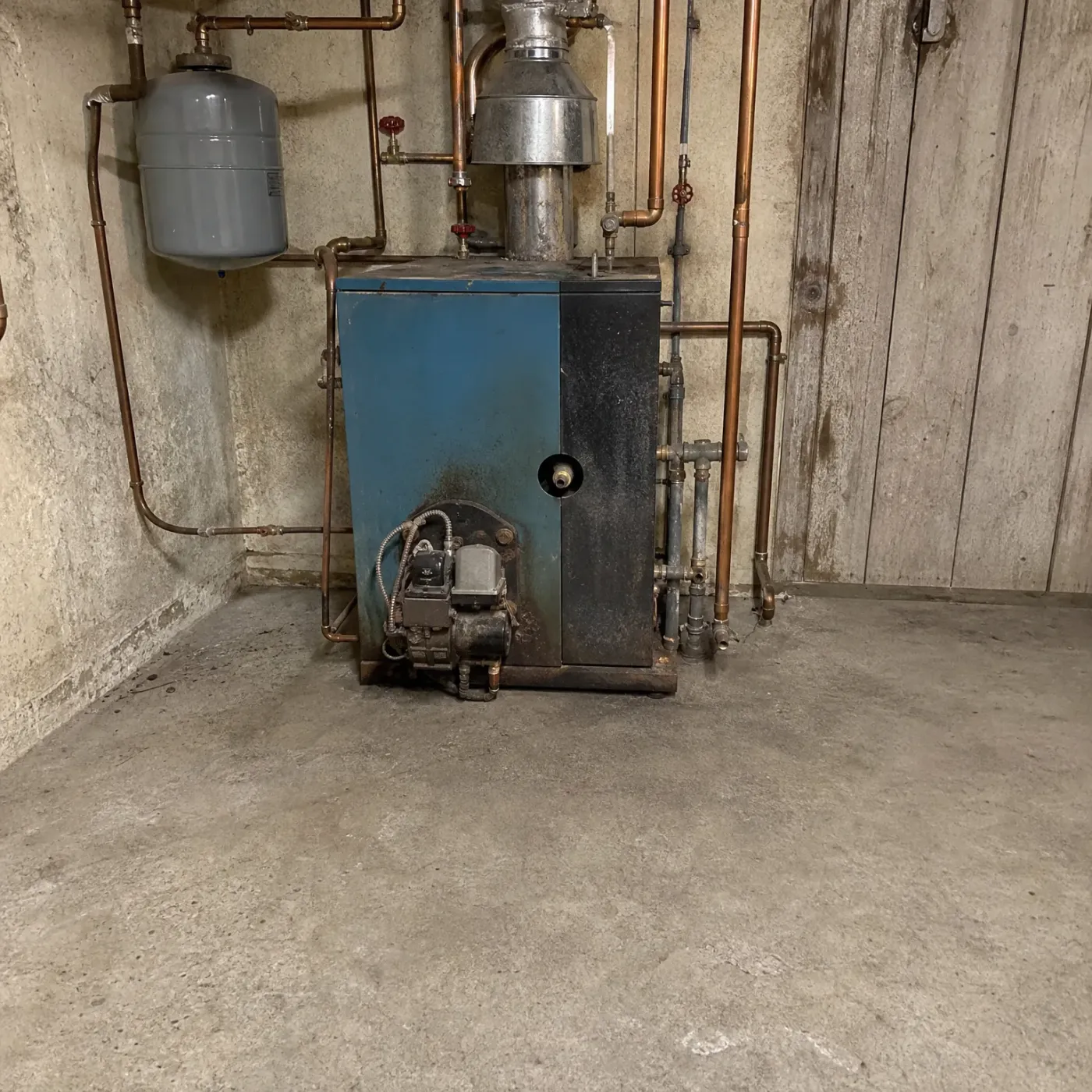
A blue and black boiler with a burner unit, flue, expansion tank and copper and steel piping stands on a concrete basement floor against a concrete wall and wooden plank partition.

Old and crowded

This oil-fired boiler sits wedged in a corner with pipes crossing close overhead and little room around the burner. Age alone isn't the problem, but a cramped spot like this makes a cracked seam or a blocked flue harder to spot before it's venting into the room instead of outside.

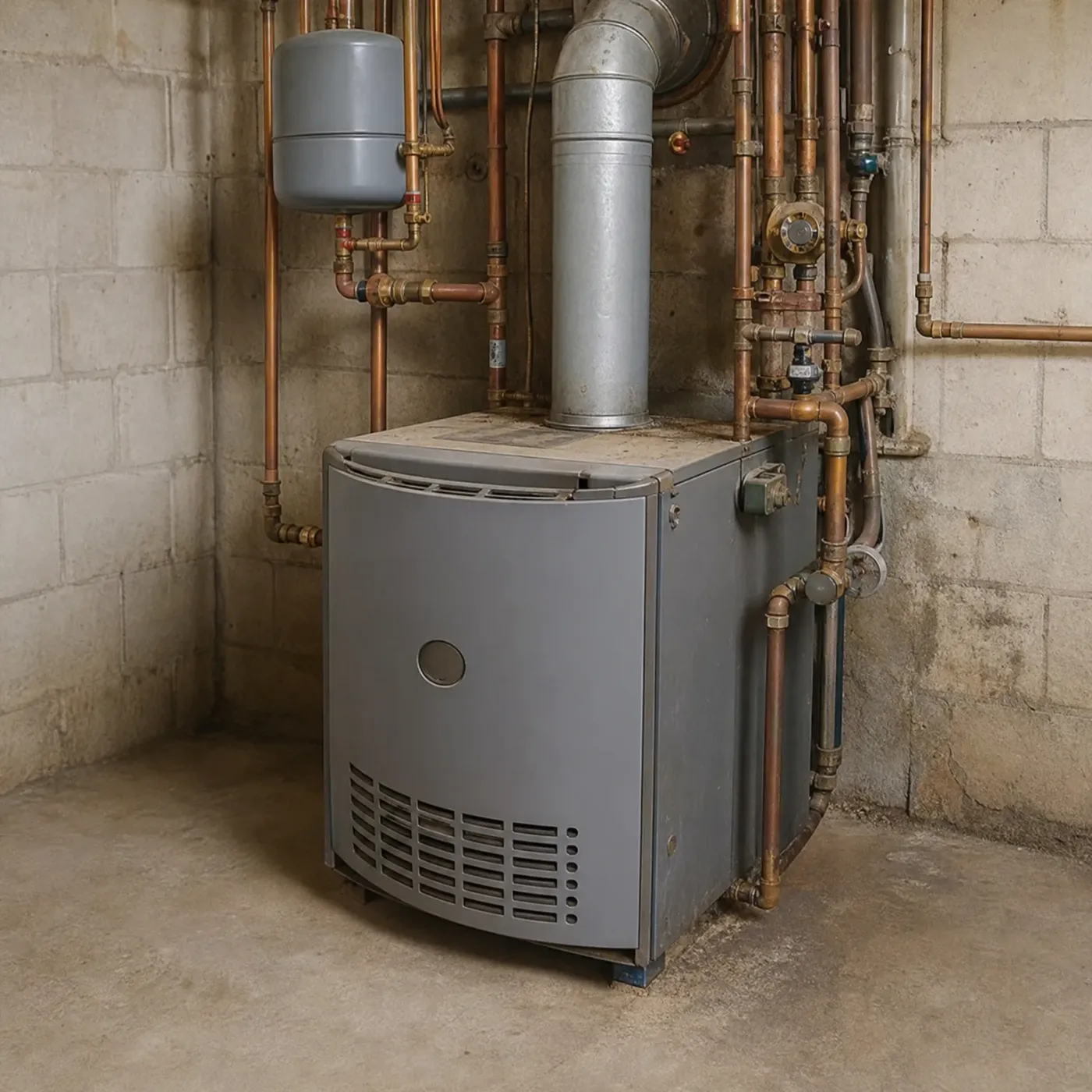
A gray residential boiler with a metal flue pipe stands in a concrete-block basement corner, surrounded by copper piping, valves and a gray expansion tank.
Before you get your boiler repair
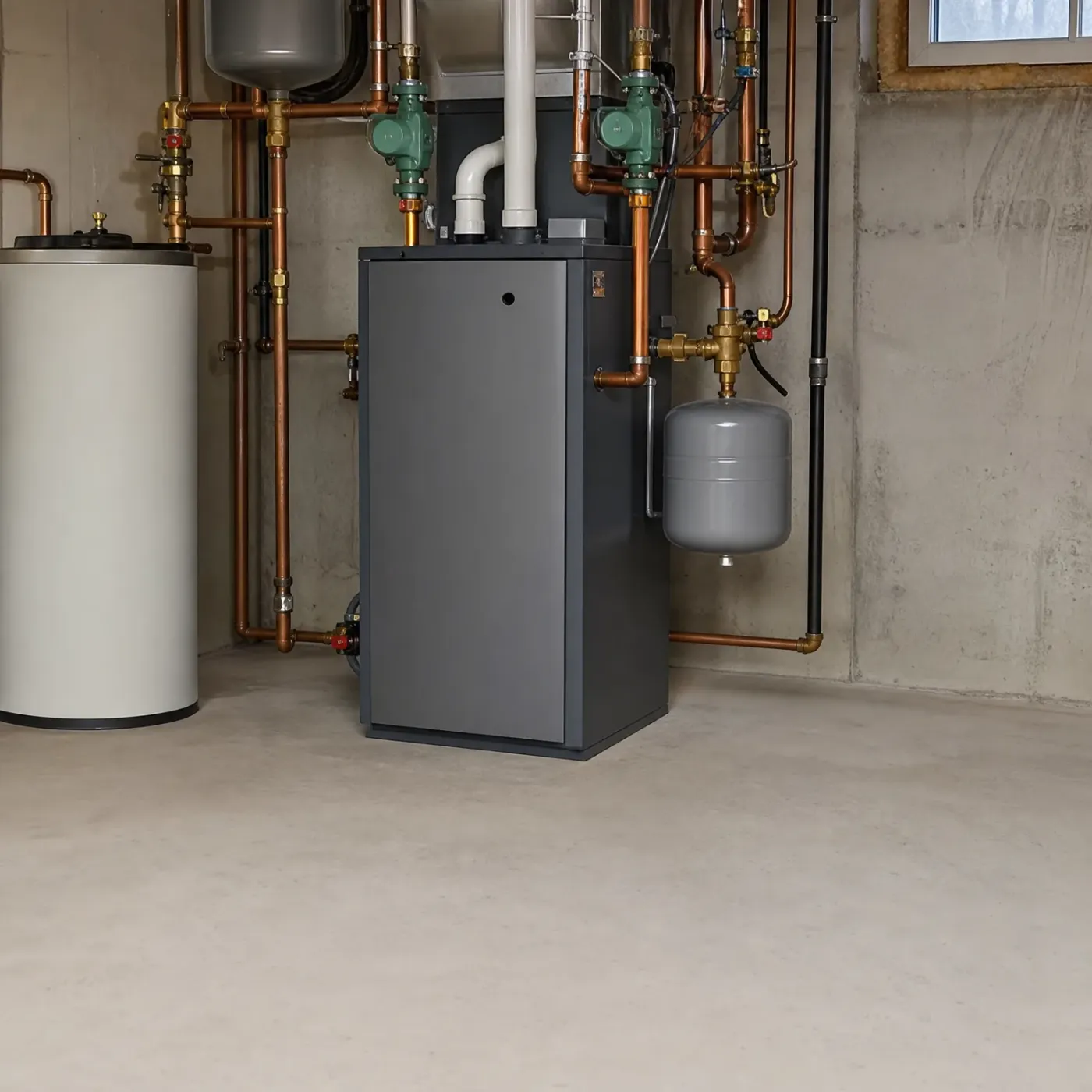
A dark gray floor-standing boiler in a concrete-walled basement, connected to copper piping, circulator pumps, a gray expansion tank, and a cream-colored storage tank to the left.
After you get your boiler repair

Winter nights average 30°F statewide

Nights here average 30°F through December, January and February, so your boiler isn't cycling on now and then, it's running most of the night, every night, for three months straight. That's a lot of hours for exhaust to be venting through that flue, and a lot of hours where a crack or blockage keeps putting carbon monoxide into the house instead of outside it.

NOAA nClimDiv 1991-2020 county normals weighted by homes

A boiler that's venting clean shows it in the flame, the flue, and the air in the room, and a boiler that isn't will show that too, if you know where to look. You've been through what to check tonight and what it means when something's off. If you've found soot on the jacket, a yellow flame, or a flue pipe warm to the touch, that's not something to sit with until the weekend. Otherwise you don't have to call around to find someone who works on boilers, explain the staining and the flame color twice over, and sort through quotes before anyone shows up. Send the details once and that part is off your plate. What's left is simpler: knowing your boiler, knowing what you saw, and getting it looked at before another night of running goes by.

A beige upholstered armchair with a dark green pillow sits beside a woven basket holding a cream fringed throw, with a potted leafy plant in a second basket near a window.
Sunlit living room corner with a beige upholstered sofa and striped linen cushion, a potted small-leaved tree in a woven basket beside sheer curtains, a framed artwork on the wall, and a jute rug on a wood floor.
A wooden storage bench with a long linen bolster cushion sits against a pale wall beneath hanging jackets, beside a doorway showing a plant and chair in sunlight, with a woven rug on the wood floor.
A dark wood sideboard holding a shallow wooden bowl and a pale ceramic vase with leafy branches, against a beige wall with a framed artwork and a window showing a sunset sky and trees.
A lit ceramic table lamp with a tapered fabric shade sits on a wooden side table beside a small wooden bowl, with a woven basket on the shelf below, next to a gray upholstered sofa and a dark-framed window at dusk.

It's off your list after this

Explain the job once and skip repeating it on every call.

Hand off my repair

No fee to send it, and nothing to sign.